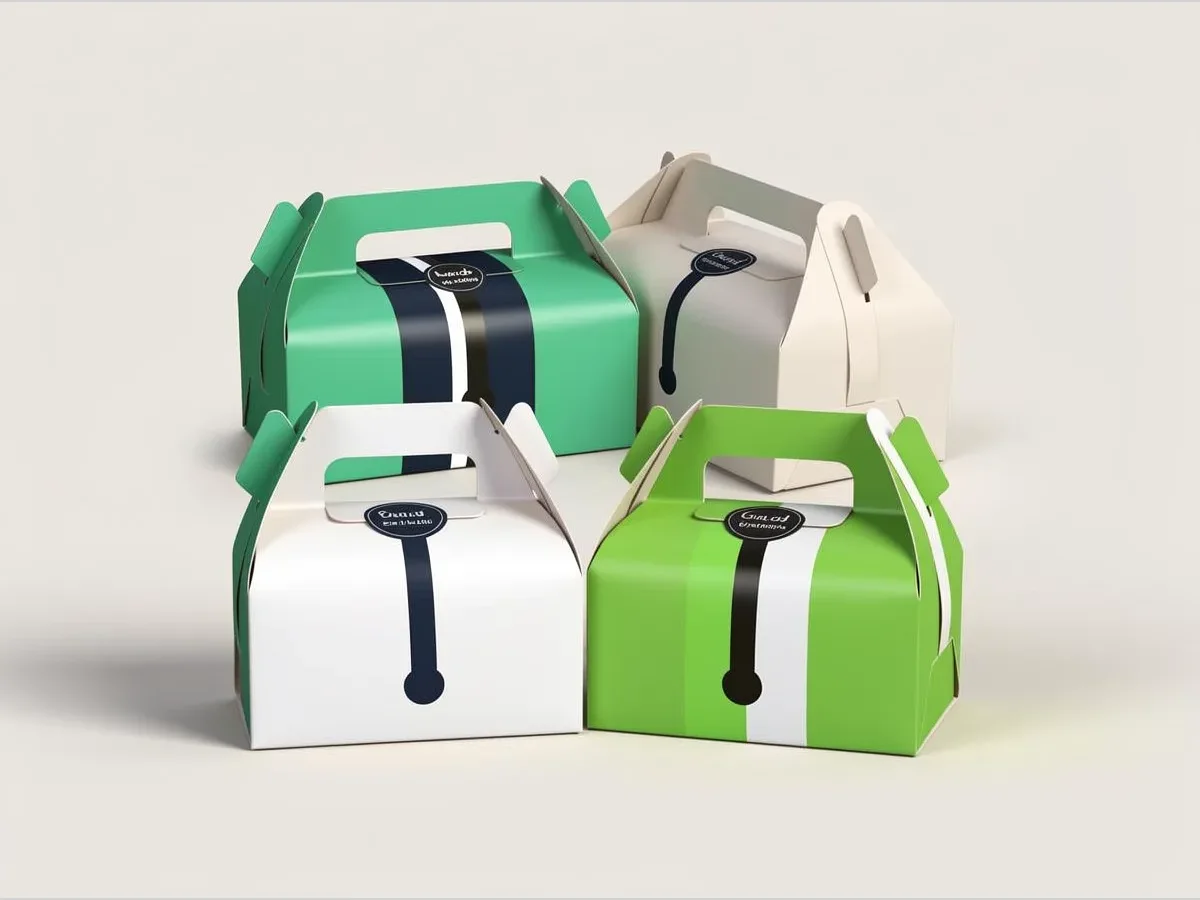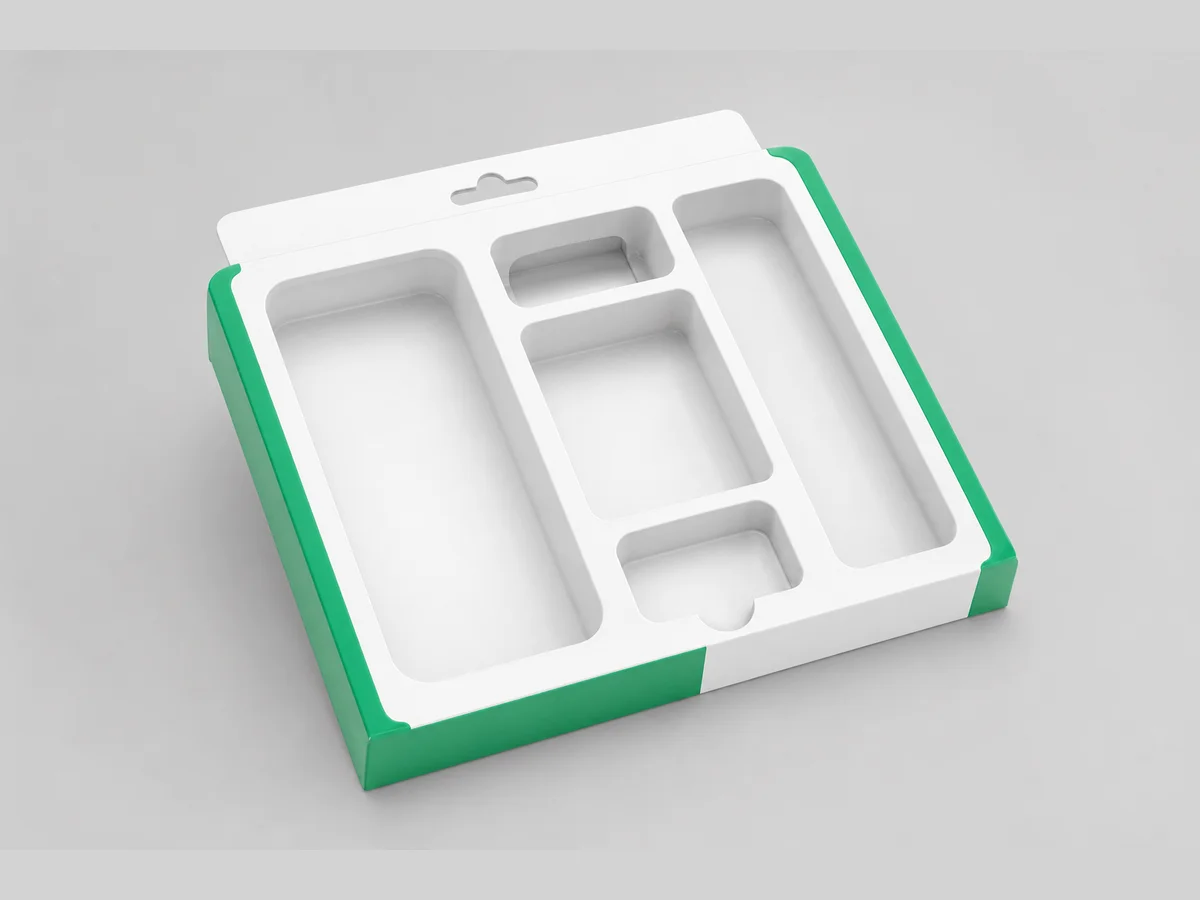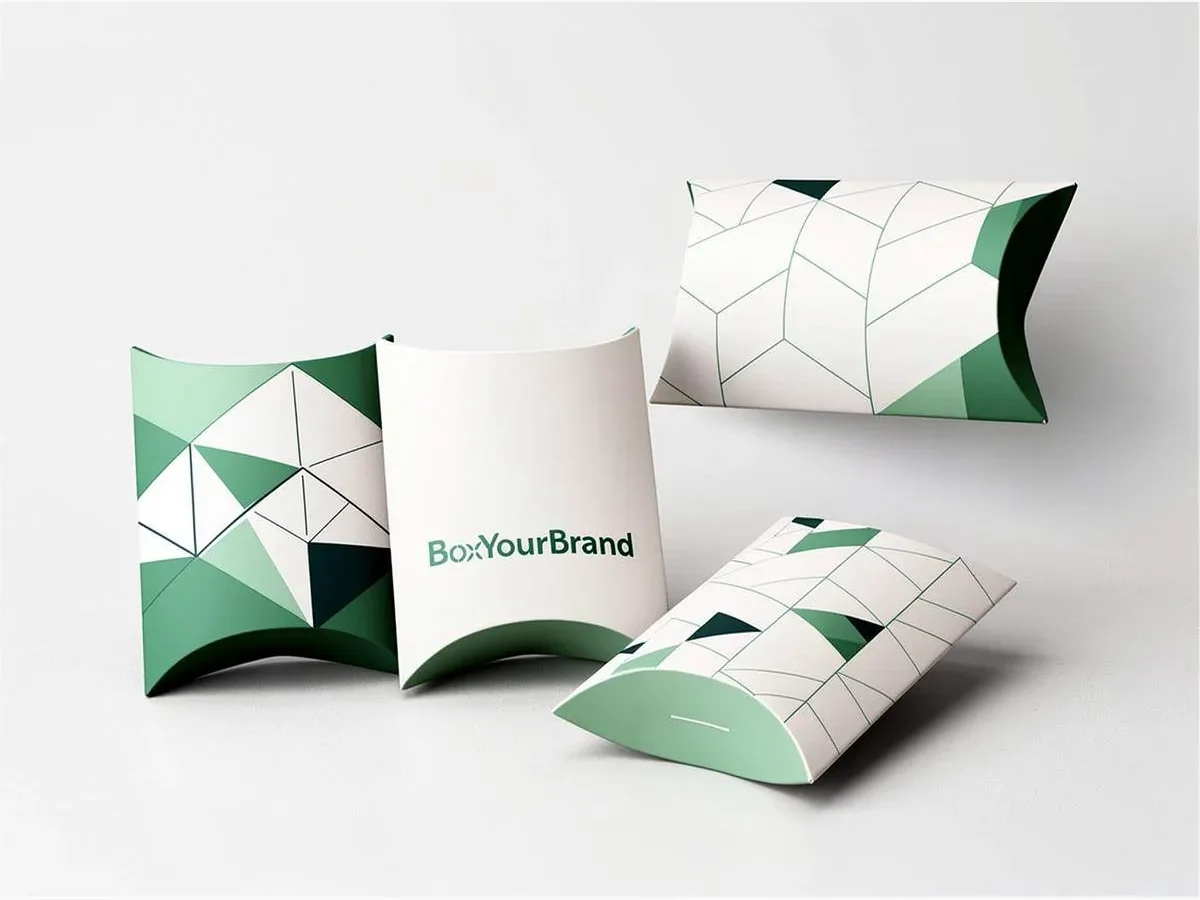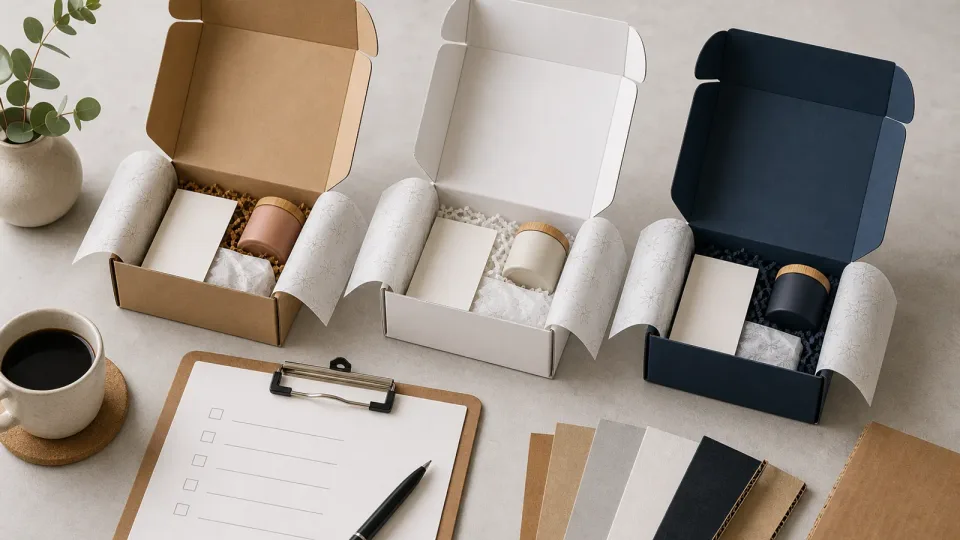
A digital proof can look perfect and still fail in the warehouse. The lid fights the product. Soft-touch feels cheaper than the mockup. A “right-sized” mailer from the calculator leaves a bottle rattling because void fill was never tested. That is what custom packaging samples are for — proving structure and substrate before you lock a production MOQ.
This guide covers when to order a sample kit, what to test when it arrives, and how samples fit next to quotes and proofs. Ready to request one? Use the packaging samples form ($25, credited to your first full order). For pricing and RFQ prep, see how to get a packaging quote.
Key takeaways
- Physical samples answer fit, board, print-on-substrate, and closure — proofs answer artwork layout.
- BoxYourBrand sample kits are $25, credited to your first full order, and typically ship within 5–10 business days.
- Test with your real product, not an empty box on a desk.
- Sample when dimensions are tight, finishes are new, or fulfillment teams have never packed the format.
- After samples pass, submit the same specs on a free packaging quote.
- Reorders of approved designs often skip samples; first runs rarely should.
Quick answer: sample, proof, or quote?
| Need | Use | Outcome |
|---|---|---|
| Budget and MOQ for a launch plan | Free packaging quote | Per-unit pricing and timeline |
| Artwork layout and panel copy | Digital proof (free) | Approved files before production |
| Hand-feel, fit, print on real board | Physical samples | Go / no-go before full MOQ |
| Outer size math only | Box size calculator | Planning dimensions, not validation |
Most first-time branded programs use all three: size → quote or sample → proof → production.
What a packaging sample kit is (and is not)
A physical sample kit is a representative unit in the board grade, structure, and finish stack you plan to produce. You assemble it, pack your SKU, and see how it ships — not just how it renders in a PDF.
It is not:
- A free catalog of every SKU in the warehouse
- A substitute for a production proof on your final artwork
- A guarantee that rush production will match sample lead time (sample shipping and production turnaround are separate clocks)
At BoxYourBrand, digital proofs stay free on production orders whether or not you sample. Samples are the optional, paid-then-credited step for tactile risk.
When samples are worth ordering
Order mailer box samples or format-specific kits when any of these are true:
- Tight fit — Irregular products, bottles, kits with inserts, or low void tolerance.
- New substrate — First time on kraft vs white, E-flute vs B-flute, or SBS caliper changes (corrugated flute types).
- Premium finishes — Soft-touch, foil, spot UV, or rigid wraps where hand-feel sells the brand (luxury packaging).
- Unboxing moments — Interior print and reveal sequences for DTC and PR kits (PR package guide).
- Fulfillment change — New 3PL, new pick-and-pack SOP, or associates who have never erected that style.
- Sustainability claims — You need to feel laminate weight and fiber before you claim recyclability (recyclable packaging guide).
Skip or defer samples when you are reordering an approved design, shipping a proven stock-adjacent size, or running a low-risk pilot where a failed pack would not damage the brand.
What to test when the kit arrives
Use a short lab routine — fifteen focused minutes beat a casual glance.
Fit and protection
- Place the real product (or a weight-matched dummy) inside.
- Check crush points, corner clearance, and whether tape or tuck closure stays shut.
- Add the void fill you will actually use — paper, air pillows, or custom inserts.
- Shake and short drop test the way your carrier treats parcels.
Board and structure
- Flex panels; note scoring that cracks print or feels flimsy.
- Confirm mailer vs shipper choice still makes sense (mailer vs shipping box).
- For cartons, check tuck friction and whether retail shelf height matches planogram notes.
Print and finish
- View color under warehouse lights and daylight — screen proofs lie about substrate.
- Rub high-touch zones (logo, soft-touch, foil) as a customer would.
- Check barcode / label quiet zones if you apply labels in-house (stickers and labels).
Operations
- Time how long it takes an associate to erect and close one unit.
- Confirm the pack fits your courier label template and DIM expectations (DIM weight guide).
Write pass/fail notes. Those notes become the production brief.
How to request samples (checklist)
Copy this into the notes field on the samples form:
- Product / format (mailer, RSC, carton, rigid, sleeve, etc.)
- Interior L×W×H (or product size + fit goal)
- Product weight and fragility
- Board preference (kraft, white, recycled, SBS caliper if known)
- Print intent (exterior, interior, coverage)
- Finishes to preview
- Insert or window needs
- Ship-to address and any rush context
- Calculator or wizard share link if you sized online
- Whether a production quote should follow the same specs
Select the closest line from the custom packaging catalog in the product field so the kit matches the right structure family — for example mailer boxes, corrugated shipping boxes, folding cartons, or eco-friendly packaging.
Sample fee, credit, and timing
| Item | BoxYourBrand program |
|---|---|
| Physical sample fee | $25 |
| Credit | Fully credited toward your first full order on the same project |
| Sample ship window | Typically 5–10 business days after confirmation |
| Digital proof | Free before production |
| Production after proof | Commonly 8–12 business days standard; 3–5 day rush when quoted; rigid luxury often longer |
Sample lead time is not production turnaround. Plan both on the calendar if you have a hard launch date. Details stay on the samples page and your specialist confirmation.
Samples vs quote: a simple decision path
Have size? → Use box size calculator / wizard
     ↓
High fit or finish risk? → Order samples
     ↓
Need budget for finance / launch? → Request free packaging quote
     ↓
Approve digital proof → Production
You can reverse sample and quote when stakeholders need a number before approving the $25 kit. Keep the same dimensions and material notes in both forms so nothing drifts.
For supplier evaluation beyond samples, see custom packaging for small business. For what moves unit price after you approve the structure, see custom packaging cost factors.
Buyer mistakes to avoid
- Admiring an empty sample — Always pack the real SKU.
- Approving color on a phone screen only — Wait for substrate print when brand color is critical.
- Changing dimensions after sampling without re-checking — A quarter-inch shift can break fit.
- Assuming the sample fee is sunk cost — It credits to the first full order when you proceed on the same project.
- Skipping ops feedback — Packers catch closure and time issues designers miss.
- Treating samples as artwork approval — Still approve a digital proof for production files.
Decision framework
- Is this a first run or a reorder of an approved design?
- Is fit tight or irregular?
- Are you specifying a finish or board your team has never touched?
- Will a packing failure damage brand or margin (returns, DIM, breakage)?
- Do you have dimensions ready (or calculator output)?
- Who will run the test checklist when the kit arrives?
- Will the same specs feed the quote form next?
If you answered yes to 2–4 on a first run, order packaging samples before locking MOQ.
Common questions
How much do custom packaging samples cost?
$25 at BoxYourBrand, credited to your first full order; digital proofs remain free.
Digital proof vs physical sample?
Proof = artwork and layout. Sample = real board, fit, and finish.
Samples before or after a quote?
Either. Match risk: budget → quote; fit/finish → sample; often both.
What should I test?
Fit, void fill, closure, board feel, print on substrate, finish rub, and a simple transit shake.
Can I sample interior-printed mailers?
Yes — specify interior print in the request notes.
When can I skip samples?
Low-risk reorders and proven sizes. Do not skip when fit or finish is new.
Conclusion
Custom packaging samples turn calculator math and mockups into a pack you can trust in fulfillment. Use them to kill fit and finish risk early; use quotes for budget; use proofs for artwork sign-off.
Order a sample kit, size first with the box size calculator if needed, then request a free packaging quote with the same specs once the kit passes your checklist.