Choosing between a mailer box and a shipping box sounds like a small decision. It is not. The format you pick affects product protection, per-order shipping cost, how fast your team can pack, and whether customers feel they bought from a premium brand or a commodity seller. Most ecommerce operators eventually use both — but the wrong default for your product mix burns money on every shipment. BoxYourBrand produces end-to-end custom packaging for ecommerce and retail brands.
This guide compares mailer box vs shipping box across structure, use cases, cost, branding, and fulfillment so you can pick the right primary format (and know when you need both). Use the quote wizard to compare quantity tiers side by side.
Key takeaways
- Mailers are self-locking, brand-forward cartons for DTC unboxing (~0.5–5 lbs typical).
- RSC shipping boxes prioritize crush protection and stacking for heavier or multi-item freight.
- Many brands use mailers for standard DTC and shippers for heavy SKUs — not either/or.
- Right-sizing either format controls dimensional weight on every shipment.
What Is a Mailer Box?
Validate board feel and print quality with packaging samples before locking production MOQ.
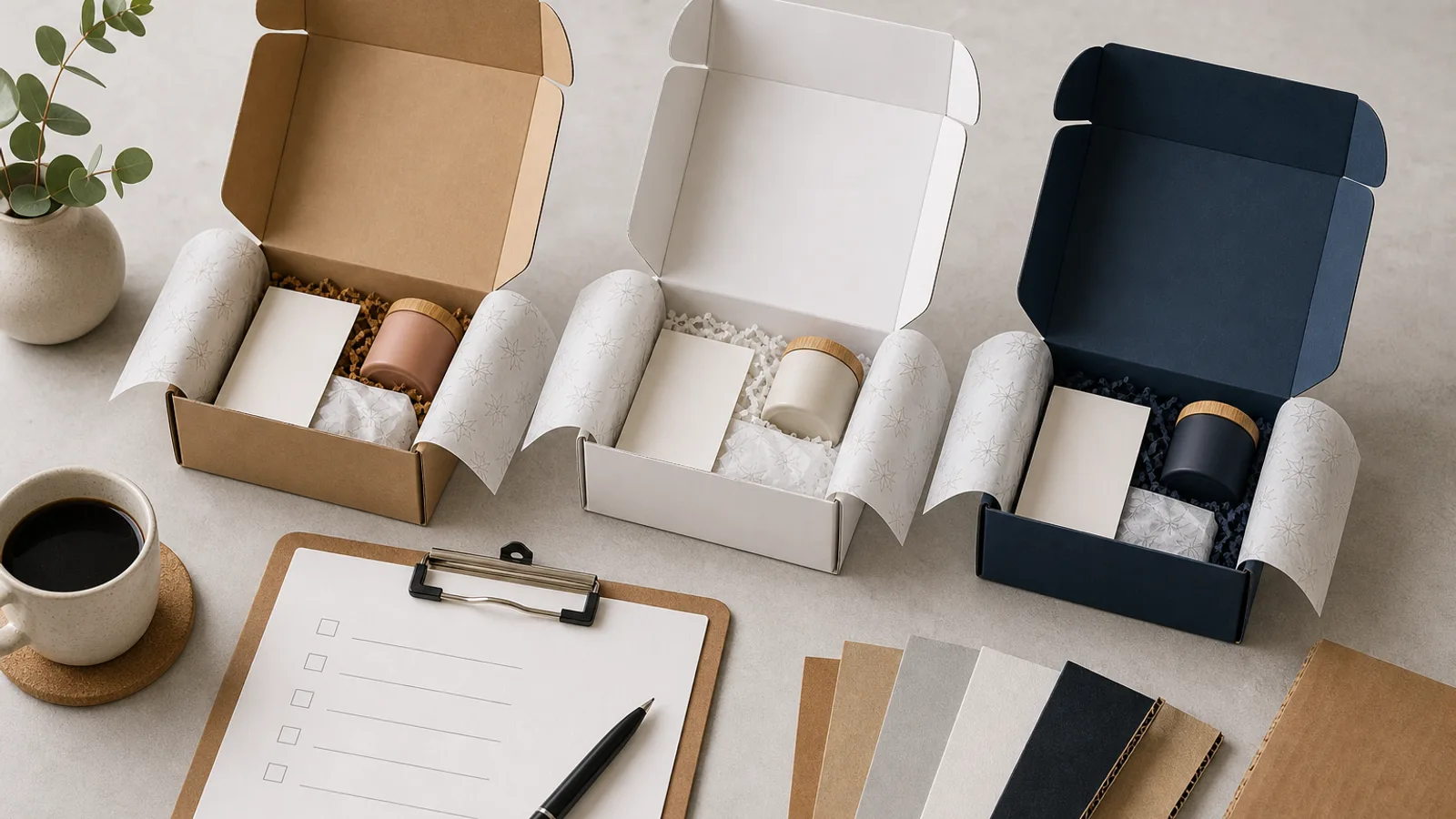
A mailer box (sometimes called a box mailer) is a self-locking corrugated box designed for direct-to-consumer shipments. It typically uses E-flute or B-flute board, ships flat, and assembles without tape thanks to tuck tabs or friction locks. The lid folds over the base and locks in place, which makes mailers fast to pack and satisfying to open.
Mailers are the default for DTC brands in beauty, apparel, supplements, electronics accessories, and subscription commerce. Their panels take full-color print well, which is why mailer boxes dominate unboxing content on social media. See our types of mailers guide for the next decision in your workflow.
Typical traits:
- Self-locking, often no tape required
- E-flute or light B-flute construction
- Premium exterior and interior print surfaces
- Best for items roughly 0.5–5 lbs in a single compact parcel
What Is a Shipping Box?
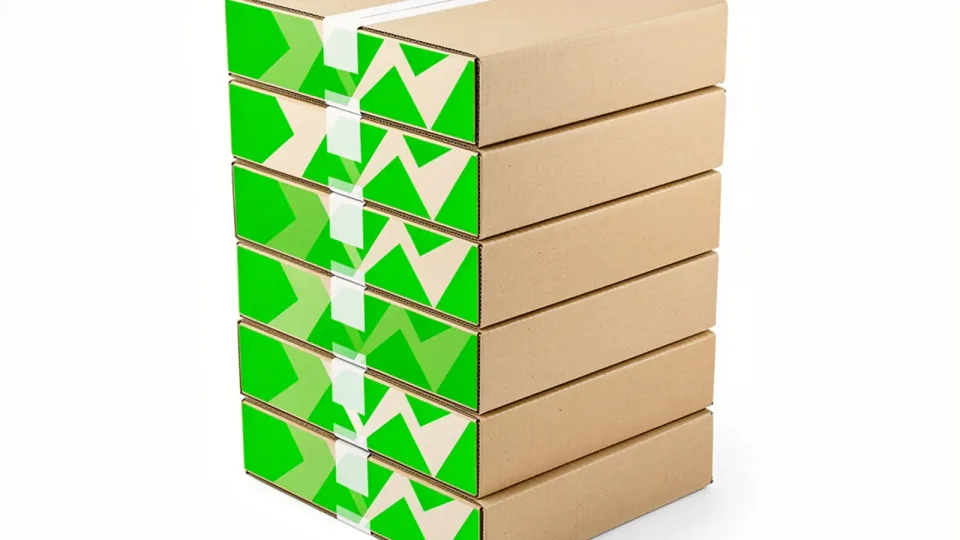
A custom shipping boxes program — usually a regular slotted container (RSC) — is the workhorse of logistics. It is a standard four-panel box sealed with tape on the top and bottom flaps. Board grades range from single-wall C-flute for general use to double-wall for heavy or fragile goods.
Shipping boxes prioritize protection and volume over presentation. They are the right choice when weight, size, or fragility exceeds what a mailer can handle, or when branding matters less than cost per unit at high volume.
Typical traits:
- Tape-sealed top and bottom
- C-flute or heavier board common
- Larger size range; multi-item and bulk orders
- Exterior print optional; often kraft or single-color logo
Side-by-Side Comparison
| Factor | Mailer box | Shipping box (RSC) |
|---|---|---|
| Assembly | Self-locking, fast | Tape required, slower |
| Board weight | Lighter (E/B-flute) | Heavier options (C, double-wall) |
| Max practical weight | ~5 lbs typical | 20+ lbs with right grade |
| Branding / print | Excellent full-color | Good; often exterior only |
| Unboxing experience | Premium, shareable | Functional |
| Cost at low volume | Moderate | Lower (plain kraft) |
| Best for | DTC, subscriptions, gifts | Heavy, bulky, multi-item |
When to Use a Mailer Box
Choose a mailer when the product fits, the experience matters, and pack speed counts.
Strong mailer use cases:
- Single-SKU Shopify orders (apparel, cosmetics, candles)
- Subscription boxes with consistent dimensions
- Gift-oriented brands where unboxing is part of the product
- Lightweight items where dimensional weight is driven by box size, not product weight
- Brands investing in social sharing and repeat purchase
If your average order is one or two items under five pounds and your brand sells on perception as much as product, a custom mailer is usually the right default.
When to Use a Shipping Box
Choose a shipper when protection, capacity, or cost at scale outweighs the mailer’s presentation advantage.
Strong shipping box use cases:
- Multi-item orders that will not fit a standard mailer footprint
- Products over ~5 lbs or requiring double-wall protection
- Fragile goods needing extra void fill and rigid walls (glass, ceramics)
- B2B wholesale or bulk shipments
- High-volume operations where plain kraft at the lowest unit cost is the priority
Many brands use a plain or lightly branded shipper for wholesale and a mailer for DTC — same product, different channel, different box.
Cost: Unit Price vs. Total Landed Cost
Mailers often cost more per unit than a plain RSC at the same dimensions because of construction and print. But total landed cost includes shipping, returns, and labor.
Mailer advantages on cost:
- Right-sized mailers reduce dimensional weight vs. oversized shippers
- Faster assembly saves labor in high-volume pack stations
- Lower damage rates on suitable products reduce return shipping
Shipper advantages on cost:
- Lowest material cost for unbranded kraft at volume
- Double-wall options avoid over-engineering mailers for heavy SKUs
- Standard sizes available off-the-shelf for emergency restocks
Run the math on dimensional weight for your actual product dimensions before assuming mailers are “more expensive.” A 9×6×3 mailer for a small SKU often ships cheaper than a 12×10×6 shipper with the same product inside.
Branding and Customer Perception
Mailer boxes are built for brand expression: full CMYK exterior, printed interior, soft-touch laminate, spot UV on a logo. That is difficult to replicate on a standard RSC without litho-lam or higher print minimums.
Shipping boxes can still carry brand — a one-color logo on kraft reads artisanal and eco-conscious; a full-color litho-wrapped shipper looks premium at higher MOQ. For most growing DTC brands, mailers deliver more brand impact per dollar at accessible quantities.
If your product price point is under $25, a heavily printed mailer may overshoot customer expectations. If your product is $75+, a plain shipper may undersell the purchase. Match packaging investment to average order value.
Fulfillment and 3PL Considerations
3PLs bill for pick, pack, and materials. Mailers that assemble without tape reduce pack time; inconsistent box sizes multiply pick errors. Standardize on as few SKUs as possible.
Tips:
- Give your 3PL clear rules: SKU A → mailer M1, SKU B → shipper S2
- Ship mailers flat to save inbound freight and warehouse space
- Document assembly with photos — self-locking tabs vary by design
Can You Use Both?
Yes — and many successful brands should. A common pattern:
- Mailer for standard DTC single-item orders
- Shipping box for bundles, wholesale, or oversized SKUs
- Mailer for subscription; shipper for one-time add-on heavy items
The mistake is forcing one format for every order. The win is defining clear rules so fulfillment stays fast and customers get appropriate protection.
How to Decide in Five Questions
- Does the product fit in a mailer under 5 lbs with proper padding? If no → shipper.
- Is unboxing part of your brand strategy? If yes → mailer (or premium litho shipper).
- What is your average dimensional weight at current box size? Run both formats through your carrier calculator.
- How many box SKUs can your team or 3PL manage? Minimize variants.
- What is your MOQ and budget for custom print? Mailers often win on brand at accessible MOQ.
Next Steps: Mailer vs Shipping Box Decision
If you are still comparing formats, start with dimensions and monthly volume. Browse mailer boxes and corrugated shipping boxes to see standard options, then request a free packaging quote with your product specs. A packaging specialist can recommend the right primary format — and whether a two-box strategy makes sense for your catalog.
Mailer box vs shipping box is not a permanent either/or. It is a decision about fit, protection, brand, and cost per order — and getting it right pays back on every shipment you send.