Skip to content

Shipping & Fulfillment

Custom Plastic Packaging

Custom plastic packaging and plastic packaging bags for retail, food, and ecommerce brands. Stand-up pouches, flat bags, rigid clamshells, and printed film with recyclable and post-consumer options where available.
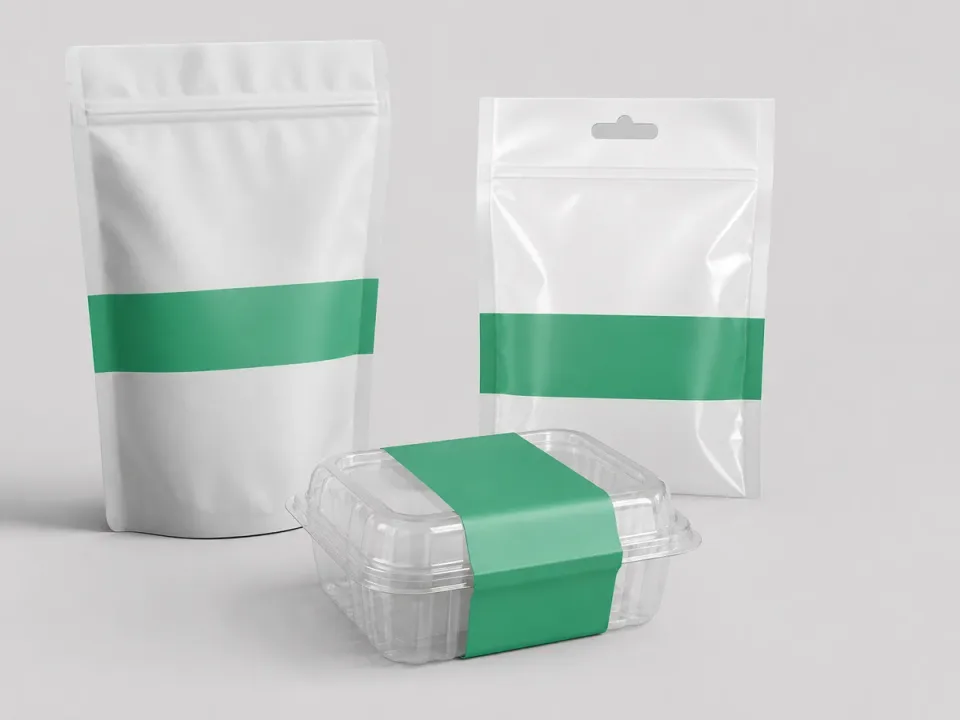
custom plastic packaging printed with brand logo

Technical Specifications for Custom Plastic Packaging

Materials
PE, PET, PP, multi-layer laminate films
Closure
Heat-seal, zipper, tear notch, hang hole
Print
Flexographic & rotogravure full-color
Turnaround
8–12 business days standard

Materials

  • Polyethylene (PE)
  • PET laminate film
  • Recycled content film
  • Food-grade barrier films

Print & Finishing

  • Flexographic print
  • Full-color process
  • Matte & gloss finishes
  • Spot varnish

Available Styles

  • Stand-Up Pouches
  • Flat Poly Bags
  • Gusseted Bags
  • Rigid Clamshells
  • Zipper Pouches

What Is Custom Plastic Packaging?

Custom plastic packaging is flexible or rigid film and thermoformed formats built to your product dimensions, barrier requirements, and brand artwork — not off-the-shelf stock bags. It covers stand-up pouches, flat and gusseted poly bags, zipper pouches, rigid clamshells, and printed laminate film for retail shelf and ecommerce accessory programs.
BoxYourBrand produces custom plastic packaging for CPG, supplement, food, apparel, and DTC brands that need moisture barriers, hang holes, tear notches, and full-color exterior print on PE, PET, PP, and multi-layer laminates. Every format is spec'd to your fill weight, seal method, and regulatory panel layout.

What brands get from custom plastic packaging:

  • Barrier control — Film structures matched to oxygen, moisture, and puncture requirements for your SKU
  • Retail-ready presentation — Stand-up pouches, hang holes, and window options for planogram placement
  • Brand consistency — Logo, color, and regulatory copy printed across bag sizes and pouch formats
  • Channel flexibility — Retail pouches, inner poly bags for folding cartons, and accessory bags for ecommerce kits
  • Material options — Recycled-content and recyclable films where barrier needs allow
Programs that also ship soft goods in film often pair retail pouches with poly mailers for outbound fulfillment, or use folding cartons when the primary sell unit is paperboard on shelf. See our retail CPG packaging guide when you need planogram and retailer compliance context beyond film specs.

Custom Plastic Packaging Styles

Style choice depends on whether the pack sits on shelf, ships inside a carton, or wraps a single unit at pack-out. Pouches win on shelf presence; flat bags win on unit cost for high-volume inner packs; rigid clamshells win when product visibility and theft deterrence matter at retail.
StyleBest forTypical closurePrint notes
Stand-up pouchSnacks, coffee, supplements, pet treatsHeat-seal, zipper, tear notchFull-wrap flexo or gravure; bottom gusset billboard
Flat poly bagApparel inner packs, accessories, kit componentsHeat-seal, header card slotLogo + care panel; opaque or clear film
Gusseted bagBulk retail, bakery, hardware small partsHeat-seal, wicket holeSide panels for regulatory copy
Zipper pouchReclosable food, cosmetics, refill SKUsPress-to-close zipperMatte or gloss laminate; spot varnish
Rigid clamshellElectronics accessories, hardware, retail visibilityFriction seal, RF weldCard insert or printed label zone
Flat-bottom pouchPremium CPG, gift setsZipper or tear stripHigh-graphic rotogravure
Most first-time plastic packaging programs start with one stand-up pouch or flat bag SKU, then add secondary sizes once the primary dieline and barrier stack are approved. Multi-SKU brands often share one laminate structure across pouch sizes to simplify inventory and reorder.
Stand-up pouches with bottom gussets create a billboard panel below the shelf facing — useful for flavor callouts, certifications, and QR codes. Flat bags suit inner-pack and warehouse pick programs where the bag never faces the consumer directly. Clamshells remain the default when theft deterrence and product visibility at big-box retail outweigh pouch economics.
Read the custom plastic packaging types guide for barrier layers, seal zones, and when to move from a bag to a pouch versus a carton.

Plastic Packaging Materials & Barrier Films

Film structure is the engineering decision behind custom plastic packaging — it controls shelf life, puncture resistance, and what you can claim about recyclability. Share product weight, fill process, and storage conditions when quoting so we recommend the right laminate stack.

Common film families:

  • Polyethylene (PE) — Flexible, economical; standard for poly bags and many pouch inner layers
  • PET laminate — Stiffness and clarity; common outer layer on stand-up pouches
  • PP (polypropylene) — Heat resistance and clarity for food and retort-adjacent applications where spec'd
  • Multi-layer laminate — Combined barrier for coffee, nuts, supplements, and high-moisture SKUs
  • Recycled-content film — Post-consumer resin where clarity and barrier allow; document claims for retailer scorecards
  • Food-grade barrier films — Direct-contact layers for dry goods, supplements, and many food applications
Closure hardware — zippers, tear notches, hang holes, and spouts — is specified at the same time as film so seal strength and print registration stay aligned through production. Opaque films suit privacy-sensitive apparel inner packs; clear windows suit retail clamshells and display pouches.
Oxygen and moisture barriers are not one-size-fits-all: coffee and nuts need different laminate stacks than dry supplements or apparel poly bags. Share expected shelf life, storage temperature swing, and whether the pack will be hot-filled or cold-packed — those three inputs narrow film options faster than requesting “high barrier” without context.
Compare film trade-offs in the plastic vs paperboard packaging guide when your team is deciding between a pouch, a folding carton, or a hybrid pack (carton plus inner poly bag).

Print, Finishing & Regulatory Panels on Plastic Packaging

Plastic packaging print is rotogravure or flexographic — full-wrap artwork with precise registration on curved and gusseted panels. Unlike paperboard, film print runs are plate-driven at volume, so proof approval locks color and copy before cylinders or plates are made.

Print and finish options:

  • Flexographic full-color — Economical at high volume on bags and pouches
  • Rotogravure — Highest graphic fidelity on premium stand-up pouches
  • Matte and gloss finishes — Surface feel and shelf photography impact
  • Spot varnish — Logo and pattern highlights without full laminate change
  • Regulatory panels — Nutrition, supplement facts, UPC, and ingredient zones engineered into the dieline
  • Window laminates — Clear PET windows on pouches and clamshells where product visibility sells the SKU
Barcode and lot-code zones need flat, low-ink panels for reliable scanning — our team flags conflicts during proof review. Brands launching in retail should share retailer copy requirements alongside brand artwork so back-panel layout is correct on the first production run.
For retail bag programs specifically, see custom plastic bags for retail — it covers hang-hole placement, wicket packs, and header-card integrations.

Plastic Packaging vs Paperboard vs Poly Mailers

These three formats solve different jobs — shelf presentation, rigid product protection, and lightweight outbound shipping. Many omnichannel brands use all three in one program.
FactorCustom plastic packagingPaperboard (folding cartons)Poly mailers
Primary roleFlexible retail pack or inner bagRigid retail carton on shelfOutbound shipper for soft goods
Moisture barrierStrong with laminate filmsModerate with coatingsExcellent for transit
Print qualityHigh on pouches; limited on thin bagsExcellent CMYK on SBSFull-color film print
Recyclability storyFilm-dependent; store drop-off often requiredCurbside paper in many marketsStore drop-off or landfill by market
Typical MOQ100–500+ units by format50–250+ for digital cartons100–500+ units
Best forPouches, snacks, supplements, inner packsCosmetics, CPG cartons, gift setsApparel, textiles, soft DTC orders
Rule of thumb: Spec plastic pouches or bags when barrier, flexibility, or reclosable features drive the pack. Spec paperboard when shelf rigidity, embossing, and fine type matter. Spec poly mailers when the goal is lowest ship cost on non-fragile soft lines — not retail shelf presentation.
Outbound fulfillment for pouch-based CPG often still needs a corrugated shipping box or mailer box as the outer shipper. The spec custom plastic packaging first order guide walks through quoting inputs for your first film run.

Retail, Food & Ecommerce Use Cases

Custom plastic packaging spans shelf-facing pouches, inner poly bags, and accessory wraps — the use case determines film, closure, and MOQ.

Common programs:

  • CPG & snacks — Stand-up pouches with zipper and tear notch; barrier matched to shelf life
  • Supplements & nutraceuticals — Child-resistant options and facts panels on gusseted pouches
  • Apparel & merch — Opaque flat bags as inner packs inside branded mailers
  • Food & beverage — Food-grade laminates; share product type for contact-layer recommendations
  • Ecommerce kits — Printed accessory bags bundled with paper bags or cartons for unboxing
Food brands should confirm whether the pack is direct-contact or overwrap-only — that single distinction drives laminate selection and what copy you can use on-pack. Explore food & beverage packaging for category norms alongside your film quote.
Co-packers and contract fillers often request wicketed flat bags, pre-printed roll stock specs, or pouch formats compatible with existing FFS lines — share equipment constraints when quoting so seal bar width and reel orientation match your line. Brands selling through club retail may need larger gusseted formats with reinforced bottom seals for heavier fill weights.
DTC brands that lead with pouches on shelf often still need e-commerce packaging guidance for the outer shipper, void fill, and dimensional-weight rules on multi-pouch orders.

MOQ, Pricing & First-Order Workflow

Plastic packaging MOQs reflect plate or cylinder setup — higher than digital paperboard, lower than many rigid formats. Pilot runs are practical once artwork and barrier spec are locked.

Typical program structure:

  • MOQ — 100–499 units launch tier on many bag and pouch formats
  • Volume tiers — Meaningful per-unit breaks at 500–2,499 and 2,500+ units
  • Production — 8–12 day standard turnaround; 3–5 day rush available
  • Reorders — Approved cylinders and dielines stay on file for repeat runs
  • Split SKUs — Multiple pouch sizes on one laminate structure simplify inventory
When you request a plastic packaging quote, send product weight, fill method (manual vs form-fill-seal), barrier needs, and target pouch or bag dimensions. Those four inputs determine film stack and price tier faster than artwork alone.
Order samples ($25, credited toward your first order) to validate seal strength, zipper function, and print opacity on film before committing to plates. Digital proofs are always free.

Recycled Content & Sustainability Claims on Film

Film sustainability is format-specific — recyclable mono-material structures, recycled-content resin, and compostable films each carry different end-of-life stories. Match on-pack claims to what your markets actually collect.
Recycled-content PE and store-drop-off recyclable laminates are available when barrier requirements allow. Compostable films suit select mailer-adjacent programs but rarely replace high-barrier snack pouches without trade-offs. Our sustainability hub covers wording that holds up under retailer and consumer scrutiny.
Brands comparing film to paperboard for eco positioning should read plastic vs paperboard packaging alongside eco-friendly packaging options across the full catalog — many omnichannel programs use recycled paperboard cartons with recyclable inner poly bags.

How to Spec Your First Custom Plastic Packaging Order

First film orders fail when artwork arrives before product and barrier spec — reverse the sequence and quoting moves faster. Lock fill weight, seal method, and regulatory panels first; then layout print on the approved dieline.
  1. Define the SKU — Product weight, shelf life, food-contact vs overwrap, and retail vs inner-pack role.
  2. Pick format — Pouch, flat bag, gusseted bag, or clamshell from the styles table above.
  3. Choose film stack — Barrier, clarity, recycled content, and closure hardware.
  4. Layout artwork — Regulatory panels, UPC zone, and brand graphics on the dieline template.
  5. Quote & sampleRequest a quote; order samples to test seal and zipper before plates.
  6. Approve proof — Digital proof is free; production starts after approval.
The spec custom plastic packaging first order guide expands each step with RFQ attachments buyers and co-packers expect. Brands launching pouches and shippers together should quote film and corrugated shipping boxes in one thread so outer case pack fits pouch case quantity.

Start Your Custom Plastic Packaging Order

Ready to move from stock bags to printed pouches and film formats built for your SKU? Request a free quote with product weight, dimensions, barrier needs, and quantity. A specialist responds within two hours with film recommendations and per-unit pricing at your tier.
New to flexible packaging? Start with the custom plastic packaging types guide and first-order spec checklist — then order samples to validate seal and hand-feel before production.

Common Uses for Custom Plastic Packaging

Businesses order custom plastic packaging for the applications below.

Retail product bags and pouches

Food and supplement packaging

Ecommerce accessory bags

Merchandise and apparel poly bags

Plastic Packaging Pricing & Order Quantities

100-499 units

Launch tier

500-2,499 units

Volume discount tier

2,500+ units

Best per-unit pricing

Exact pricing depends on dimensions, material, print, and quantity. Request a free quote for a precise per-unit price.

Industries That Order Plastic Packaging

custom plastic packaging pairs well with custom plastic packaging bags across these verticals.

Guides for Designing Plastic Packaging

Expert guides on custom plastic packaging — sizing, design, materials, and ordering.
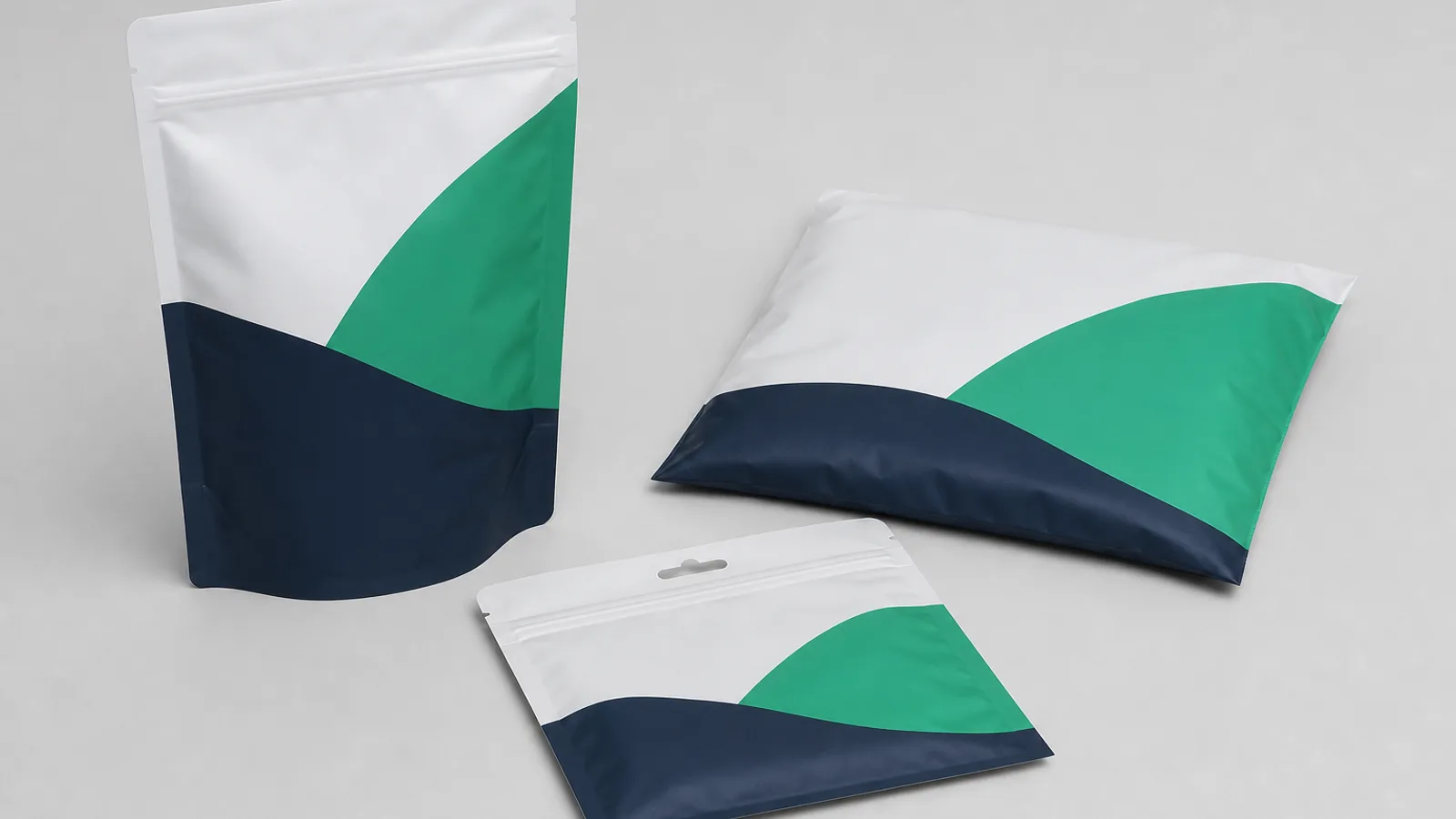
types of plastic packaging compared — Custom Plastic Packaging Types
Buying Guide

Custom Plastic Packaging Types Guide

Custom plastic packaging types explained — stand-up pouches, flat bags, zipper pouches, and clamshells with film, barrier, and MOQ guidance.
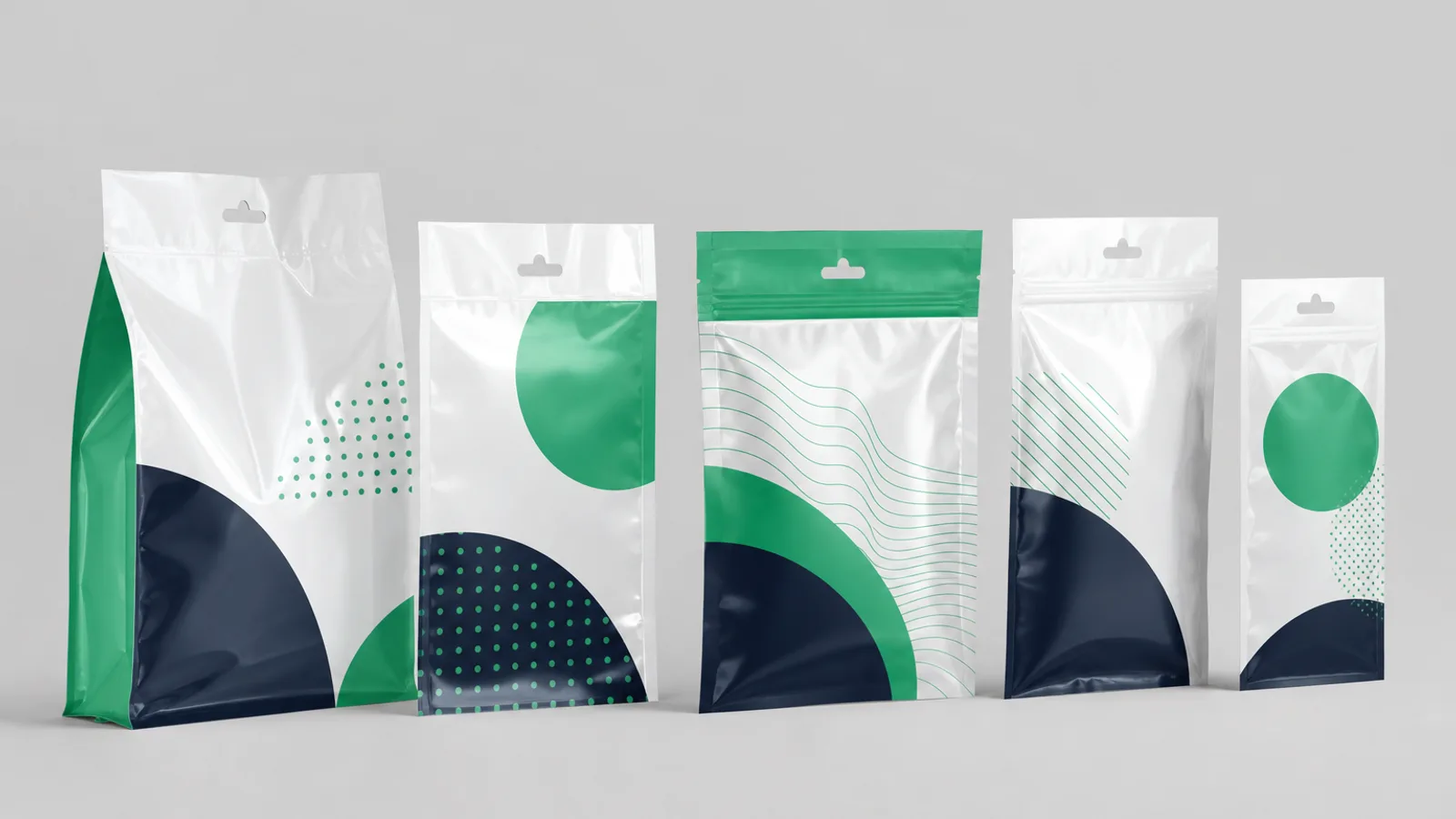
plastic bags for retail shelves — Custom Plastic Bags for Retail
Buying Guide

Custom Plastic Packaging Bags Guide

Custom plastic packaging bags for retail — bag styles, film gauge, hang holes, barcode panels, and omnichannel spec basics.
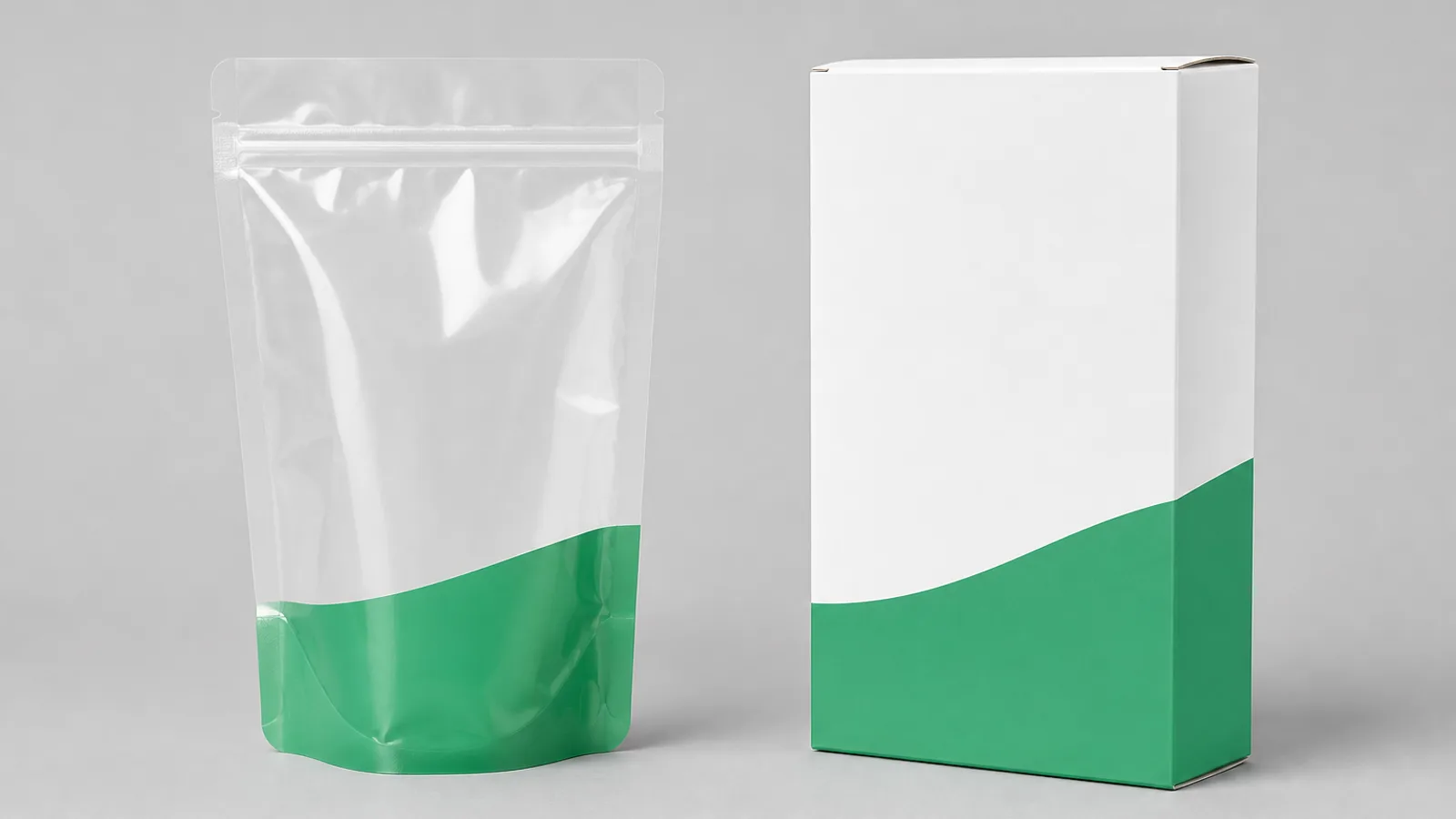
plastic packaging vs paperboard — Plastic vs Paperboard Packaging
Buying Guide

Plastic Packaging vs Paperboard Guide

Plastic packaging vs paperboard compared — barrier properties, shelf presentation, sustainability, and hybrid programs for CPG brands.
FAQ

Plastic Packaging Questions

What types of custom plastic packaging do you offer?

We produce custom plastic packaging including stand-up pouches, flat and gusseted bags, zipper pouches, and rigid clamshell formats — spec'd to your product weight, barrier needs, and retail requirements.

Do you make custom plastic packaging bags with logo print?

Yes. Custom plastic packaging bags can include full-color exterior print, brand logos, nutrition panels, and barcode zones depending on your SKU and regulatory needs.

Are food-safe plastic packaging options available?

Yes. We offer food-grade films and laminates for pouches and bags that contact dry goods, supplements, and many food applications. Share your product type for material recommendations.

How does plastic packaging compare to poly mailers?

Poly mailers are optimized for shipping soft goods. Custom plastic packaging covers retail pouches, product bags, and rigid formats for shelf presentation — we also produce poly mailers for fulfillment.

Can custom plastic packaging include recycled-content films?

Yes. Recycled-content and recyclable film options are available depending on barrier needs and local recycling rules. We help match clarity, puncture resistance, and sustainability claims to your SKU.

What is custom plastic packaging?

Custom plastic packaging is flexible or rigid film formats — stand-up pouches, poly bags, zipper pouches, and clamshells — built to your product dimensions, barrier requirements, and brand artwork. It differs from stock bags in that film structure, dieline, and print are specified for your SKU.

What is the MOQ for custom plastic packaging?

Many bag and pouch formats start at 100–499 units for launch runs. Per-unit pricing improves at 500–2,499 units and again at 2,500+ as plate and cylinder setup amortizes. Your quote itemizes pricing at the quantity you request.

How does custom plastic packaging compare to folding cartons?

Plastic pouches and bags offer flexible barriers and reclosable features; folding cartons offer rigid shelf presentation and curbside paper recyclability in many markets. Many CPG brands use pouches for product contact and cartons for retail display — see our plastic vs paperboard guide.

Can stand-up pouches include zippers and tear notches?

Yes. Zipper pouches, tear notches, hang holes, and spouts are specified with the film structure so seal strength and print registration stay aligned. Share your fill equipment and reclosable requirements when quoting.

Are custom plastic packaging bags food-safe?

Yes. Food-grade films and laminates are available for dry goods, supplements, and many food applications. Share your product type and whether the pack is direct-contact or overwrap-only for material recommendations.

How long does plastic packaging production take?

Standard production takes 8–12 business days after proof approval after digital proof approval. Rush production of 3–5 business days is available when quoted. First runs may include plate or cylinder lead time — your quote states the full timeline.

Can I get samples before a full plastic packaging order?

Yes. Physical samples are $25, credited toward your first full order, and ship within 5–10 business days. Digital proofs are always free before production.

Should I use plastic packaging or poly mailers for shipping?

Poly mailers are optimized for outbound shipping of soft goods. Custom plastic packaging covers retail pouches, product bags, and rigid formats for shelf presentation. Many brands use pouches for the product and poly mailers or boxes for fulfillment.

Products Related to Plastic Packaging

Brands ordering custom plastic packaging often compare these formats before requesting a quote.
Ready to Order Plastic Packaging?

Get a custom quote in minutes. No commitment, no pushy sales calls. Just great packaging at a fair price.

  • Packaging specialists
  • Response within 2 hours
  • No obligation quote