
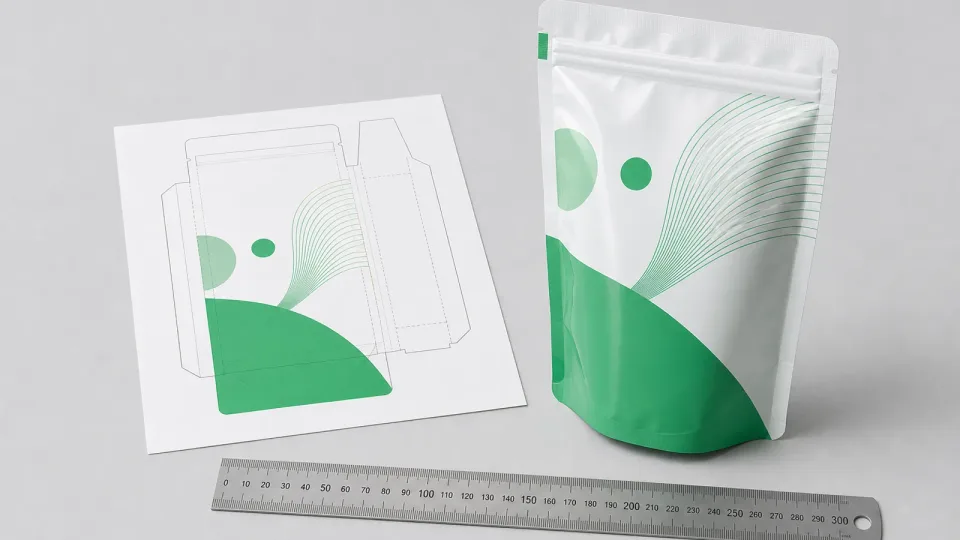
Your first custom plastic packaging order goes smoother when you arrive with dimensions, barrier needs, and channel context — not just a logo file. Review plastic packaging specs and the custom plastic packaging types guide to confirm pouch vs bag vs clamshell before you spec.
Key takeaways
- Define channel (retail shelf vs ship) before choosing pouch, bag, or clamshell.
- Share filled dimensions, gusset depth, and fill weight for accurate film structure.
- Flag barcode, nutrition, and lot code zones on the dieline before proofing.
- Approve digital proof first; physical samples when zipper or seal strength is critical.
Step 1: Define the product and channel
Retail hang-hole bags, stand-up pouches, and flat poly bags use different tooling. Confirm whether the pack sells on shelf, ships in a mailer, or both. See custom plastic packaging bags for retail for hang-hole and panel requirements, or plastic packaging vs paperboard if you are still choosing substrate.
Step 2: Share dimensions and fill weight
Film structure depends on product weight and sharp edges. For custom plastic packaging bags, provide filled width, height, gusset depth (if any), and estimated fill weight.
Step 3: Choose print and regulatory panels
Full-color flexo is standard for custom plastic packaging. Flag barcode, nutrition, and lot code zones on the dieline before proofing.
Step 4: Plan MOQ and lead time
First runs often start at hundreds to low thousands of units per SKU depending on film width and cylinder setup. Reorders are faster when print cylinders and spec are archived. BoxYourBrand produces end-to-end custom packaging for ecommerce and retail brands.
Step 5: Request proof and sample
Approve a digital proof on the bag template, then physical samples when timeline allows — especially for zipper function and seal strength. Use the quote wizard to compare quantity tiers side by side.
First-order plastic pouch specs that survive production
How to spec plastic pouches for first order: dimensions, film stack, zipper, panels, and MOQ — in writing — before cylinders. Verbal sizes create expensive reprints.
| Spec | Capture |
|---|---|
| Size | W × H × gusset + fill weight |
| Film | Gauge / barrier notes |
| Closure | Zipper / notch / spout |
| Flexo vs digital | |
| Channel | Retail vs ship |
First pouch order checklist
- Measure filled width, height, and gusset needs.
- Note oils, powders, or sharp edges.
- Map barcode and claim panels.
- Approve digital proof before cylinders.
- Sample zipper and seal when function is critical.
Barrier and seal notes for first runs
Shelf-life should be stated in weeks/months with storage conditions. Seal jaw settings and zipper track quality belong in the supplier conversation early.
First-order plastic pitfalls
- Guessing film without chemistry notes
- Changing art after cylinders are cut
- Skipping samples on new zippers
Submit a first-order pouch brief
Use this checklist as your quote attachment. We will recommend film structure, print, and MOQ for a first plastic pouch run that is reorderable.
Archiving first-order pouch specs for reorders
The value of a careful first pouch order is a reorder that does not rediscover film stacks. Save dieline revision, laminate notes, and zipper SKU with the PO.
Bring that archive to every reorder quote. For the first run, attach fill weight, chemistry notes, and channel so how-to-spec guidance becomes a production-ready brief.
Sampling zippers before cylinder commitment
If zipper function is brand-critical, approve a physical sample after digital proof. First-order pouch programs that skip this step often reprint.
Call out zipper sampling in the first-order plastic brief.
Practical next steps for How to Spec Plastic Pouches for Your First Order
Before you scale how to spec plastic pouches for first order, freeze structure and size on a short pilot, then decorate. Bring packed dimensions, channel notes, and quantity tiers to the quote form so engineering recommendations match how the pack actually ships and sells.
If you already have a working dieline, send it — reusing proven structure cuts tooling and proof rounds. Archive board, film, ink, and revision IDs with the purchase order so reorders do not rediscover decisions you already paid to learn.