
Food & Beverage
Food-safe solutions for perishables and packaged goods
Explore Food & BeverageFood Boxes
Custom burger boxes for restaurants, smash-burger concepts, ghost kitchens, and delivery brands. Food-contact board with grease and moisture barriers, steam venting that keeps buns from going soggy, and full-color logo print in clamshell, tuck-top, and window styles.
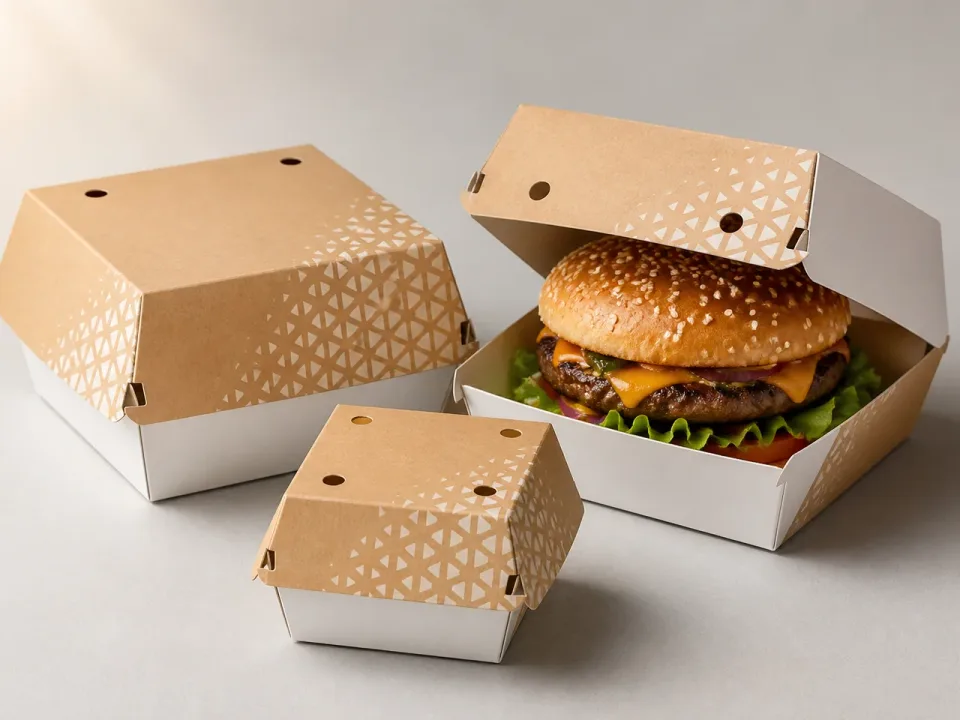
What operators get from custom burger packaging:
| Style | Best for | Trade-off |
|---|---|---|
| Clamshell (hinged lid) | High-volume counters and delivery | Fastest close; lid print area limited by the hinge fold |
| Tuck-top carton | Brand-forward fast casual | Largest uninterrupted print panel; one extra fold per pack |
| Kraft corrugated clamshell | Long delivery radius, loaded builds | Best insulation and crush strength; higher board cost |
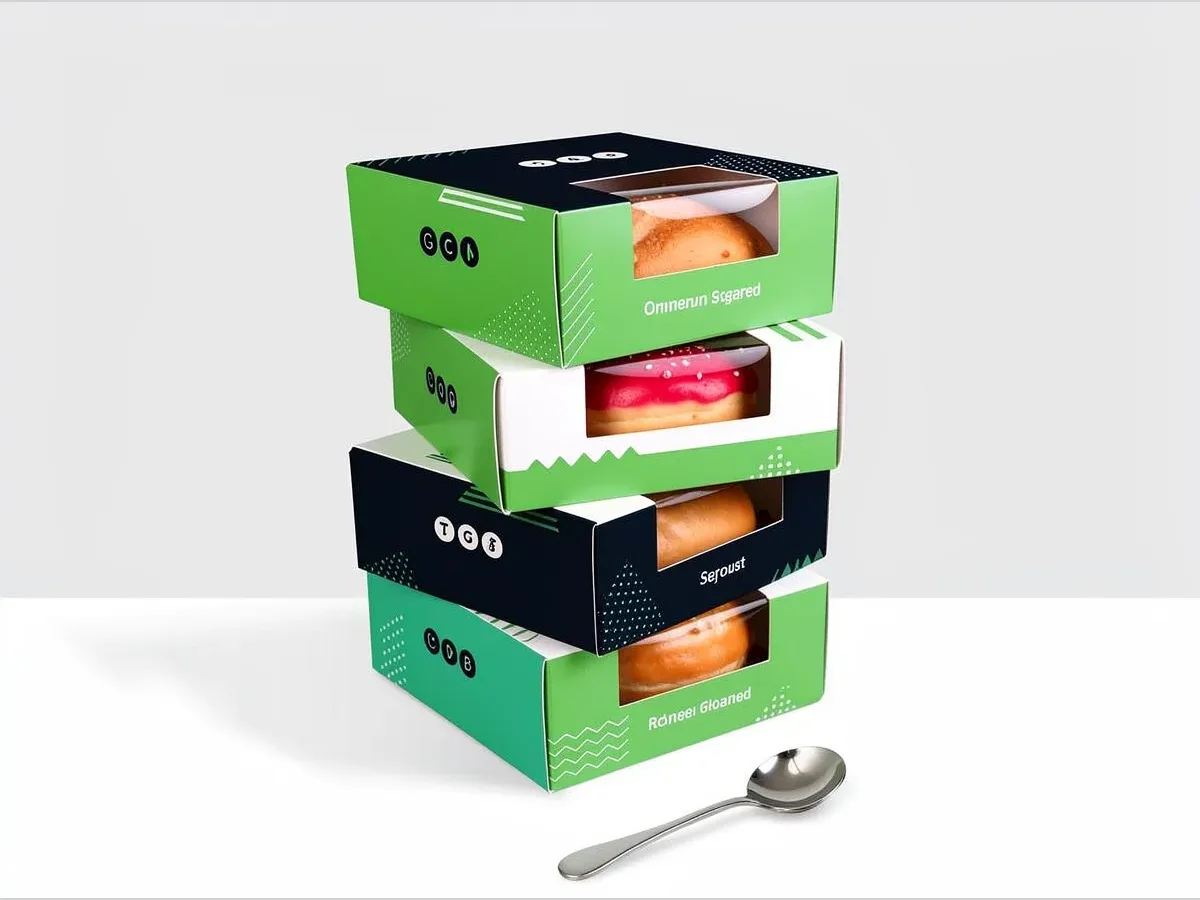
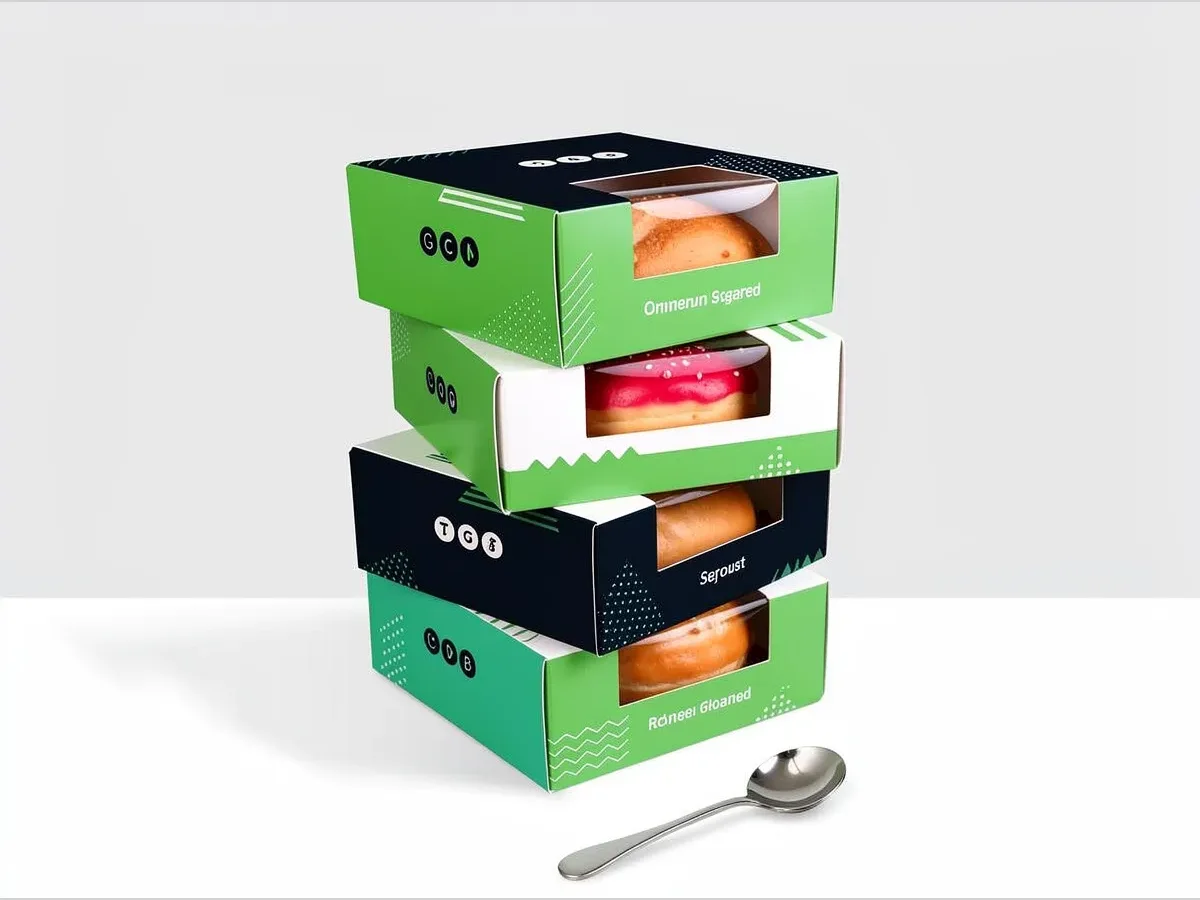
| Window burger box | Grab-and-go retail and food halls | Product visibility; window film complicates recyclability |
| Double / stacked box | Doubles, triples, and stacked builds | Extra height stops lid crush; costs more board per unit |
| Slider / mini box | Sliders, kids meals, tasting flights | Small footprint; often ordered as a second SKU |
| Combo meal box | Burger + fries in one pack | Fewer items per bag; fries share the burger’s steam unless divided |
| Box size (L × W × H) | Fits | Typical use |
|---|---|---|
| 4 × 4 × 3" | Slider, 2–3 oz patty | Sliders, kids meals, catering trays |
| 5 × 5 × 3" | Standard single, 4–5 oz patty | Most common single-patty SKU |
| 6 × 6 × 3" | Double patty or loaded single | Smash-burger doubles, bacon builds |
| 7 × 7 × 3.5" | Triple, stacked, or oversized builds | Signature and limited-time items |
| 8 × 6 × 3" | Burger plus a small fry portion | Combo boxes with a divider |
Board and barrier options:
Print options:
Program structure:
Businesses order custom burger boxes for the applications below.
Burger restaurants and smash-burger concepts
Ghost kitchens and delivery-only brands
Food trucks and stadium concessions
Fast-casual chains and franchises
Catering and combo meal programs
Sliders, mini burgers, and event service
Launch tier for single locations and pop-ups
Volume discount tier for busy kitchens
Best per-unit pricing for multi-location programs
Exact pricing depends on dimensions, material, print, and quantity. Request a free quote for a precise per-unit price.
custom burger boxes pairs well with burger boxes across these verticals.
Food-safe solutions for perishables and packaged goods
Explore Food & BeverageShelf-ready formats built for planogram compliance
Explore Retail & CPGBranded unboxing that gets shared
Explore E-commerceExpert guides on custom burger boxes — sizing, design, materials, and ordering.
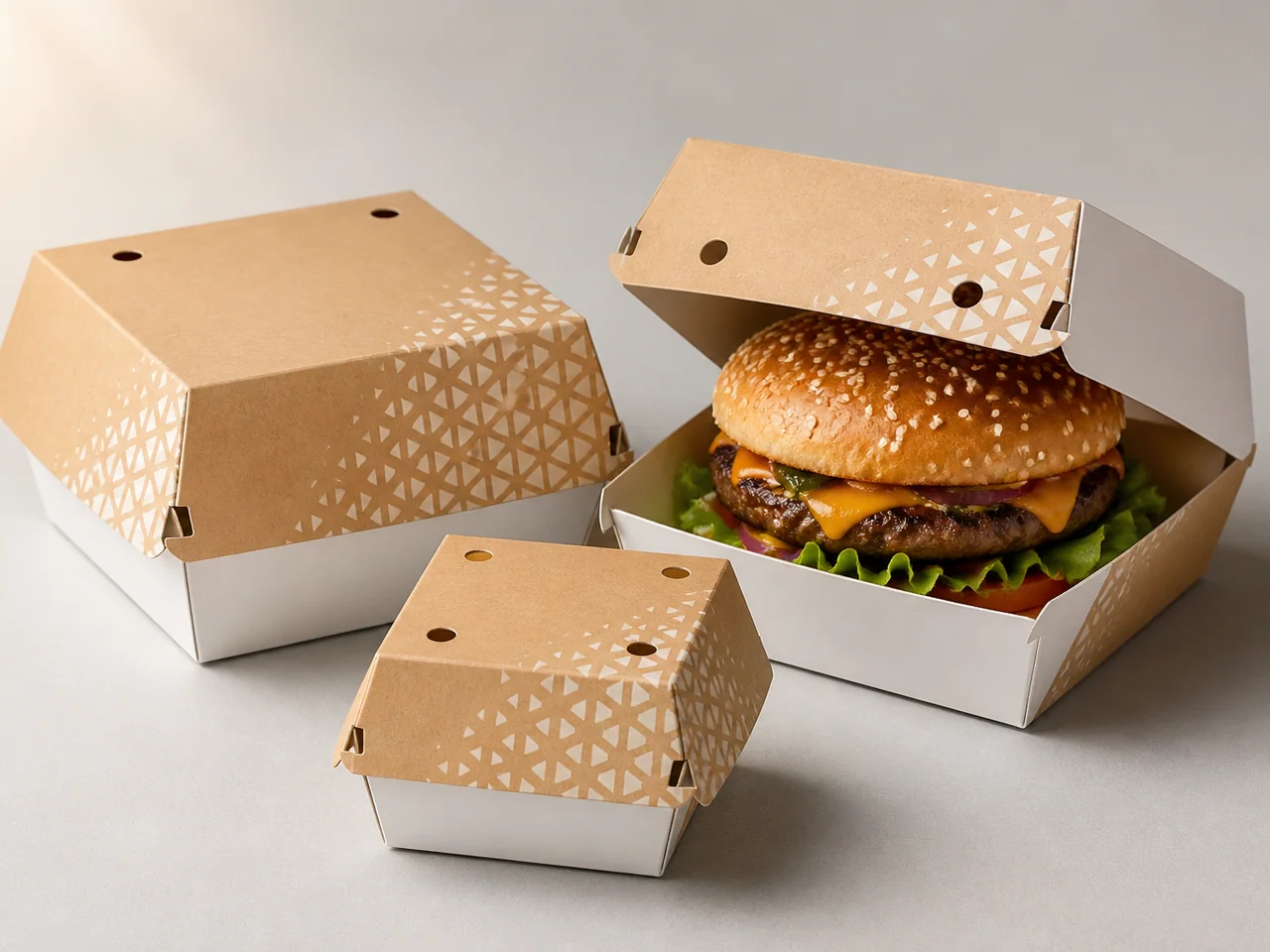
Burger box packaging explained — box sizes by build height, steam venting, grease barriers, PFAS rules, delivery stacking, and how to order custom burger boxes.
FDA food packaging requirements for US brands — food-contact materials, coatings, labeling panels, and specs for your first custom food box order.
Standard size of box and common packaging dimensions — cereal, tissue, milk carton, pizza box sizes, length width height explained, plus box size calculator.
FAQ
Yes. We spec food-grade board with grease-resistant and moisture-barrier coatings so oils from the patty and sauces do not soak through during a 20–30 minute delivery. PFAS-free barrier options are available where state rules require them — tell us your destination states on the quote.
Yes. Die-cut vent holes or slots let steam escape instead of condensing on the bun crown. We place vents on the lid and upper side walls, away from grease contact zones, and size them to the burger footprint so print areas stay clean.
Common footprints are 4×4×3" for sliders, 5×5×3" for a standard single, 6×6×3" for a double, and 7×7×3.5" for stacked or loaded builds. Measure your assembled burger at its tallest point and add roughly half an inch of headroom — we build the dieline from that.
Yes. Full-color CMYK, Pantone spot colors, and interior lid print are all available with food-safe inks. Lid graphics, QR codes for reviews or loyalty, and sauce or allergen panels on the side walls are the most common layouts.
Burger boxes start at 250 units for digital print, which suits a single location or a pop-up testing artwork. Per-unit cost drops meaningfully at 1,000 and again at 5,000 units, so most busy kitchens order quarterly. Production runs 8–12 business days standard after proof approval.
Food-grade SBS or kraft paperboard with a grease-resistant coating handles most single-patty programs. Switch to E-flute food-grade corrugated when deliveries run long, builds are heavy, or bags are stacked deep — it adds insulation and crush resistance for a modest cost increase.
PFAS-free grease barriers are available and are what we recommend by default, since a growing number of US states restrict intentionally added PFAS in food-contact paper. Tell us which states you operate in and we will spec a barrier that complies.
Vent the box and give the burger headroom. Steam that cannot escape condenses on the lid and drips onto the bun crown. Die-cut vents in the upper third of the box plus about half an inch of clearance above the build solve most of it. Keeping fries in a separate container matters too — fry steam is a bigger contributor than the burger itself.
Yes. Window burger boxes suit grab-and-go retail and food halls where the product sells itself visually. Note that the window film complicates curbside recyclability, so brands with sustainability commitments usually keep windows to retail SKUs and run plain board for delivery.
Yes. Combo meal boxes typically run 8 × 6 × 3" with an internal divider so fry steam does not reach the bun. They reduce the number of items per bag, which couriers appreciate, but they cost more per unit than separate containers.
Standard production takes 8–12 business days after proof approval after digital proof approval. Rush production of 3–5 business days is available when quoted. Reorders of an approved design move faster because the dieline is already on file.
Yes, and it is usually the right call. Keep one structure and vary only the print per virtual brand. The pack station holds fewer parts, and consolidating volume across brands moves the whole order into a better price tier.
Uncoated and lightly coated paperboard burger boxes are recyclable where local programs accept food-soiled paper, though heavy grease saturation and window film both work against that. If recyclability is part of your brand messaging, keep finishes simple and check what your main markets actually accept.
Yes. Physical samples are $25, credited toward your first full order, and ship within 5–10 business days. Digital proofs are always free before production.
Brands ordering custom burger boxes often compare these formats before requesting a quote.
Get a custom quote in minutes. No commitment, no pushy sales calls. Just great packaging at a fair price.