
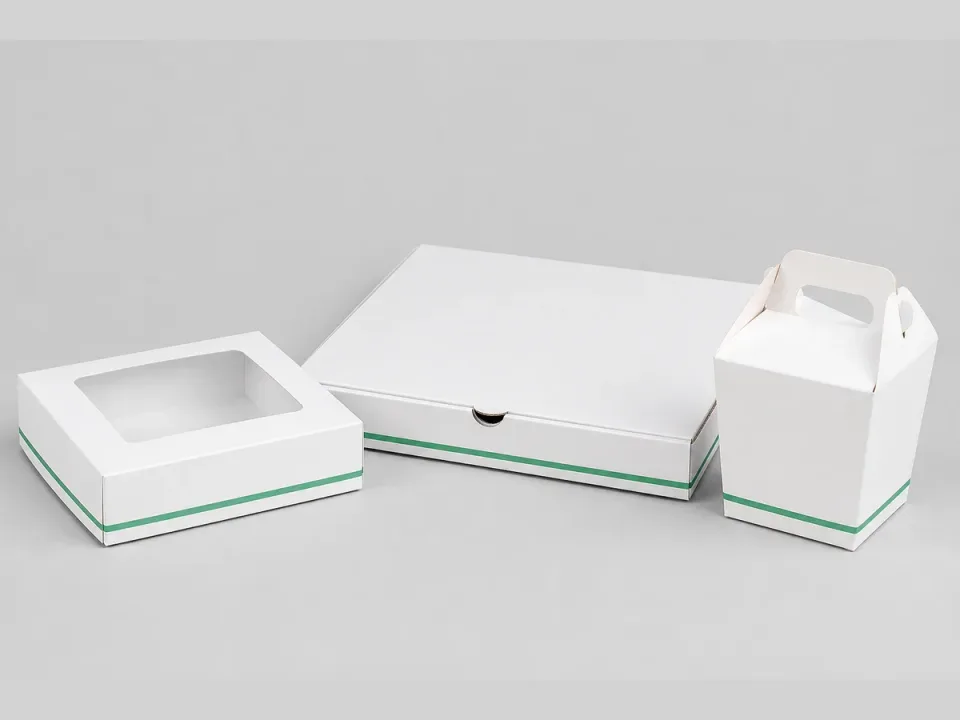
US brands shipping food in custom cartons, mailers, or pouches need packaging that meets FDA food packaging expectations for materials, coatings, and label placement. FDA approved food packaging is not a single stamp — it is a chain of compliant food grade packaging choices matched to how your product contacts the board or film. BoxYourBrand produces end-to-end custom packaging for ecommerce and retail brands.
This guide explains what to specify on purchase orders and proofs. Pair with the custom food packaging guide for format selection and MOQs.
Food-contact vs indirect contact
| Contact level | Example | Material focus |
|---|---|---|
| Direct | Bakery box touching pastry | Food-safe SBS, barrier coatings |
| Indirect | Outer shipper around sealed pouch | General corrugated; pouch carries food contact |
| Dual | Pizza box under hot cheese | Grease-resistant, heat-tolerant coatings |
Tell your supplier the maximum temperature, fat content, and moisture your packaging will see in normal use. Browse food packaging for format specs and MOQ tiers.
Board and coating specs
Food safe packaging boxes commonly use:
- SBS (solid bleached sulfate) — smooth print, bakery and confectionery cartons
- Kraft paperboard — eco positioning; verify coating for greasy foods
- Grease-resistant coatings — pizza, fried foods, chocolate-enrobed candy
- Moisture barriers — ice cream cups, frozen meal cartons (pair with beverage packaging guide)
Uncoated board is rarely appropriate for direct greasy food contact without a liner or inner wrap. Related formats include pizza boxes.
Inks, adhesives, and windows
- Use food-suitable inks for panels that may contact food or migrate through wrappers
- Window films (PET, acetate) must suit food display and storage temperature
- Adhesives on window patches and seals should be flagged for food-adjacent use
Holiday retail windows — see holiday candy packaging 2026 — need the same coating discipline as year-round formats.
Labeling and panel layout
Food packaging labeling requirements (FDA) affect dieline design:
- Principal display panel — product identity and net quantity
- Information panel — nutrition, ingredients, allergen statement
- Allergen disclosure — clear, conspicuous placement
- UPC / barcode zone — keep free of heavy ink coverage
Reserve panel space before creative artwork wraps full bleed. Share FDA-regulated copy with your packaging partner during digital proof — not after plates are made.
Claims and sustainability
Avoid packaging claims your product cannot support:
- “Compostable” — match to home vs industrial facilities
- “Recyclable” — confirm local acceptance for coated board
- “Plastic-free” — verify all laminates and window films
See eco-friendly packaging 2026 for honest environmental messaging.
Spec checklist for food packaging POs
- Food category and contact type (direct / indirect)
- Temperature range in storage and display
- Grease or moisture barrier required (yes/no)
- Label copy with allergen and nutrition panels
- Barcode and lot code placement
- Digital proof signed by brand regulatory owner
Order FDA-compliant food packaging
Get a free quote with your food category, coating needs, and label panel layout — or order samples to validate grease resistance and print on your actual SKU.
Aligning food packaging with FDA labeling realities
FDA-oriented food packaging work is about accurate panels, claims, and materials suitable for contact — not decorating around rules later. Reserve panel space before brand illustration expands.
| Area | Lock early |
|---|---|
| Nutrition / allergen | Quiet, readable panels |
| Claims | Compatible with materials |
| Contact | Direct vs secondary |
| Barcode | Quiet zones |
Compliance-minded food packaging checklist
- List required panels before art.
- Confirm food-contact pathway with supplier.
- Soft-proof regulatory type at final size.
- Keep claims consistent with coatings used.
- Version art carefully across reformulations.
Food-contact notes for regulated packs
Secondary cartons still need careful ink choices when they contact food indirectly. Document assumptions in the PO.
Compliance pitfalls
- Designing brand first and squeezing nutrition later
- Claims that imply certifications you do not have
- Tiny type that fails after print gain
Brief FDA-aware food packaging
Share product category, panel list, and contact type. We will help allocate panels and materials so packaging supports compliance workflows.
Reformulation and packaging version control
When recipes change, panel art must version cleanly. Keep regulatory text in editable layers and track which lots used which art.
Confirm contact pathway. Share panel requirements when briefing food packaging so compliance workflows stay ahead of decoration.