Skip to content

Free packaging tool

Box Size Calculator

Use our custom box size calculator to calculate packaging dimensions, compare internal vs external box size, and get mailer or shipping box recommendations for your products.

This packaging size calculator and shipping box size calculatorruns entirely in your browser. Enter product length, width, height, and weight to generate recommended box dimensions — then request a quote with one click.

Product dimensions

Actual weight including inner packaging, in pounds.

Product details

Adds ~0.5 in clearance per side

0

Recommended Box Size for Your Product

Enter product dimensions to see internal and external box sizes, board suggestions, and mailer or shipping box recommendations.

Estimates only. Final specifications are confirmed by the BoxYourBrand team before production.

Request QuoteOrder samples

How to Use the Box Size Calculator

What Is a Box Size Calculator?

A box size calculator helps ecommerce brands, retailers, and product teams translate product measurements into practical packaging dimensions. Instead of guessing whether a 9×6×3 mailer or a larger shipper fits your SKU, you enter the product's length, width, height, and weight, then add clearance for protection. The tool returns recommended internal dimensions (the cavity your product sits in), external dimensions (the finished box size carriers and warehouses see), and suggestions for mailer boxes, shipping boxes, board thickness, and material.

For custom packaging projects, sizing is one of the first decisions that affects cost, shipping rates, and customer perception. An oversized box wastes corrugated board, requires more void fill, and often triggers higher dimensional weight charges from UPS, FedEx, and USPS. An undersized box crushes product, increases damage claims, and undermines the unboxing experience. A custom box size calculator gives you a defensible starting point before you request tooling or place a production order.

BoxYourBrand's free packaging size calculator is built for brands that ship through Shopify, Amazon, wholesale, or subscription programs. It works entirely in your browser — no account required — and saves your inputs locally so you can refine dimensions over time. When you are ready, send results to our quote form with dimensions pre-filled, or explore custom mailer boxes and shipping boxes for your category.

Whether you call it a shipping box size calculator, box dimensions calculator, or tool to calculate packaging dimensions, the goal is the same: right-size protection, control freight, and present your brand with intention. Use this page alongside our mailer box size guide and Shopify packaging checklist for a complete sizing workflow from first SKU to scale.

Unlike generic carton tables at office-supply stores, a packaging-specific calculator accounts for fragility, product category, and the difference between mailer construction and heavy-duty shippers. That context matters because board grade, closure style, and print surface all influence wall thickness — and therefore external size. Treat calculator output as a structured brief you hand to your packaging partner rather than a final engineering drawing.

Brands launching on crowdfunding or marketplace channels benefit especially from early sizing discipline. A miscalculation discovered after backers receive product is costly to fix publicly. Running each SKU through a box dimensions calculator before you announce fulfillment specs sets realistic expectations and reduces support tickets about damaged goods.

How to Measure Products for Packaging

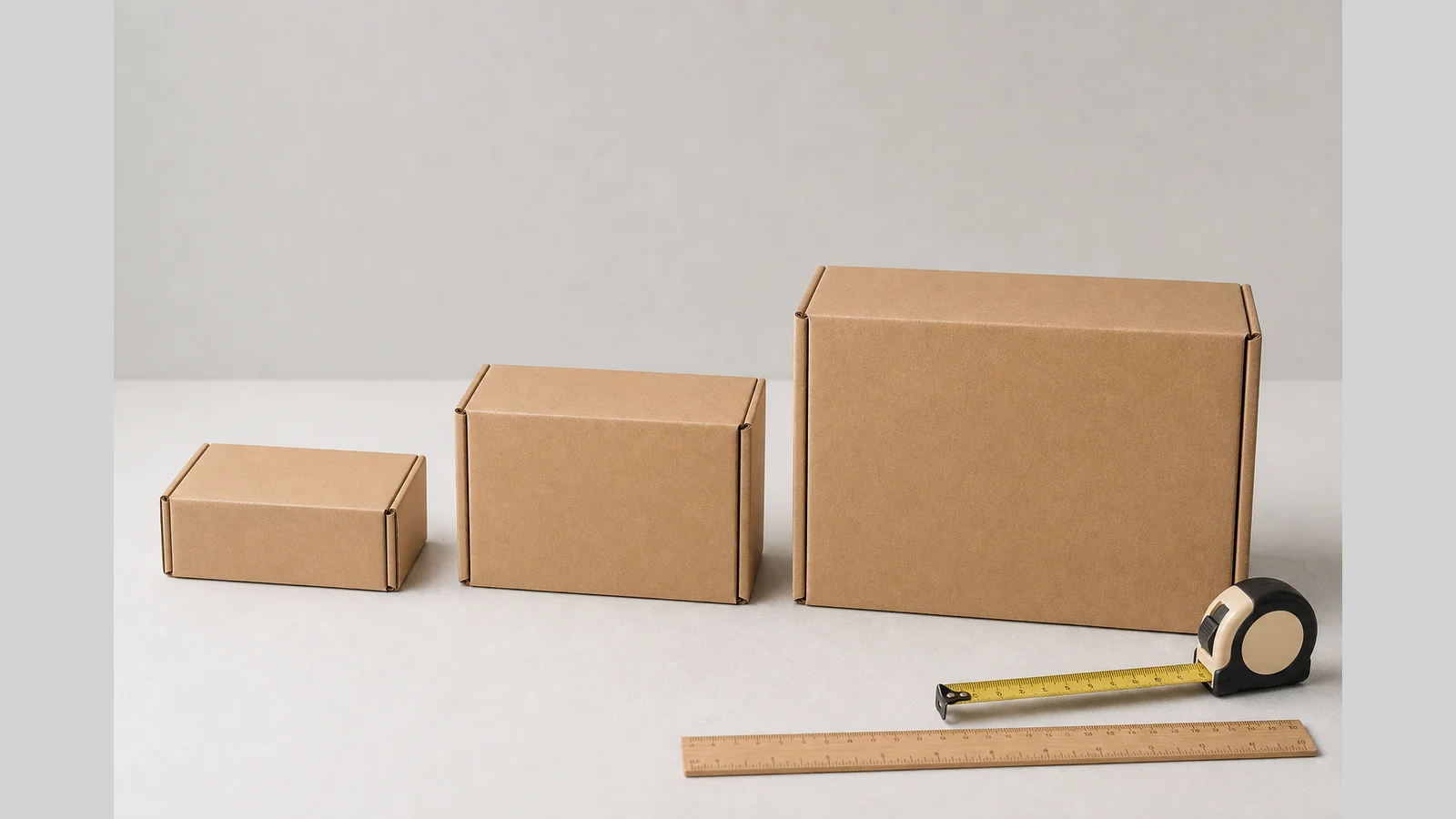
Accurate packaging starts with accurate product measurements. Measure the assembled product — the way it will sit inside the box — not a loose component. For a serum bottle, include the pump and overcap. For apparel, measure the folded bundle as you intend to pack it. For gift sets, arrange items together and measure the combined footprint. Use a flat surface, a rigid ruler or calipers, and record length (longest side), width (second longest), and height (vertical stack).

Always measure the physical unit, not only a supplier spec sheet. Tolerances in molding, stitching, or filling can change fit by millimeters — enough to matter for tight cosmetic inserts or friction-fit cavities. If you ship multiple configurations (single unit vs bundle), create a measurement row for each configuration you plan to pack.

Record weight on a calibrated scale with any inner packaging your customer receives (manuals, sample sachets, etc.). Weight influences whether a mailer box or corrugated shipping box is appropriate and which flute grade carries your product safely. Enter measurements in inches, centimeters, or millimeters; stay consistent when you request a quote so production specs match your calculator output.

Photograph the product next to a ruler for your internal records and share images with your packaging partner when fit is critical. For irregular shapes, measure the bounding box — the smallest rectangular prism that fully contains the item. Odd shapes often need custom inserts; the calculator provides outer cavity dimensions that inserts must fit within.

Before finalizing, simulate transit: shake the prototype pack. If the product shifts, add padding or reduce air space. If the closure bulges, increase height or choose a structurally stiffer board. Measuring once at launch and revisiting when you add SKUs prevents expensive rework on dies and print plates.

Document measurement methodology in your operations wiki so co-packers and 3PL staff measure the same way. A half-inch difference in fold style for apparel can change which mailer tier you need. Consistency across teams keeps your custom box size calculator inputs aligned with what actually ships.

For imported products, confirm whether dimensions are listed in metric or imperial on the factory sheet. Convert once at the source and store both if you sell internationally. The unit selector on this page accepts inches, centimeters, and millimeters so you can work in the system your supplier uses.

Packaging Dimension Guide

Packaging dimensions flow from product size → internal cavity → external finished box. Each step adds material and tolerance. Understanding this chain helps you read a box dimensions calculator output and communicate clearly with suppliers.

Product dimensions are your baseline: maximum length, width, and height of the sellable unit as packed. Clearance is added per side for void fill, tissue, bubble, foam, or die-cut inserts. Fragile goods need more clearance; dense durable goods need less. Our calculator applies a fragility-based allowance plus any extra padding you specify.

Internal box dimensions define the space inside the walls where product and inserts sit. Suppliers quote custom mailers and shippers using interior dimensions because that is what must fit your SKU. External dimensions add wall thickness on each side — E-flute mailers are thinner; B-flute or double-wall shippers are thicker. Carriers and marketplace fulfillment programs use external measurements for DIM weight and oversize rules.

Standard ecommerce mailer tiers — such as 6×4×2, 9×6×3, and 12×9×4 inches — are useful benchmarks, not requirements. Custom sizes that match your product reduce waste and shipping cost. Browse custom packaging boxes across mailers, folding cartons, and shippers to match your channel.

When you calculate packaging dimensions, round sensibly: manufacturing works in fractions of an inch or whole millimeters. Slightly larger internal clearance is safer than forcing a tight fit that fails in summer humidity or after slight product tolerance drift. Document one primary size per fulfillment path (e.g., Shopify default mailer, wholesale case pack) to keep operations simple as you grow.

Length is always the longest horizontal edge of the base footprint; width is the shorter horizontal edge; height is the vertical closing dimension. Rotating a product can change which axis is length vs width but not the volume. Suppliers may ask for dimensions in different orders — always label L × W × H when sharing specs.

Include dunnage in your mental model even if you do not model it separately: air pillows, molded pulp, and honeycomb pads consume space. The extra padding slider on this tool is where you approximate those materials without modeling each layer individually.

Internal vs External Dimensions

Confusing internal and external dimensions is one of the most common causes of mis-sized orders. Internal dimensions (ID) describe the usable cavity — the space available for product and inserts after the box is erected. When you say "I need a 8×6×4 box for my product," suppliers usually need to know whether you mean inside or outside.

External dimensions (OD) describe the finished outer size of the closed box. Shipping labels, cubing software, pallet planning, and carrier DIM weight formulas use external measurements. A mailer with a 9×6×3 inch exterior may have a slightly smaller interior because corrugated walls consume space — typically a few millimeters per side for E-flute.

Wall thickness depends on board grade. E-flute (~0.06 inch per wall) is common on custom mailer boxes where print quality and unboxing matter. B-flute (~0.12 inch) and double-wall BC combinations are common on corrugated shipping boxes where stacking strength and burst resistance matter. The calculator estimates wall thickness and shows both ID and OD so you can paste the right numbers into quotes and carrier tools.

For retail folding cartons (paperboard), caliper is stated in points (pt) rather than flute. Small cosmetic packaging boxes may use 16–18pt SBS for tuck cartons on shelf, while ecommerce mailers use corrugated. If you sell in retail and DTC, you may need two dimension sets — one for shelf cartons and one for shipper mailers.

Rule of thumb: spec internal dimensions when defining product fit; spec external dimensions when modeling shipping cost and warehouse storage. Our calculator displays both and labels them clearly so your team and supplier align before production.

Marketplace listings sometimes require package dimensions for fee previews. External box size feeds those fields. If your listing shows product dimensions only, do not confuse the two — customers care about product size; carriers care about parcel size.

When comparing quotes from multiple suppliers, verify each quote uses the same ID/OD convention. A lower unit price on misunderstood dimensions often disappears when the box arrives too small. Paste calculator output directly into RFQs to reduce ambiguity.

Ecommerce Packaging Guide

Ecommerce packaging must protect in transit, photograph well for social sharing, and stay economical at scale. The right box size supports all three. Most direct-to-consumer brands center on custom mailer boxes for single-line orders: self-locking corrugated with full-color exterior and optional interior print. Mailers signal brand quality the moment the parcel arrives.

Start by ranking SKUs by order volume. Size for the top 20% of shipments first — that is where savings compound. Use this packaging size calculator for each hero SKU, then cluster sizes: many brands end with one small and one medium mailer plus a shipper for heavy bundles. Avoid the trap of one oversized "universal" box; it inflates DIM weight on lightweight orders.

Add branded inserts, tissue, and stickers into your sizing plan. A thank-you card tucked under a product lid consumes vertical space. Subscription brands should size for the largest planned monthly configuration or use variable inserts while keeping exterior dimensions consistent for operational efficiency.

Integrate sizing with your 3PL or in-house fulfillment software. External dimensions feed cartonization logic. If your warehouse auto-selects cartons, feed it accurate OD values from this calculator. For Shopify sellers, align mailer size with your default shipping profile to avoid surprise surcharges.

When you outgrow stock sizes, transition to custom dielines. BoxYourBrand offers low MOQs on mailer boxes so you can test calculated dimensions with physical samples before committing to volume. Pair calculator output with our sample program to validate fit and unboxing presentation.

Photography and influencer kits are part of ecommerce packaging strategy. If you include non-essential items seasonally, decide whether to size for peak kit configuration or use variable inserts while keeping the exterior mailer constant. Consistent exterior dimensions simplify freight forecasting even when interior layouts change.

Returns logistics also benefit from right-sizing: a compact, well-proportioned box stores efficiently if customers send product back. Oversized return cartons cost you twice — outbound and inbound — when you provide prepaid return labels.

Shipping Packaging Guide

Shipping packaging prioritizes damage prevention and carrier compliance. When orders exceed roughly ten pounds, include heavy glass multiples, or ship business-to-business, corrugated shipping boxes in regular slotted container (RSC) style often outperform mailers on strength per dollar. The calculator flags when a shipper is likely the better primary recommendation.

Carriers bill on the greater of actual weight or dimensional weight. DIM weight equals package volume divided by a carrier-specific divisor (commonly 139 for domestic UPS/FedEx ground). A lightweight product in a large box can be charged as if it weighed far more. Right-sizing external dimensions is a direct lever on margin, especially for free-shipping offers.

Check carrier size thresholds: oversize length plus girth limits, large package surcharges, and cubic pricing tiers for USPS. Staying just under a threshold can materially cut cost. If you sell on Amazon FBA, confirm dimensions against their prep and storage size brackets before production.

Double-wall corrugated may be warranted for heavy electronics, industrial parts, or high-fragility goods. The calculator suggests BC double-wall when weight and fragility thresholds indicate higher burst strength. Pair with internal foam or molded pulp when product value justifies it.

Label external dimensions on your spec sheet shared with fulfillment. Include closure orientation (tuck vs RSC tape) and weight limits tested in drop protocols if you ship fragile goods. Request a custom packaging quote with calculator dimensions to get board grade, print, and freight options tailored to your shipping zone mix.

International shipments add customs and volumetric rules that differ by lane. Domestic DIM divisors are a starting point; export programs may use different factors. Re-run sizing when you open a major new country if freight mix shifts materially.

Palletization for wholesale may require exterior dimensions that match standard case footprints. If you ship both DTC mailers and master cartons, maintain two calculator profiles — consumer pack and case pack — linked by quantity break rules.

Common Packaging Sizing Mistakes

Oversizing is the costliest and most frequent error. Brands pick a large box "just in case," then pay for DIM weight, extra void fill, and a sloppy unboxing. Customers associate rattling product with low quality. Use calculated internal dimensions plus justified padding — not arbitrary extra inches.

Ignoring assembled height causes failures on pumps, sprayers, and hang tags. Measure once the product is retail-ready. Cosmetics and personal care are especially sensitive; a 2 mm cap tolerance can break a friction-fit insert design.

Forgetting inserts and dividers leads to boxes that fit the product but not the experience. Tissue, cards, and molded pulp consume volume. Subscription kits need layout planning, not only single-SKU math.

One box for every SKU simplifies purchasing but hurts unit economics. Maintain a small size library tied to order volume. Use the calculator per SKU, then consolidate to two or three fulfillment sizes.

Confusing inside vs outside dimensions when quoting suppliers creates boxes that are too small by the thickness of four walls. Always confirm whether a dimension is ID or OD before approving a dieline.

Skipping samples before a full run is risky for new structures. Calculator output is an estimate; physical samples validate fit, print registration, and assembly on your packing line. Order samples when launching a new size or format.

Using supplier stock sizes without testing your hero SKUs leads to compromise fits. Stock may be close but not optimal. A few millimeters of unnecessary width multiplied by thousands of orders becomes real money in freight and board.

Revisit sizing after major product refreshes — new caps, bundles, or sustainability swaps (glass to aluminum, for example) change weight and fragility profiles. Treat packaging as a living spec tied to product version numbers.

Industry Packaging Recommendations

Cosmetics & beauty: Small folding cartons for retail with tight inserts (2–3 mm clearance) protect glass and pumps. DTC beauty often ships in white or kraft mailer boxes with die-cut inserts. Explore cosmetic packaging boxes for SKU-specific structures — lipstick, serum, and sample kits each have different aspect ratios.

Apparel & accessories: Folded garments are forgiving but bulky. Medium mailers around 9×6×3 inches cover many tees and accessories; size for a clean fold rather than maximum compression. Soft goods rarely need heavy void fill but benefit from consistent exterior dimensions for branding.

Food & beverage: Size with liners, cold packs, or inner bags included. Grease-resistant coatings and sturdier board prevent oil bleed and crush. Add vertical clearance for shaken contents and comply with food-contact material rules when quoting.

Electronics & tech: Prefer snug fit with foam or molded inserts and consider B-flute or double-wall shippers. High fragility and product value favor shipping boxes over thin mailers. Weight and shock protection drive board choice more than print area.

Subscription boxes: Size for curated multi-item layouts, not single-product peaks. Consistent exterior dimensions simplify packing SOPs and customer expectations. Interior print and dividers define perceived value — allocate height for presentation.

General merchandise: Use the general category in the calculator, then refine with fragility settings. Most mixed-catalog brands use a small and medium mailer plus a corrugated shipper for outliers. When ready to produce, request a quote with your calculated dimensions and monthly ship volume so MOQ aligns with demand.

Across industries, the workflow is identical: measure truthfully, pad appropriately, compare internal and external dimensions, then produce custom packaging at the size your data supports. Browse custom packaging boxes by category or talk with our team if you need engineering review on unusual shapes or heavy assemblies.

Health and supplement brands straddle cosmetics and food rules — child-resistant closures, desiccants, and glass bottles may require higher fragility settings and shippers instead of thin mailers. Use category and fragility together rather than relying on product type alone.

If you are migrating from poly mailers to branded corrugated mailers, re-run the calculator with the same product dimensions — you may need slightly larger interior clearance because corrugated walls are stiffer than film. The upgrade is worth it for perceived quality, but sizing must be recalculated rather than copied from bag dimensions.

Save a shareable link from the calculator when collaborating with designers, co-packers, or investors. Everyone reviews the same numbers without re-entering measurements, which shortens approval cycles before you commit to print plates and cutting dies.

Box size calculator FAQ

Common questions about how to measure products, interpret internal and external dimensions, and ordercustom mailer boxes orcorrugated shipping boxes.

What is a box size calculator?

A box size calculator is a tool that converts your product dimensions into recommended packaging dimensions. You enter length, width, height, and product details; the calculator adds padding allowance and suggests internal box size, external box size, and a mailer or shipping box format.

How do I measure my product for packaging?

Measure the assembled product at its longest, widest, and tallest points. Include caps, pumps, hangers, or overcaps. Use a rigid ruler or calipers and record dimensions in inches or centimeters. Measure the real item, not only a spec sheet, because manufacturing tolerances affect fit.

What is the difference between internal and external box dimensions?

Internal dimensions describe the usable cavity inside the box where your product sits. External dimensions include board thickness on every side and represent the finished outer size used for shipping labels, carrier scans, and dimensional weight calculations.

How much padding should I add inside a shipping box?

Most ecommerce products need roughly 0.25 to 0.5 inches of clearance per side for tissue or void fill. Fragile glass, ceramics, or electronics often need 0.75 inches or more plus structured inserts. Our calculator adds padding based on fragility level and any extra clearance you specify.

What are standard mailer box sizes for ecommerce?

Common starting tiers are 6×4×2 inches for small goods, 9×6×3 inches for apparel and mid-size DTC products, and 12×9×4 inches for gift sets or multi-item orders. Most brands use two or three custom sizes rather than one stock box for every SKU.

When should I use a mailer box instead of a corrugated shipping box?

Mailer boxes suit lightweight DTC orders where branding and unboxing matter. Corrugated shipping boxes (RSC style) are better for heavier, fragile, or bulk shipments above roughly 10 pounds or when you need higher burst strength and double-wall protection.

Does box size affect shipping cost?

Yes. Carriers bill on actual weight or dimensional (DIM) weight, whichever is higher. Oversized boxes increase DIM weight and waste void fill. Right-sizing your packaging is one of the fastest ways to lower per-order shipping cost without changing your product.

Can I order custom box sizes that are not standard?

Yes. BoxYourBrand manufactures custom mailer boxes and corrugated shipping boxes to your exact interior dimensions. A box size calculator gives you a starting point; our team confirms board grade, style, and dieline before production.

What unit should I use — inches, centimeters, or millimeters?

US ecommerce brands typically spec in inches. Metric is common for cosmetics, EU retail, and supplier tooling. Our calculator accepts all three and converts results to your selected unit. When requesting a quote, use the same unit you measured in.

How do I size packaging for multiple products in one box?

Arrange items as they will actually ship — folded, nested, or side by side — then measure the combined footprint. Add padding for dividers, tissue, or molded inserts. Subscription and gift sets often need a larger tier than single-SKU mailers.

What is E-flute vs B-flute corrugated?

E-flute is thinner with a smoother print surface, common on mailer boxes. B-flute is thicker and stronger, typical on shipping boxes. The calculator suggests board thickness based on product weight, fragility, and whether a mailer or shipper is recommended.

Do cosmetic boxes need different sizing than mailer boxes?

Retail folding cartons for cosmetics are often tighter with 2–3 mm insert clearance around glass or pumps. Ecommerce mailers for beauty brands need more room for void fill and branded tissue. Use the cosmetics category in the calculator for white-top board and tuck-carton guidance when products are small.

How tight should a product fit inside a box?

The product should not move freely in transit but should not be crushed. Snug fit with an insert is ideal for glass bottles. Apparel can tolerate more air space if folded cleanly. If the product rattles, increase padding or downsize the cavity.

What is dimensional weight?

Dimensional weight is a carrier billing method based on package volume. It is calculated from length × width × height divided by a carrier divisor. Light products in large boxes are often charged as if they weighed more than they do.

Should I size for the product or for the shipping label?

Size for product protection first, then confirm the external dimensions fit your carrier’s limits and rate tiers. External dimensions appear on labels and tracking. Internal dimensions define how your product and inserts fit.

Can I save my calculator results?

Yes. This calculator saves your inputs and results in your browser using localStorage so you can return later on the same device. You can also copy a shareable link with your dimensions encoded in the URL.

How do I send calculator results to get a quote?

Click Request Quote to open our quote form with your length, width, height, and unit pre-filled. Add quantity, packaging type, and any print or material preferences. A packaging specialist typically responds within two business hours.

What if my product is an odd shape?

Measure the bounding box — the smallest rectangular prism that contains the entire product. Irregular shapes may need die-cut inserts or custom dielines. Share photos and dimensions when you request a quote so engineering can recommend the right structure.

Are calculator results guaranteed for production?

No. Results are estimates to help you plan. Final specifications are confirmed by BoxYourBrand after review of your product, channel, and artwork. Always order samples before a full production run when fit is critical.

What box style is best for Shopify brands?

Most Shopify sellers start with custom mailer boxes for branded unboxing on single-item orders and add corrugated shipping boxes for heavy or multi-item shipments. Right-size both formats to control dimensional weight on every order.

How do I size food packaging boxes?

Include inner wrappers, liners, or insulation in your measurements. Food products often need grease-resistant coatings and sturdier board. Add extra clearance for cold packs or dividers if you ship perishables or assortments.

What mistakes do brands make when choosing box size?

The most common errors are oversizing (higher shipping cost and rattling product), forgetting assembled dimensions, ignoring inserts, and using one box for every SKU. A packaging size calculator helps you avoid these before you commit to tooling.

Do I need different boxes for retail vs ecommerce?

Often yes. Retail folding cartons prioritize shelf presence and planogram depth. Ecommerce mailers prioritize transit protection and unboxing. Some brands spec both; share your channels when quoting so dimensions align across fulfillment.

How many box sizes does a growing brand need?

Many DTC brands settle on two or three sizes covering roughly 80% of orders — for example a small mailer for accessories and a medium mailer for core SKUs, plus a shipper for heavy bundles. Add sizes only when a meaningful order volume justifies it.

Can BoxYourBrand help if I only know my product weight?

Weight alone is not enough for sizing, but it helps select board grade and mailer vs shipper. Enter product dimensions and weight in the calculator, then request a quote. Our team can recommend structure if you need hands-on sizing support.

Ready to produce your custom box size?

Send your calculator dimensions for a free quote. Low MOQs, custom print, and fast turnaround for ecommerce brands.

  • Packaging specialists
  • Response within 2 hours
  • No obligation quote