
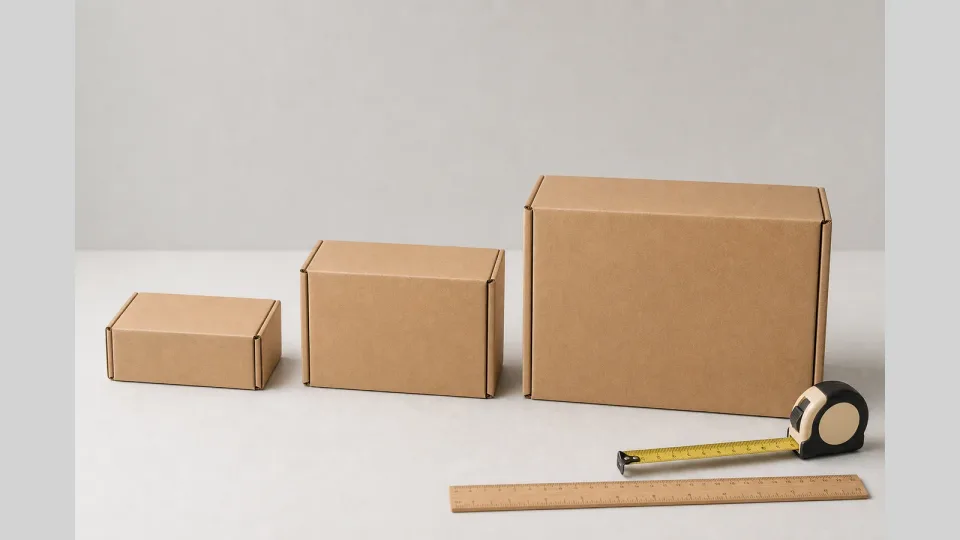
Box size is one of the most underestimated decisions in ecommerce. Pick a box that is too big and you pay for shipping air, waste material, and let products rattle around in transit. Pick one that is too small and you risk crushed goods and damaged returns. The right mailer box size protects your product, controls your shipping cost, and shapes how customers feel the moment they open the package. BoxYourBrand produces end-to-end custom packaging for ecommerce and retail brands.
This guide walks through exactly how to choose the right size, from standard dimensions to a step-by-step method, common mistakes, cost impact, and real examples by product category. Custom mailer boxes for ecommerce are the go-to format for most direct-to-consumer brands because they are sturdy, fold flat, assemble without tape, and print beautifully, so getting their size right pays off on every single order. Related formats include corrugated shipping boxes.
Key takeaways
- Measure product L×W×H with inner packaging before picking a mailer SKU.
- Document one default mailer for ~80% of orders to simplify fulfillment.
- Run dimensions through the box size and DIM weight calculators before quoting.
- Interior print and inserts do not change outer cube — include them in sizing.
Why Mailer Box Size Matters
Size is not a cosmetic choice. It affects four things that directly hit your bottom line and your brand. Use the quote wizard to compare quantity tiers side by side.
Shipping Cost Optimization
Carriers no longer charge by weight alone. Most use dimensional weight shipping (also called DIM weight), which prices a parcel based on the space it occupies, not just how heavy it is. A light product in an oversized box can be billed as if it weighed far more, because the box volume drives the rate. Right-sizing your mailer is the single most reliable way to lower shipping cost on lightweight ecommerce orders. See our USPS cubic packaging guide for the next decision in your workflow.
Product Protection During Transit
A box should fit the product with just enough room for protection. Too much empty space lets items shift and collide with the walls; too little leaves no room for padding and risks crushing. Correct sizing keeps the product stable so it arrives the way it left your warehouse.
Customer Unboxing Experience
A snug, well-fitted box feels intentional. When a customer opens a mailer and the product sits neatly in place, the experience reads as premium. A product swimming in void fill, or stuffed in too tightly, undercuts that feeling no matter how good the item is.
Brand Perception
Branded mailer boxes are a visible extension of your brand. The proportions matter: a box that fits well photographs better, stacks better, and signals that you care about the details. Size is part of how customers judge quality before they even touch the product.
Standard Mailer Box Sizes (With Examples)
Mailer boxes come in a wide range, but most ecommerce products fall into three common tiers. Dimensions are listed as length x width x height in inches.
Small — 6 x 4 x 2 inches
Best for compact, lightweight items: jewelry, cosmetics, supplements, phone accessories, enamel pins, or single small goods. Small mailers keep dimensional weight low, which is ideal for high-volume, low-cost products where every cent of shipping matters.
Medium — 9 x 6 x 3 inches
The most versatile size. Medium mailers suit apparel (folded tees, accessories), mid-size beauty sets, books, and most standard DTC products. If you sell a range of items and want a single workhorse box, this tier is usually the right starting point.
Large — 12 x 9 x 4 inches
For bulkier or multi-item orders: shoes, larger apparel, gift sets, bundled products, and many subscription boxes. Large mailers give room for inserts and presentation, but watch dimensional weight closely, since the added volume raises shipping cost fastest in this tier.
A practical note: most brands end up needing two or three sizes, not one. Offering a small and a medium, for example, lets you match the box to the order instead of defaulting everything into one oversized format.
How to Choose the Right Size
Use this step-by-step method to size any product correctly.
Step 1: Measure Your Product Dimensions
Measure the product at its longest, widest, and tallest points. If you ship multiple items together, arrange them as they will actually pack and measure the combined footprint. Always measure the real product, not the spec sheet, since tolerances vary.
Step 2: Add Padding and Insert Space
Add room for protection. As a rule of thumb, allow roughly a quarter to half an inch of clearance on each side for lighter goods, and more for fragile items that need foam, molded pulp, or die-cut inserts. If you plan to use tissue paper, cards, or dividers, account for that space too.
Step 3: Consider Shipping Carrier Rules
Check your carrier’s dimensional weight divisor and any size thresholds that bump a parcel into a higher rate tier. Staying just under a key dimension can meaningfully cut cost. If you sell through Amazon FBA, confirm the box meets their prep and dimension requirements before committing to a run.
Step 4: Think About Branding Presentation
Finally, picture the open box. The product should be the focal point, framed by your interior print, insert, or tissue. The best size protects the product, satisfies the carrier, and still looks deliberate when the customer lifts the lid. Ordering samples at this stage confirms the fit before you produce at scale.
Common Mailer Box Sizing Mistakes
These four errors quietly drain margins and hurt the customer experience.
- Choosing oversized boxes. The most common and most expensive mistake. Oversized mailers inflate dimensional weight, require more void fill, and feel cheap when the product rattles inside.
- Ignoring internal packaging space. Forgetting to account for inserts, tissue, or padding means the product technically fits but has no room for protection, leading to damage.
- Not accounting for product movement. A box sized to the product’s static dimensions but with loose clearance lets items slide during transit. Plan for how the product sits and shifts, not just whether it fits.
- Forgetting shipping cost impact. Designing a beautiful box without checking dimensional weight can turn a profitable order into a break-even one. Always validate the size against real shipping rates.
Cost Impact of Box Size
Understanding the math makes the case for right-sizing obvious.
Dimensional weight is calculated from the box’s volume divided by a carrier’s DIM divisor. The billed weight is the greater of the actual weight or the dimensional weight. For light products, the dimensional weight almost always wins, which means your box size, not your product weight, sets your shipping cost.
Here is what that means in practice. Take a lightweight 8-ounce product. Ship it in a snug small mailer and you pay a low rate. Drop the same product into a large mailer and the parcel may be billed as if it weighed two or three pounds, multiplying the cost per order. Across thousands of shipments, that gap is the difference between healthy margins and shipping eating your profit.
Correct sizing improves margins in three ways at once: lower dimensional weight per parcel, less spend on void fill and padding, and fewer damage-related refunds and replacements. Right-sizing is one of the few packaging decisions that saves money on every order without compromising quality.
Industry-Specific Sizing Examples
Different categories have different sizing logic. Here are practical starting points.
Cosmetics
Small mailers (around 6 x 4 x 2) work for single items like a serum or lipstick, while medium mailers suit curated sets. Cosmetics benefit from snug inserts that hold fragile glass bottles in place and present the products cleanly for the unboxing photo.
Apparel
Folded apparel is forgiving but bulky. A medium mailer (around 9 x 6 x 3) handles most tees and accessories; move to large for multi-item orders or heavier knits. Apparel rarely needs heavy padding, so size for a clean fold rather than crush protection.
Food Products
Food packaging often needs extra structural protection and sometimes insulation or barrier layers. Size with the protective layer included, and prioritize durable corrugated board so products survive transit without crushing or leaking.
Subscription Boxes
Subscription box packaging is usually medium to large, because the experience depends on presentation: multiple items, dividers, tissue, and a card. Consistency matters here, since subscribers receive the same box repeatedly. Size for the curated layout, not just the contents.
Electronics
Electronics need precise fit and shock protection. Use snug sizing with foam or molded inserts so components cannot shift. For higher-value items, a slightly more substantial box reinforces the premium, protected feel that customers expect from tech.
How BoxYourBrand Helps With Mailer Sizing
Once you know the dimensions you need, the next step is producing them without overcommitting. This is where a flexible custom mailer boxes partner makes the difference.
BoxYourBrand manufactures custom-sized mailer boxes built to your exact product dimensions, so you are not forced to fit your product into a stock size that wastes space and inflates shipping. We work with ecommerce brands at every stage with low minimum order quantities, fast production, and global shipping, which makes it practical to test a size, refine it, and scale the version that works. If you sell across categories, we can help you settle on the small set of sizes that cover your catalog efficiently.
A smart starting path: measure your top-selling products, choose two or three target sizes, and order samples to confirm fit and presentation before your first full run.
Mailer Box Sizing — Final Takeaways
Mailer box size is not a detail to settle at the end; it is a core ecommerce decision that affects shipping cost, product protection, and brand perception on every order. Brands that right-size their packaging spend less on dimensional weight, lose fewer products to damage, and deliver a cleaner unboxing experience that customers remember.
Measure carefully, plan for protection, validate against carrier rules, and test samples before you commit. Get the size right and your packaging quietly works in your favor, order after order.
Need custom-sized mailer boxes for your products? Request a free packaging quote and optimize your packaging today.