
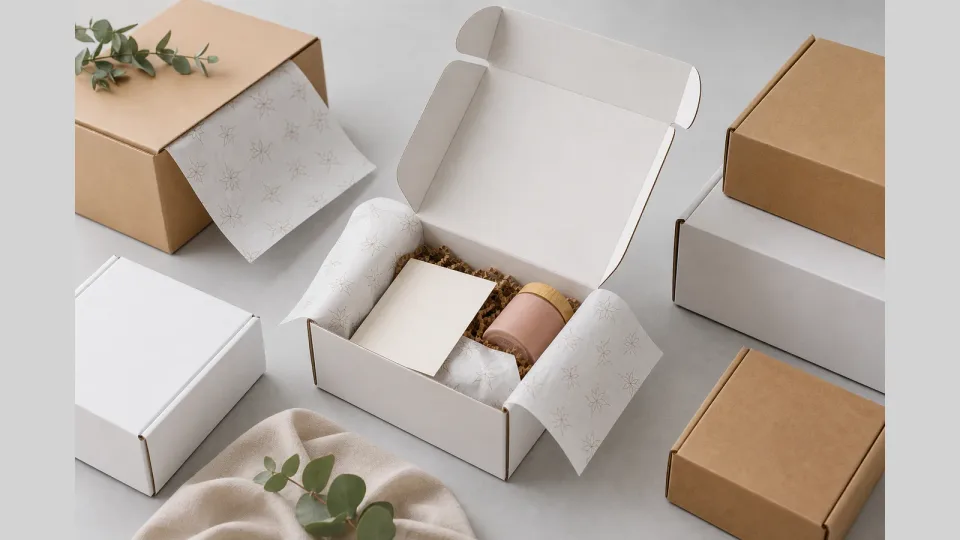
Launching or scaling a Shopify store means dozens of decisions about product, pricing, and fulfillment — and packaging is the physical touchpoint every customer judges at the door. A practical Shopify packaging checklist covers right-sized mailer boxes, carrier-compliant dimensions, branded unboxing, and a process that scales when order volume jumps. Start from custom packaging specs or the ecommerce packaging guide before your first production run.
Use this checklist before your first production run and revisit it whenever you add SKUs, change carriers, or refresh your brand.
Key takeaways
- Pick one primary ship format — usually a right-sized mailer — before adding secondary shippers.
- Validate outer dimensions against carrier limits and DIM weight for your primary service.
- Brand exterior and interior panels; photograph unboxing before peak season.
- Confirm 3PL carton library compatibility before MOQ commits.
1. Define Your Primary Ship Format
Validate board feel and print quality with packaging samples before locking production MOQ.
Every Shopify brand needs at least one core outbound format. For most DTC sellers, that is a custom mailer box for single-item or small multi-item orders. Heavier, bulkier, or fragile shipments may need a corrugated shipping box instead — or mailers for lightweight orders and shippers for everything above a weight threshold.
Checklist items:
- Measure your largest and smallest SKU (L × W × H with padding allowance)
- Choose mailer vs. shipper based on weight and fragility
- Confirm the box fits carrier size limits for your primary service (USPS, UPS, FedEx)
- Document one “default” box size for 80% of orders
2. Right-Size for Product Protection and Shipping Cost
Oversized boxes waste money on dimensional weight and let products shift in transit. Undersized boxes crush goods and drive returns.
Checklist items:
- Add 0.5–1 inch clearance per dimension for void fill or inserts
- Test fit with your heaviest and most fragile SKU
- Calculate dimensional weight at your chosen dimensions against carrier rates
- Plan a second smaller size if you have a distinct lightweight SKU line
3. Brand the Exterior (and Consider the Interior)
Shopify customers judge quality from the moment they see the package. Exterior print with your logo, brand colors, or a simple pattern turns a shipper into marketing. Interior print — a thank-you message, social handle, or brand story — costs more but drives shares and repeat visits.
Checklist items:
- Supply vector logo and brand hex colors to your packaging partner
- Decide exterior-only vs. inside-and-out print
- Keep copy timeless (avoid dates or one-time promo codes on the box itself)
- Ensure artwork meets bleed and safe-zone specs before print approval
4. Plan Inserts and Void Fill
The box is the frame; inserts and fill are what keep product safe and elevate unboxing.
Checklist items:
- Choose void fill: tissue, crinkle paper, molded pulp, or custom insert
- Add a thank-you card or QR code linking to reviews, social, or a discount
- Include return instructions if you accept returns
- Keep insert MOQ and assembly time in mind for fulfillment
5. Align with Your Fulfillment Workflow
Whether you pack in-house, use a 3PL, or run a hybrid model, packaging must work on the packing line — not just in a photo.
Checklist items:
- Confirm boxes ship flat and assemble quickly (self-locking mailers save tape labor)
- Standardize SKUs so pickers know which box goes with which product
- Store flat-packed inventory with clear labels (size, version, reorder date)
- Share box specs and assembly notes with your 3PL before the first inbound shipment
6. Meet Carrier and Marketplace Requirements
Shopify connects to many carriers and channels. Packaging that works for Shopify Shipping may also need to satisfy Amazon FBA, TikTok Shop, or international customs rules if you sell beyond your own storefront.
Checklist items:
- Verify weight and dimension limits for your primary carrier service
- Use ISTA-appropriate board grade if you ship fragile goods
- For international orders, confirm customs invoice placement (outside the box)
- If using FBA, check Amazon prep and labeling requirements separately
7. Build Sustainability Into the Default
Customers increasingly notice excess material and non-recyclable plastics. Sustainable defaults do not require a full rebrand — kraft board, right-sizing, and recyclable void fill go a long way.
Checklist items:
- Prefer recyclable corrugated over poly mailers where product protection allows
- Minimize void fill by right-sizing
- Add a recyclability note on the box or insert
- Document sustainability claims you can support (recycled content %, certifications)
8. Set MOQ and Reorder Triggers
Running out of branded boxes mid-peak season forces you into plain shippers that break the customer experience. Plan inventory like any other SKU.
Checklist items:
- Order enough for 2–4 months at current ship rate (see our MOQ guide)
- Set a reorder point when inventory hits 4–6 weeks of cover
- Keep print files and die specs on file for faster reorders
- Budget lead time (typically 7–12 business days standard production)
9. Test the Full Unboxing Before Scale
One prototype is not enough. Run a pilot with real products, real carriers, and real customers (or team members acting as customers).
Checklist items:
- Ship five test packages through your actual carrier to different zones
- Inspect for damage, print scuffs, and assembly failures
- Photograph the unboxing sequence for social and ads
- Collect feedback on perceived quality vs. product price point
10. Document and Train
Packaging knowledge should not live in one person’s head. Document choices so new hires and 3PL partners pack consistently.
Checklist items:
- Create a one-page packing guide (SKU → box → fill → insert)
- Note tape requirements (if any) and branding sticker placement
- Include photos of correct vs. incorrect pack jobs
- Review quarterly as SKUs and order mix change
Quick Reference: Shopify Packaging Stack
| Layer | Purpose | Common choice |
|---|---|---|
| Outer box | Protection + brand | Custom mailer or RSC shipper |
| Void fill / insert | Product security | Tissue, crinkle, custom insert |
| Insert card | Retention + CX | Thank-you, QR, care instructions |
| Exterior label | Carrier + tracking | Shopify-generated shipping label |
Ready to Check Off Your List?
A Shopify packaging checklist is only useful when it connects to real specs and a production timeline. If you have product dimensions, monthly order volume, and a target launch date, request a free quote and a packaging specialist can recommend mailer sizes, MOQ tiers, and print options that fit your store — so your first Shopify shipment looks as intentional as your product page.