For an online brand, packaging is the only physical touchpoint you have with a customer. They never see your warehouse, your team, or your storefront. They see a box on a doorstep. That single moment decides whether someone feels they bought from a serious brand or a random seller, and it happens before they ever touch the product inside. Related formats include custom plastic packaging.
This guide explains how custom packaging for ecommerce actually works in 2026, from box types and materials to customization, cost, and the brand impact that justifies the investment. Whether you run a Shopify store, sell on Amazon, or ship a monthly subscription, the goal is the same: help you make smarter packaging decisions that protect products, lift your brand, and keep margins healthy.
Key takeaways
- Lock outer format (mailer, poly, shipper) before investing in interior print and inserts.
- MOQs from 50 units on mailers make pilot runs practical for new Shopify brands.
- Digital proofs and optional physical samples de-risk first production runs.
- Document one default outer size per major SKU to keep fulfillment rules simple.
Why Packaging Is Critical in Ecommerce
In a physical store, packaging competes for attention on a shelf. In ecommerce, packaging is the experience. The unboxing moment is your brand’s first impression, and first impressions compound. A clean, well-fitted, branded box signals quality and care. A flimsy, oversized, or generic box quietly tells customers the opposite, even if the product inside is excellent. Use the quote wizard to compare quantity tiers side by side.
Packaging also does real commercial work. It reduces damage and returns, encourages social sharing, and increases the perceived value of what is inside. Brands that treat packaging as a growth lever, rather than a shipping cost, tend to see stronger repeat purchase rates and more organic reach. The box is marketing that customers pay you to receive. See our Shopify packaging checklist for the next decision in your workflow.
Types of Ecommerce Packaging
Choosing the right format is the foundation of any packaging strategy. Most ecommerce brands rely on four core types.
Mailer Boxes
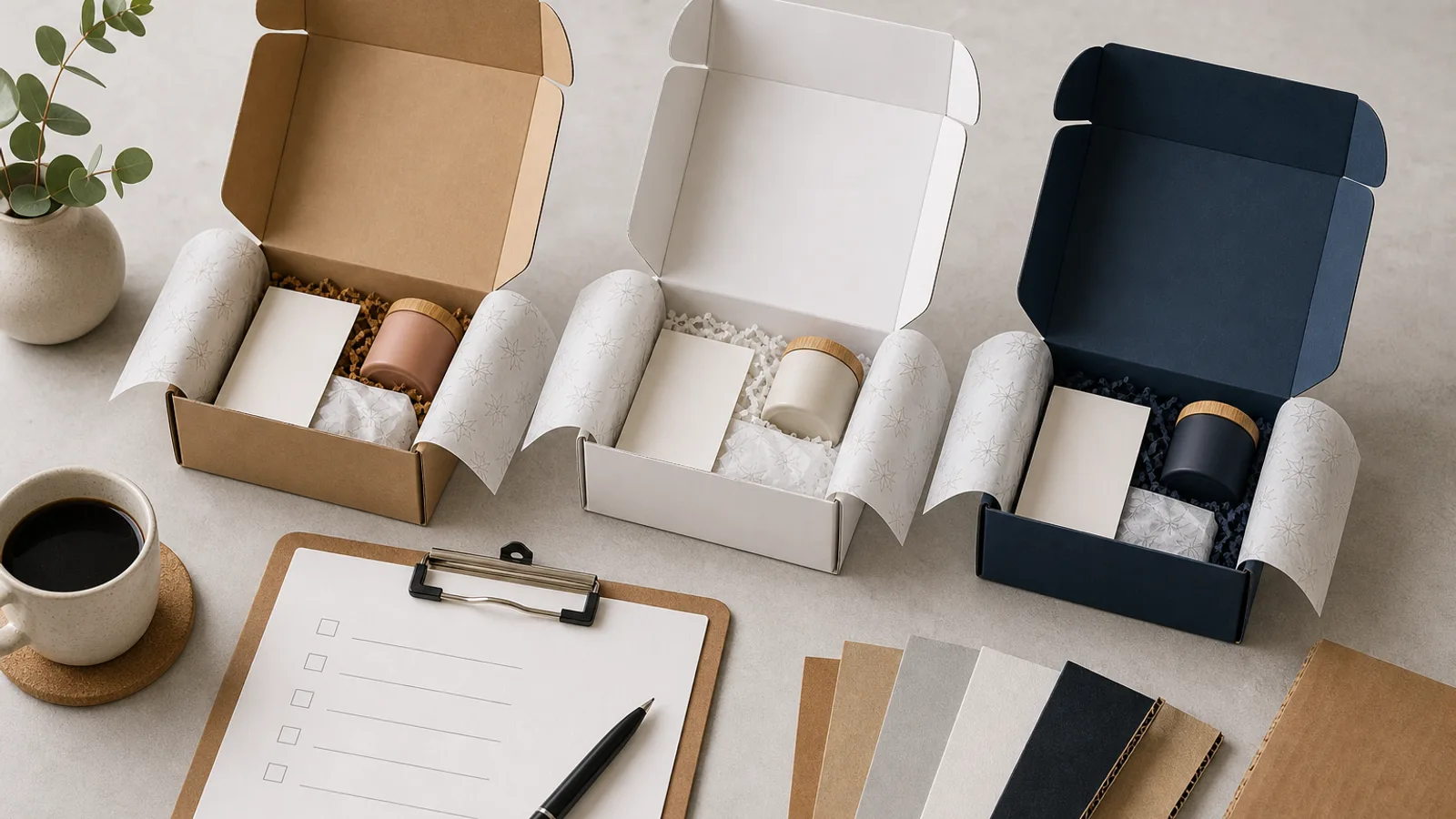
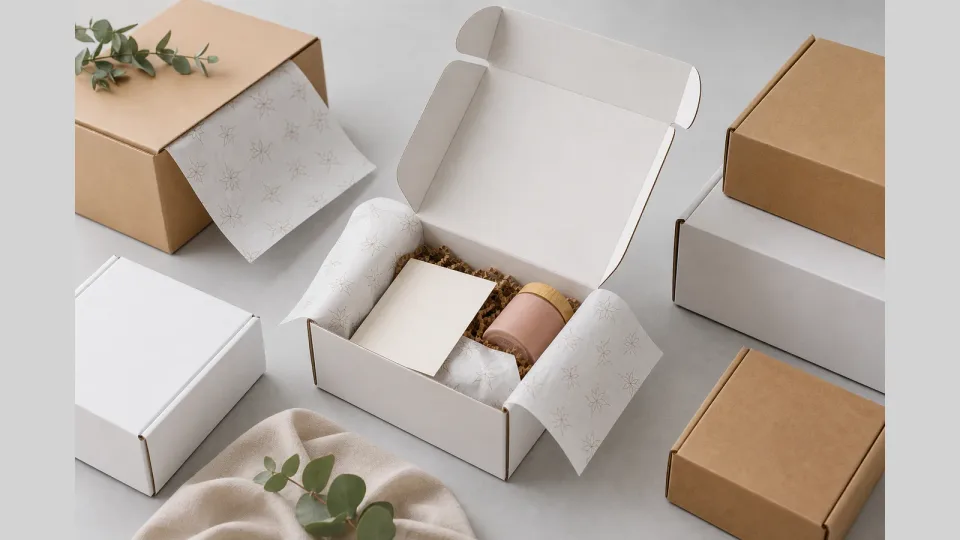
Custom mailer boxes are the workhorse of DTC ecommerce. They are sturdy, self-locking corrugated boxes that fold flat for storage and need no tape to assemble. They are ideal for apparel, beauty, electronics, and most lightweight-to-medium products. Because their interior and exterior surfaces print beautifully, mailer boxes are the format most associated with premium unboxing experiences.
Shipping Boxes
Regular corrugated shipping boxes are built for protection and volume. They suit heavier items, multi-product orders, and anything that needs to survive a rough carrier journey. While they are often plain on the outside, even a single-color logo print or a branded interior can turn a basic shipper into a brand touchpoint at very low cost.
Product Boxes
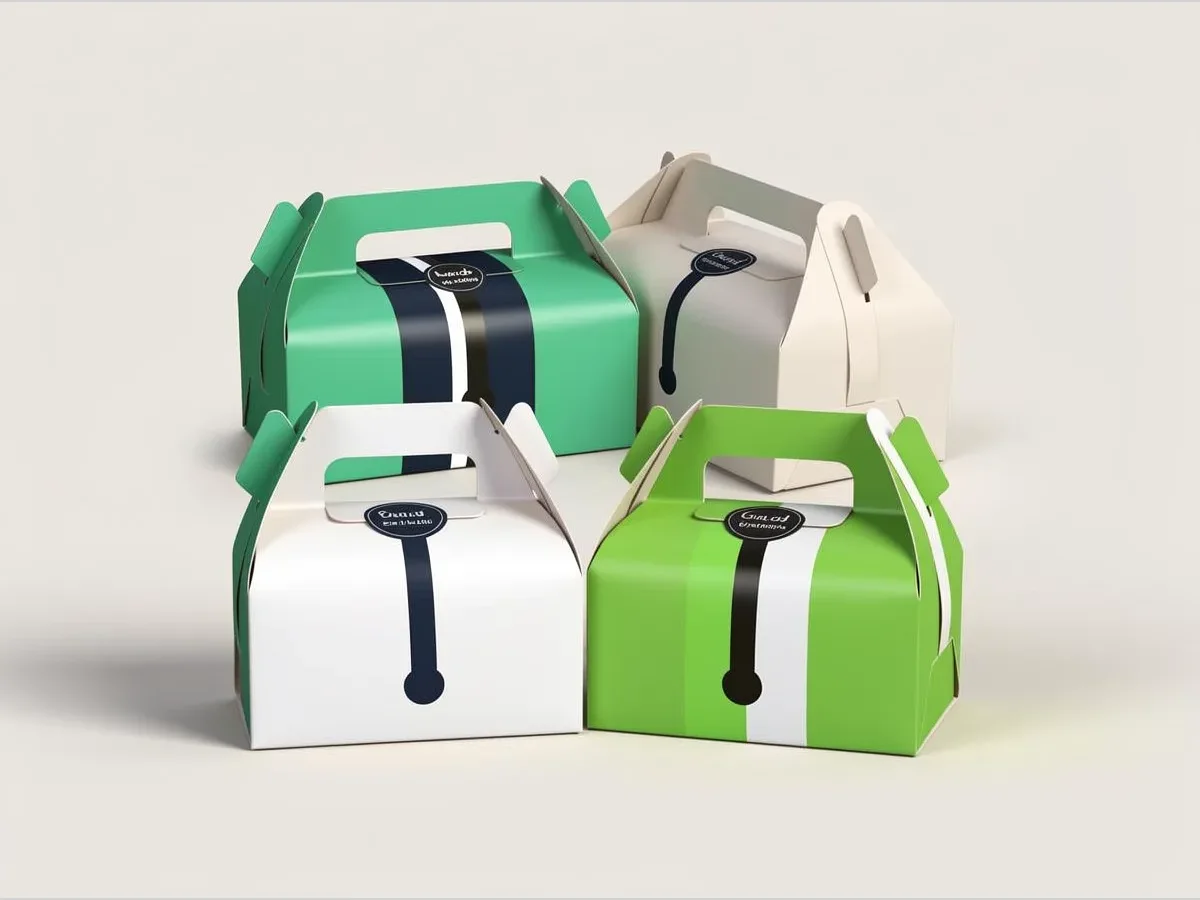
Product boxes, also called folding cartons, are the lighter retail-style boxes that hold a single item: a candle, a supplement bottle, a skincare jar. They are common for brands that sell both online and in stores, and they are frequently shipped inside a mailer or shipper for protection. This is where detailed product packaging design matters most, because the carton sits directly in the customer’s hand.
Subscription Boxes
Subscription box packaging is its own discipline. Because subscribers receive a box repeatedly, the experience has to feel fresh, consistent, and worth staying for. Strong subscription packaging balances a recognizable brand identity with seasonal or themed variation, plus inserts that guide, surprise, and upsell. The box becomes part of the product, not just its container.
Materials Used in Custom Packaging
Material choice affects durability, cost, sustainability, and how your branding looks. Four options cover the vast majority of ecommerce needs.
Corrugated Cardboard
Corrugated board is the default for shipping. Its fluted inner layer absorbs impact, and it is strong, lightweight, recyclable, and affordable. Flute grades (such as E, B, and C) trade thickness for print smoothness, so you can tune the board to your product weight and design needs.
Kraft Packaging
Kraft is unbleached, natural-brown board with an earthy, minimalist look. It signals sustainability and pairs well with simple one- or two-color printing. Many eco-conscious and artisanal brands choose kraft because it communicates values instantly and costs less than fully coated white board.
Rigid Boxes
Rigid (or set-up) boxes are the premium tier: thick, non-collapsing boxes used for luxury goods, electronics, and high-value gifting. They cost more and ship at higher volume, but for a $200 product, the structural feel of a rigid box reinforces price and quality in a way thinner board cannot.
Eco-Friendly Materials
Sustainability is now an expectation, not a bonus. Recycled content, soy- or water-based inks, and compostable or curbside-recyclable construction are widely available and increasingly affordable. Choosing eco-friendly packaging is both a values decision and a practical one, since many customers actively prefer brands that reduce waste.
Customization Options
Customization is where a box stops being a container and becomes branded packaging. The main levers are printing, finishes, inserts, and brand elements.
Printing Methods
- Digital printing is fast, economical at low to mid volumes, and ideal for short runs, variable designs, or testing. It is the most common choice for growing ecommerce brands.
- Offset (litho) printing delivers the sharpest detail and color consistency at high volumes, making it the choice for large, established runs.
- CMYK is the standard four-color process used to reproduce full-color artwork across most digital and offset jobs, while spot colors can be added when exact brand-color matching matters.
Finishes
Finishes change how a box feels and catches light. Matte reads as modern and understated, gloss makes colors pop, soft-touch lamination adds a velvety premium feel, and spot UV creates a shiny raised contrast on logos or accents. Used selectively, finishes elevate perceived value far more than their cost.
Inserts and Dividers
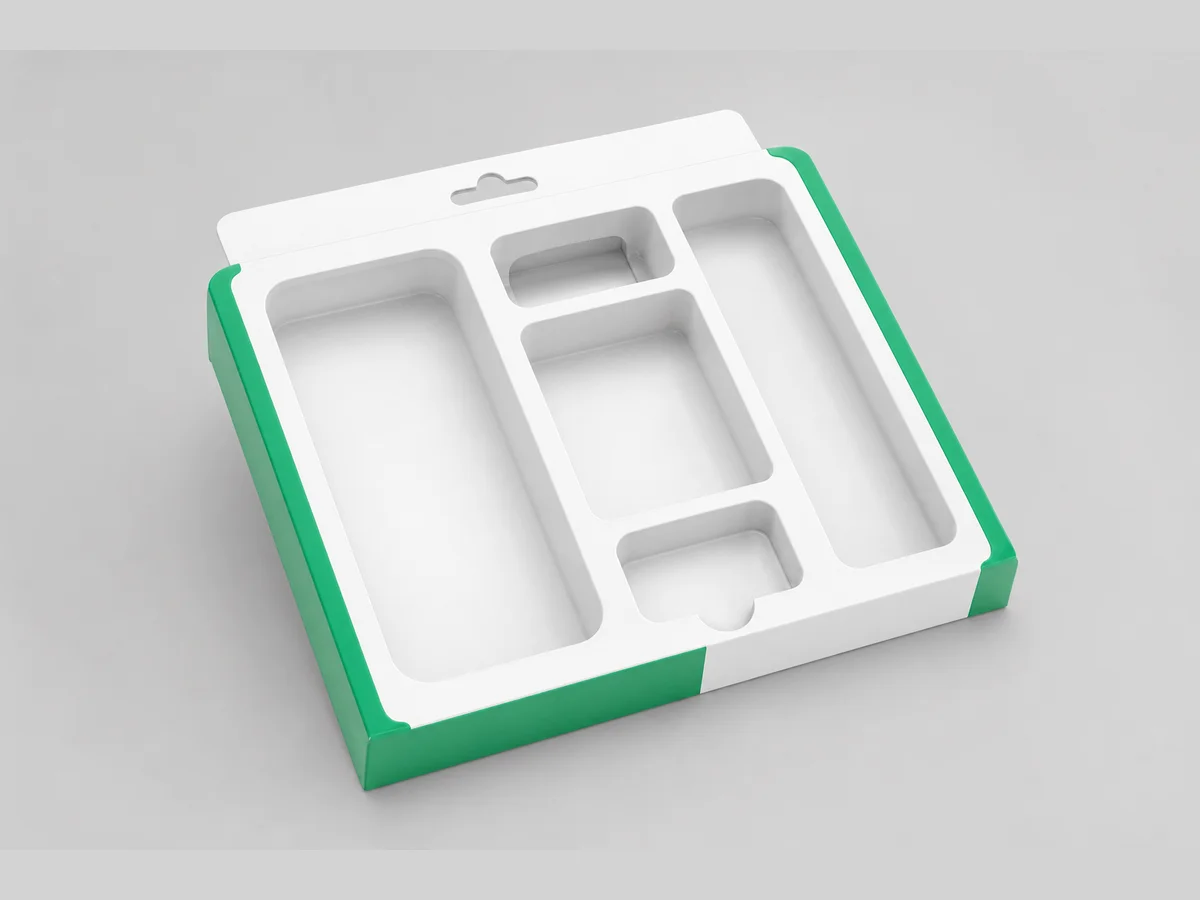
Inserts hold products in place, prevent damage, and make the open-box moment feel intentional. Custom foam, molded pulp, or die-cut cardboard inserts protect fragile items and create a clean, curated presentation. For multi-item orders and subscription boxes, dividers turn a jumble into a layout.
Branding Elements
Beyond the box itself, branded tissue paper, stickers, custom tape, thank-you cards, and printed interiors tie the experience together. These small additions are inexpensive but disproportionately memorable, and they are what customers photograph and share.
Cost Factors of Custom Packaging
Packaging quotes vary widely, and understanding the drivers helps you budget and avoid surprises.
- Minimum order quantity (MOQ): Per-unit cost drops sharply as volume rises. The challenge for newer brands is finding a manufacturer whose MOQ matches real demand rather than forcing you to over-order.
- Size and dimensions: Larger boxes use more material and cost more to ship. Right-sizing your box to the product is the single most effective way to cut both packaging and shipping spend.
- Printing complexity: Full-color, multi-surface printing costs more than a one-color logo. More colors, finishes, and special techniques each add to the price.
- Material choice: Rigid boxes and specialty coatings cost more than standard corrugated or kraft. Match the material to the product’s value.
- Shipping and logistics: Box weight, flat-pack efficiency, and dimensional weight all influence carrier costs. Lighter, well-fitted packaging saves money on every single order.
How Packaging Impacts Brand Growth
The strongest argument for investing in custom packaging is what it does after the sale.
The Psychology of Unboxing
Unboxing is a sequence of small, satisfying moments: the weight of the box, the reveal, the reveal of the product nested in place. When that sequence feels deliberate, customers attach positive emotion to your brand. That emotion is what they remember and repurchase.
Social Media Sharing
A genuinely well-designed box gets photographed and filmed. Unboxing content on TikTok and Instagram is effectively free, high-trust marketing, because it comes from real customers. Brands like Glossier built much of their early reach on instantly recognizable pink pouches and bubble mailers that customers wanted to show off.
Customer Retention
Packaging that feels premium raises expectations and satisfaction, which lifts repeat purchase rates. Subscription brands such as Birchbox proved that a thoughtful monthly box experience can be a core reason people stay subscribed, not just a delivery method.
Perceived Product Value
The same product feels more valuable in better packaging. A skincare serum in a fitted box with a soft-touch finish and a branded insert justifies a higher price than the identical bottle in a bubble mailer. Packaging frames how customers judge what they bought.
Common Ecommerce Packaging Mistakes
Even well-funded brands repeat the same avoidable errors.
- Overcomplicated designs: Cramming every color, finish, and message onto one box dilutes impact and raises cost. Restraint usually photographs better and reads as more premium.
- Wrong box sizing: Oversized boxes waste material, require more void fill, increase dimensional shipping costs, and feel cheap when the product rattles inside. Undersized boxes crush products. Right-sizing is non-negotiable.
- Ignoring shipping durability: A box that looks great but arrives dented destroys the experience. Packaging has to survive real carrier handling, not just a studio shoot.
- Not testing samples: Approving artwork on a screen is not the same as holding the box. Colors shift, finishes feel different, and fit issues only appear in the physical sample. Always order samples before committing to a full run.
How to Get Started
Once you know your product dimensions, target volume, and the experience you want to create, the next step is finding the right packaging manufacturer to produce it. The ideal partner makes it easy to start small, iterate, and scale without forcing impractical minimums.
BoxYourBrand works with ecommerce brands at every stage, from first product launch to high-volume operations. We manufacture custom mailer boxes, corrugated shipping boxes, folding cartons, and subscription box packaging with low minimum order quantities, fast production, and global shipping. That combination lets you test packaging on a realistic budget, then scale the designs that work.
A practical starting path looks like this: confirm your exact product dimensions, decide on your box type and material, choose a printing method that fits your volume, and order a sample before your first production run. Getting these basics right early saves significant money and rework later.
Ecommerce Packaging Guide — Final Takeaways
Packaging is no longer a back-office shipping expense. For ecommerce brands, it is a visible, repeatable part of the product experience that shapes first impressions, drives organic sharing, and influences whether customers come back. The brands that win treat custom packaging as a strategic investment: right-sized, on-brand, durable, and tested before launch.
You do not need the most expensive box on the market. You need the right box for your product, your customers, and your stage of growth, produced by a partner who can scale with you. Invest deliberately, and your packaging will keep working for your brand on every doorstep it reaches.
Get a custom packaging quote for your brand in 24–48 hours with BoxYourBrand. Request your quote today.