Start here for supplier and ordering paths: Where to order custom mailer boxes with low MOQ for small businesses. This guide explains why MOQ exists and how print method affects quantity tiers.
Minimum order quantity is often the first real question when a brand moves from plain shipping boxes to custom mailer boxes. You have artwork ready, a product that ships well in a mailer, and a launch date in mind — but the MOQ on the quote does not always match what you expected. Understanding how custom mailer box MOQ works helps you budget, plan inventory, and avoid ordering more (or less) than your business actually needs.
Key takeaways
- Custom mailer MOQs often start at 50–249 units for digital print launch tiers.
- Per-unit cost improves at 250–999 and again at 1,000+ units.
- Share exact dimensions and monthly volume so quotes include the next volume break.
- Physical samples ($25, credited to first order) validate fit before full MOQ.
This guide explains what MOQ means for mailer boxes, typical ranges for growing ecommerce brands, what drives the number on your quote, and how to plan a first order that sets you up for scale without tying up cash in excess stock. BoxYourBrand produces end-to-end custom packaging for ecommerce and retail brands.
What MOQ Means for Custom Mailer Boxes
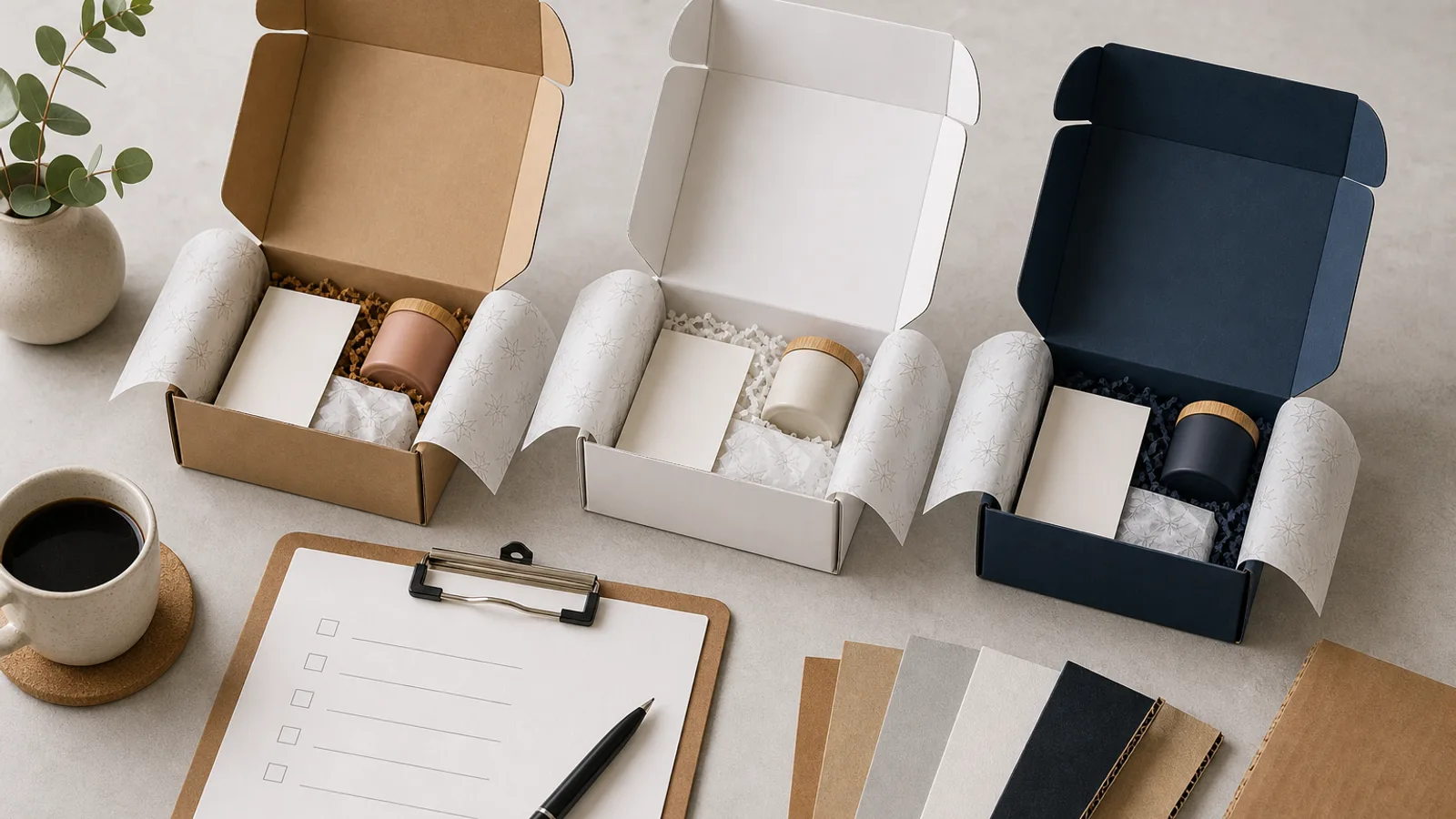
Validate board feel and print quality with packaging samples before locking production MOQ.
MOQ — minimum order quantity — is the smallest number of units a packaging supplier will produce in a single print run. For custom mailer boxes, that number reflects setup costs: plate or digital prep, die cutting, print calibration, and quality checks all happen whether you order 50 units or 2,500. Related formats include corrugated shipping boxes.
Unlike stock boxes sold by the case, every custom mailer is built to your dimensions, board grade, and artwork. The MOQ is how suppliers recover those fixed costs while still offering accessible entry points for startups and DTC brands. Use the quote wizard to compare quantity tiers side by side.
For most ecommerce sellers, mailer box MOQs fall between 50–249 units on launch-tier digital print and a few thousand units for litho or specialty finishes, depending on print method, finish, and structural complexity. Low MOQ packaging is available, but “low” is relative to your monthly ship volume — ordering 500 boxes when you ship 50 a month means a ten-month supply, which may or may not fit your cash flow and storage situation.
Typical MOQ Ranges by Print Method
Print method is one of the biggest levers on minimum order quantity.
Digital Print Mailers
Digital printing has the lowest setup overhead, which usually translates to the lowest MOQs. BoxYourBrand’s launch tier starts at 50–249 units for digital-print E-flute mailers with CMYK exterior print. Many industry suppliers still quote 250–500 units as their standard floor for the same format — always confirm the tier in writing on your quote. Digital print is the most common path for Shopify brands, subscription startups, and anyone testing packaging before committing to a large run.
Litho-Laminated or Offset Mailers
When you need the sharpest color reproduction or a flood-coated interior, litho-lam or offset print may be specified. These methods carry higher plate and setup costs, so MOQs typically start higher — often 1,000–2,500+ units. The per-unit cost drops at volume, which makes sense for established brands shipping thousands of orders per month.
Special Finishes and Structures
Soft-touch lamination, spot UV, foil stamping, magnetic closures, or custom inserts can push MOQs up because each finish adds a separate production step. A standard printed mailer might start at 500 units; add a premium laminate and an insert tray, and the supplier may require 1,000 or more to keep unit economics viable.
What Drives Your MOQ on a Quote
When you request a quote, several variables beyond print method shape the minimum:
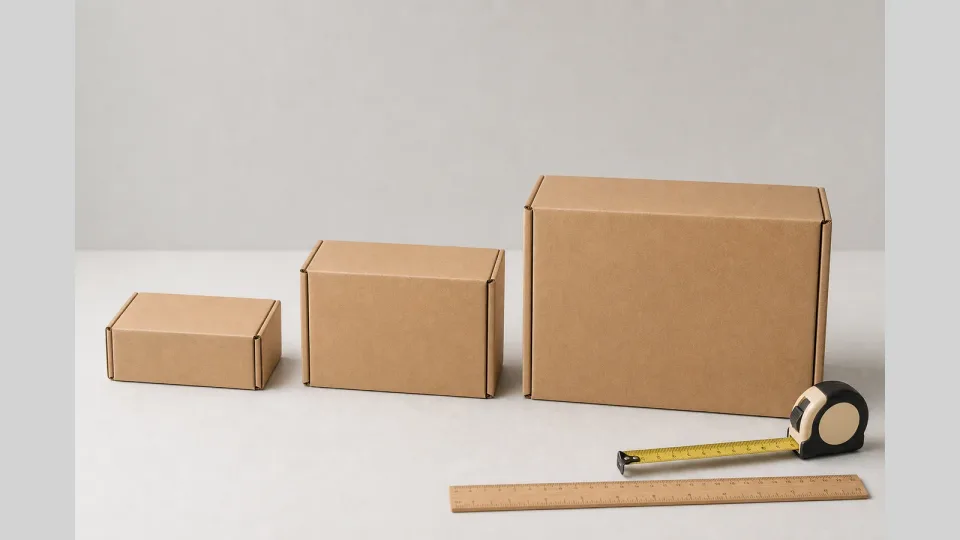
Box dimensions. Very large or very small custom sizes can require non-standard tooling or more waste per sheet, which affects MOQ.
Board grade and flute. Heavier B-flute or double-wall constructions cost more per unit and may carry higher minimums than standard E-flute mailers.
Number of print colors and sides. Full-color exterior plus a branded interior doubles print area and can increase setup. Spot-color-only jobs sometimes qualify for lower MOQs.
Finishes. Matte, gloss, soft-touch, and spot UV each add a pass through production.
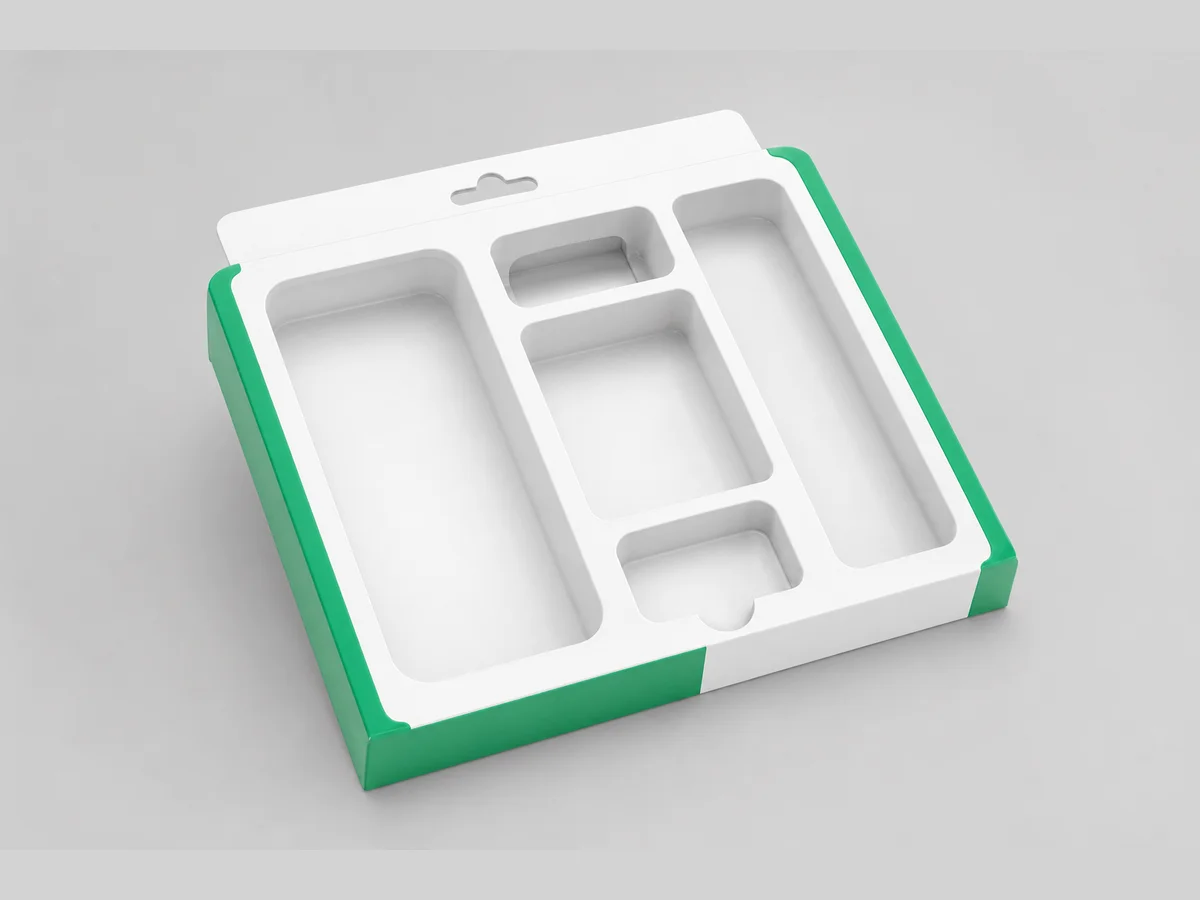
Insert or divider requirements. Custom corrugated inserts often have their own MOQ, separate from the mailer shell.
Reorder vs. first run. Some suppliers lower effective MOQ on reorders when dies and print files already exist from a prior job.
Being clear about your monthly ship volume, target unit cost, and whether this is a test run or a production commitment helps your packaging partner recommend the right quantity tier.
How to Plan Your First Custom Mailer Order
A smart first order balances three things: enough boxes to get a meaningful per-unit price, not so many that you run out of warehouse space, and a buffer for growth before your next reorder.
Match MOQ to 2–4 Months of Volume
A common rule for growing brands: order enough to cover two to four months of shipments at your current run rate, plus 10–15% buffer for spikes (holiday, PR, influencer seeding). If you ship 200 orders per month, a 500-unit MOQ covers roughly two and a half months — reasonable for a first run. If you ship 800 per month, 500 units lasts less than a month and you will reorder quickly; negotiating a 1,000-unit MOQ may lower your per-box cost enough to justify the larger commitment.
Order Samples Before Committing to MOQ
Physical samples let you verify fit, print color, and assembly before you lock in hundreds or thousands of units. Most suppliers offer sample sets of a generic or semi-custom mailer so you can feel board weight and print quality. Always sample if you are changing dimensions, board grade, or print vendor.
Plan Artwork for the Quantity You Are Ordering
If your first run is 500 units, design for longevity — avoid date-stamped promo copy that expires in three months. Use core brand elements (logo, pattern, tagline) that stay relevant across reorder cycles. You can always add seasonal insert cards at lower MOQ than reprinting the entire mailer.
Factor Storage and Cash Flow
Custom mailers ship flat and stack efficiently, but 2,000 units still occupy meaningful warehouse space. Run the math on cost per unit at different quantity breaks versus how long it takes to consume that inventory. Sometimes the lowest MOQ is not the best deal if you are paying to store boxes for eight months.
MOQ vs. Unit Cost: Finding the Sweet Spot
Higher quantity almost always lowers per-unit price. The question is whether the savings justify the upfront spend.
| Order size (example) | Typical use case |
|---|---|
| 50–249 units | Launch pilot, size/print test (BoxYourBrand launch tier) |
| 250–999 units | Seasonal test, steady DTC brand, better per-unit pricing |
| 1,000–2,500 units | Established brand, cost optimization |
| 2,500+ units | High-volume shippers, marketplace sellers |
Ask your supplier for a price ladder at two or three quantity breaks. The jump from 500 to 1,000 might save 15–25% per box — if you will use 1,000 within four months, the larger order often pays for itself.
Common MOQ Mistakes to Avoid
Ordering for a launch that slipped. If your go-live date moves, you are still sitting on branded boxes. Build timeline buffer into your order date.
Ignoring dimensional weight. A mailer that is too large for your product increases shipping cost on every order, which can erase savings from a higher MOQ. Right-size first, then optimize quantity.
Splitting SKUs too early. Two sizes with separate artwork means two MOQs. Start with one primary mailer size if your catalog allows it.
Skipping the reorder conversation. Ask upfront what MOQ applies on the second order. If it drops significantly, a smaller first run may be less risky.
When to Request a Mailer Box Quote
If you know your product dimensions, approximate monthly volume, and whether you need exterior-only or inside-and-out print, you have enough to get a meaningful MOQ and price quote. Get a free quote with those details and a packaging specialist can recommend quantity tiers that match your stage — whether you need 300 mailers for a product launch or 2,000 for a scaling Shopify brand.
For a direct answer on suppliers and ordering workflow, read where to order custom mailer boxes for a small business.
Custom mailer box MOQ is not a barrier; it is a planning tool. The brands that get the most value from custom packaging treat their first order as the start of a reorder rhythm, not a one-time purchase — and they size that first run to protect products, control shipping cost, and deliver an unboxing experience worth repeating.