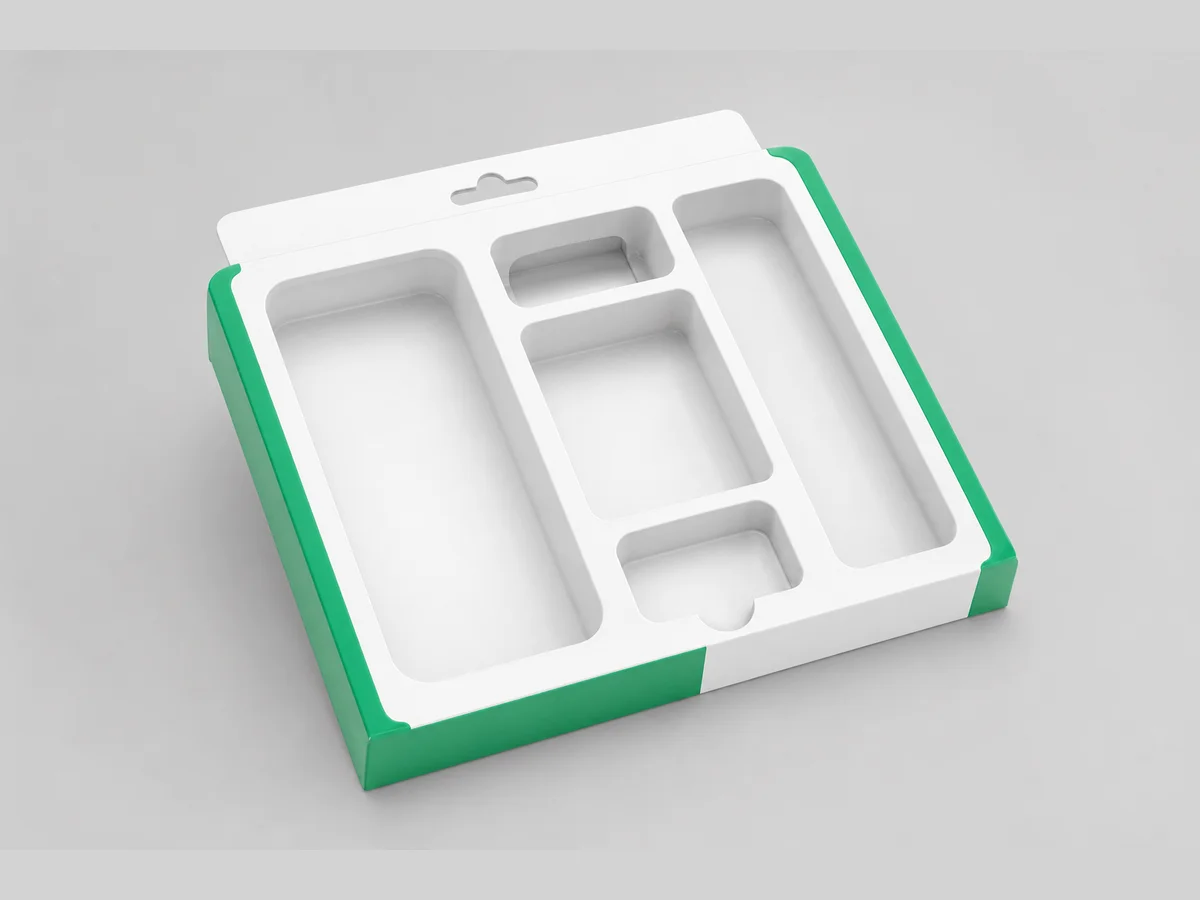
Custom electronics packaging must solve two problems at once: protect sensitive components from shock and electrostatic discharge, and present devices cleanly on retail shelves or in DTC unboxing. The right combination of anti-static packaging boxes, custom packaging trays, and corrugated shippers reduces return rates and supports premium positioning. BoxYourBrand produces end-to-end custom packaging for ecommerce and retail brands.
This guide covers insert types, shipper selection, and retail formats. See electronics packaging for industry product recommendations.
Electronics packaging requirements
| Risk | Packaging response |
|---|---|
| ESD / static discharge | Anti-static foam, conductive liners, dissipative trays |
| Impact / drop | Die-cut foam, molded pulp, double-wall corrugated |
| Cable clutter | Multi-cavity trays, accessory wells |
| Retail theft / display | Shelf-ready cartons, security tabs, window panels |
| Returns / refurbishment | Reusable rigid boxes, standardized insert families |
Share test standards (ISTA, drop height) with your supplier when quoting — fulfillment partners often require documented cushion performance. Browse custom inserts and void fill for format specs and MOQ tiers.
Anti-static packaging options
Anti-static packaging boxes use:
- Pink anti-static foam — dissipative polyethylene for general ESD protection
- Conductive foam — lower resistance for highly sensitive ICs and bare boards
- Anti-static bags — inner wrap before rigid or corrugated outer pack
- Grounded handling notes — printed interior instructions for assembly partners
Not every consumer gadget needs full conductive packaging — phone accessories and assembled devices often spec dissipative foam; bare PCB shipments need stricter ESD controls. Related formats include custom plastic packaging.
Custom packaging trays
Custom packaging trays organize:
- Chargers, cables, and earbuds in labeled cavities
- Replacement parts for warranty programs
- Multi-SKU retail sets (device + case + screen protector)
Trays can be vacuum-formed PET, die-cut corrugated, or molded pulp depending on unit cost and sustainability goals. Pair trays with cardboard box dividers and inserts for hybrid kits.
Corrugated shippers for electronics
Protective electronics shipping boxes typically use:
| Board | Use case |
|---|---|
| C-flute single-wall | Standard accessories, sub-5 lb |
| Double-wall BC | Monitors, heavy hubs, fragile glass |
| Custom die-cut | Fixed product silhouette, reduced void fill |
Right-size shippers to cut DIM weight — run specs through the DIM weight calculator before production.
Retail and gift presentation
Retail electronics packaging often combines:
- Folding cartons with hang tabs or shelf feet
- Rigid presentation boxes with magnetic closure for premium lines
- Retail display boxes for counter placement — see cardboard display boxes
Interior trays keep accessories visible through window panels without tangling cables. Use the quote wizard to compare quantity tiers side by side.
DTC unboxing for electronics brands
Consumer electronics DTC brands mirror subscription unboxing discipline:
- Branded mailer or shipper with restrained exterior
- Tray or foam insert with labeled accessory positions
- Quick-start card and QR to setup video
- Return-friendly structure for warranty exchanges
See design shareable mailer boxes for reveal sequencing — adapted for rigid inserts instead of soft goods.
Spec checklist
- Device dimensions and weight (with accessories packed)
- ESD class required (yes/no; component-level detail)
- Drop test or carrier compliance target
- Retail vs ecommerce channel mix
- Window, hang tab, or security feature requirements
- Sample drop test before MOQ commitment
Order custom electronics packaging
Get a free quote with device drawings, accessory BOM, and ESD requirements — or order samples to validate tray retention and print quality before production.
Electronics packaging with ESD and cushion in mind
Electronics packaging ESD guides start with whether static control is required, then cushion and presentation. Foam, trays, and shielding bags are specified — not guessed.
| Need | Spec path |
|---|---|
| ESD | Shielding materials as required |
| Shock | Foam / pulp cavities |
| Retail | Carton presentation |
| Ship | Outer ECT |
Electronics pack engineering checklist
- Confirm ESD requirements in writing.
- Measure boards/devices with connectors.
- Design cavities for cable kits.
- Soft-proof regulatory marks.
- Drop-test candidate packs.
Engineering notes for electronics
Retail electronics cartons still need transit tests. Do not assume a pretty carton survives parcel networks without an outer.
Electronics packaging pitfalls
- Ignoring ESD when the product requires it
- Foam that sheds onto boards
- Tight fits that stress ports
Brief electronics packaging correctly
Share device drawings, ESD needs, and channel. We will recommend trays, cartons, and shippers for electronics packaging that protect and present.
Cable kits and port clearance in electronics packs
Electronics packaging fails when cavities ignore connectors and cable bundles. Measure the device as configured for shipment.
Confirm ESD needs explicitly. Share drawings and channel when quoting electronics packaging so trays and outer cartons protect ports and boards.