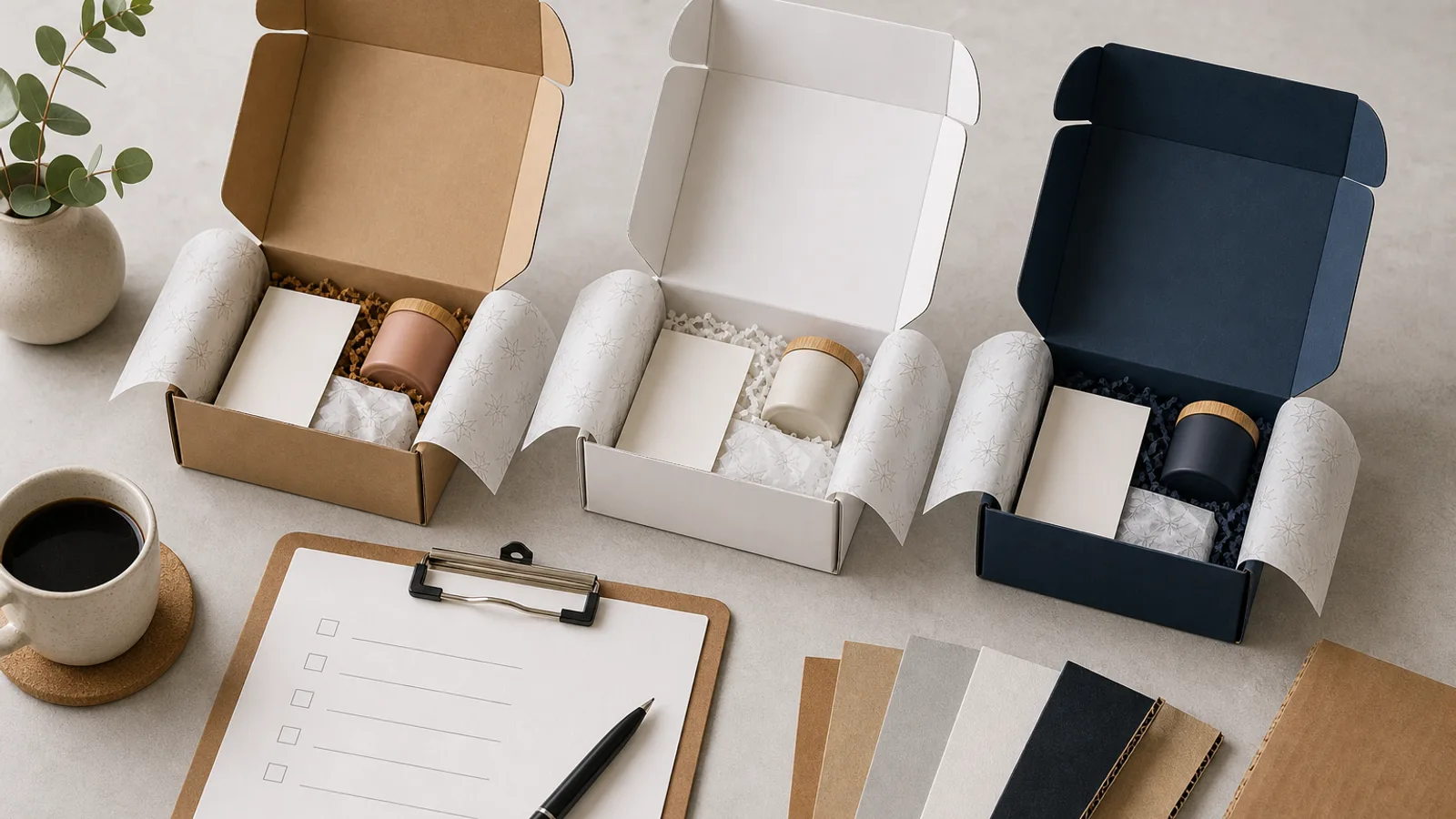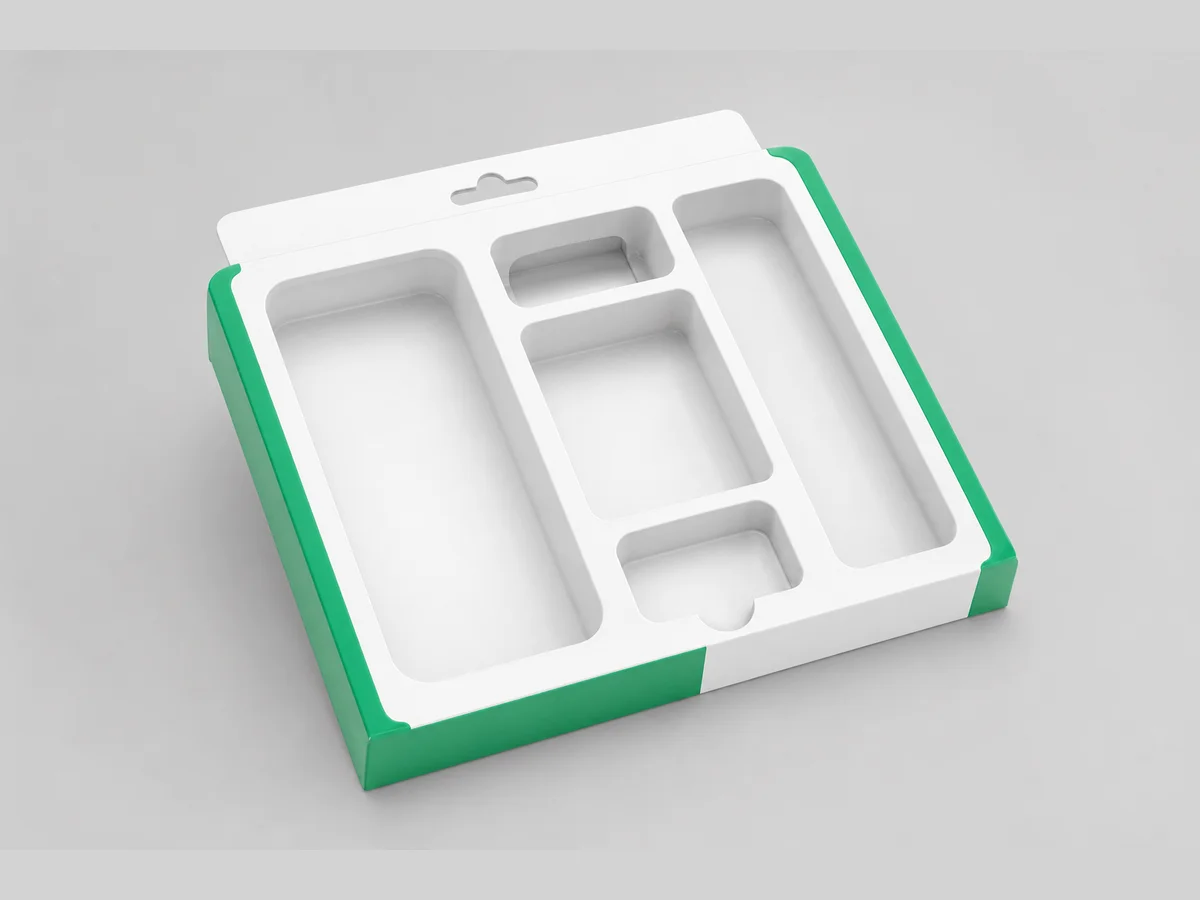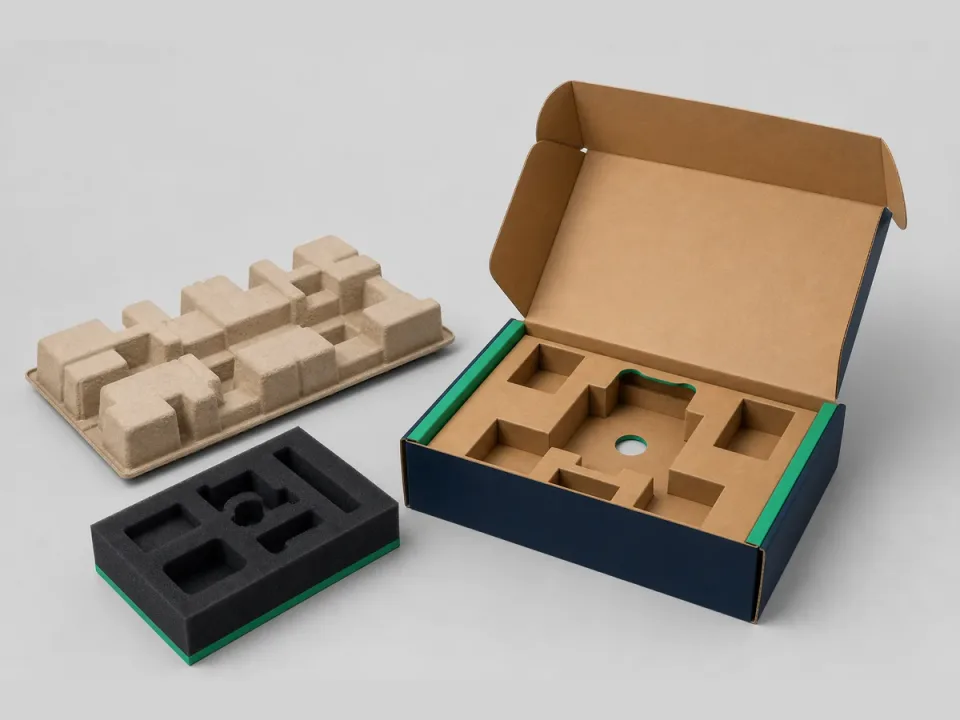
Cardboard box dividers keep multiple products separated inside one outer shipper — reducing damage, returns, and repack labor. Whether you need a cardboard divider grid for a 6-bottle shipper, cardboard box separators between product layers, full box dividers for subscription kits, or broader packaging inserts (foam, pulp, tissue), die-cut corrugated and paperboard inserts are the most scalable solution. BoxYourBrand produces end-to-end custom packaging for ecommerce and retail brands.
This guide covers divider types, sizing workflow, and material choices. For product options, see custom inserts & void fill.
Types of box dividers and inserts
Validate board feel and print quality with packaging samples before locking production MOQ.
| Type | Construction | Best for |
|---|---|---|
| Die-cut cardboard grid | Corrugated or paperboard cells | Bottles, jars, candles, multi-SKU sets |
| Layer separators | Flat partitions between tiers | Stacked flat goods, apparel layers |
| Molded pulp insert | Pressed fiber cavities | Eco programs, electronics accessories |
| Foam insert | CNC or die-cut foam | Fragile glass, cosmetics |
| Velvet / flocked pad | Fabric-covered board | Jewelry, luxury gift sets |
Cardboard dividers for boxes are the default when weight is moderate and sustainability messaging favors recyclable fiber over plastic foam. Related formats include custom plastic packaging.
Cardboard box separators vs divider grids
Cardboard box separators are flat sheets that create horizontal layers inside a tall shipper — useful when products stack vertically without touching. Use the quote wizard to compare quantity tiers side by side.
Box dividers in grid form create individual cells — each SKU gets its own compartment. Grids are standard for:
- Wine and spirits multi-packs
- Candle gift sets
- Subscription box curated assortments
- Glass jar food programs
Both formats are custom die-cut to interior box dimensions — never order from stock grids unless your outer box is a standard RSC size.
How to spec cardboard box dividers
- Outer box interior dimensions — Length × width × height (inside faces).
- Product count and dimensions — Diameter for round goods; L×W×H for rectangular.
- Weight per cell — Heavier products need thicker board or double-wall corrugated.
- Assembly method — Hand-insert at fulfillment vs pre-assembled grid.
- Sustainability — Recycled corrugated, molded pulp, or plastic-free void fill pairing.
Use the box size calculator to document interior dimensions before quoting dividers with a matching shipper.
Pairing dividers with outer boxes
Dividers perform best when engineered with the outer box as a system:
| Outer format | Divider approach |
|---|---|
| RSC shipping box | Full grid or corner pads |
| Mailer box | Thin paperboard insert or foam tray |
| Rigid gift box | Flocked or foam cavity insert |
| Subscription mailer | Custom grid tuned to monthly SKU mix |
Pair inserts with corrugated shipping boxes or mailer boxes from the same supplier so tolerances match.
MOQ and cost factors
Divider pricing depends on:
- Die complexity — Cell count and board thickness drive tooling
- Board grade — E-flute vs B-flute corrugated; SBS paperboard for retail inserts
- Quantity — Tooling amortizes across 500+ units
- Bundled vs standalone — Ordering outer box + insert together reduces fit risk
Pilot runs often start at 250 units when bundled with a box program. Request a quote with product photos and interior dimensions.
Order custom box dividers
Need cardboard box dividers or cardboard box separators for your next shipper or subscription program? Get a free quote with outer box dimensions, product count, and weight — or explore custom inserts for foam, pulp, and void fill options.
Engineering dividers and inserts that actually hold
Cardboard dividers and inserts fail when cavities are designed from photos. Measure products, set tolerances, and test pack density for warehouse labor.
| Element | Spec |
|---|---|
| Cavity | Product + tolerance |
| Caliper | Crush vs cost |
| Nest | Flat-ship efficiency |
| Fiber | Recycled vs virgin |
Divider engineering checklist
- Measure production samples, not renders.
- Design cavities for the heaviest accessory set.
- Soft-proof any print on divider faces.
- Test assembly time for pack-line.
- Confirm nest height for inbound freight.
Engineering notes for inserts
Chipboard and corrugated dividers behave differently under humidity. State storage climate if relevant.
Divider pitfalls
- Cavities sized to prototypes that shrank
- Over-complex folds that slow pack-out
- No spare cavities for kits that vary
Spec dividers with real product sets
Send BOM and pack photos. We will engineer dividers and inserts that protect and pack at speed.
Pack density vs protection for divider systems
More cavities per layer save freight but can slow pack-out. Balance density with labor seconds and damage rates.
Humidity can soften chipboard dividers — state storage climate if relevant. Send the full kit BOM when quoting dividers and inserts so cavities match real accessories.
Browse packaging trays when you are ready to spec sizes, print, and MOQ for this format.