Corrugated boxes come in several flute types, and the flute you choose directly affects cushioning, stacking strength, print quality, and box thickness. This 2026 guide explains the four most common flute profiles so you can pick the right board for corrugated shipping boxes and custom mailer boxes.
What is a flute?
Key takeaways
- E-flute (~1/16“) suits mailers and retail print; B-flute adds stacking for heavier parcels.
- C-flute is standard for RSC shipping boxes; double-wall adds crush resistance for freight.
- Flute choice affects print smoothness, board caliper, and stacking strength — not interchangeable.
- Match flute to product weight and channel before quoting print coverage.
Validate board feel and print quality with packaging samples before locking production MOQ.
A flute is the wavy, arched layer of paper sandwiched between the flat liners of corrugated board. Those arches act like columns, giving the board its strength and cushioning. Flutes are graded by letter based on their height and the number of flutes per foot. BoxYourBrand produces end-to-end custom packaging for ecommerce and retail brands.
ECT (edge crush test) ratings describe stacking strength — pair flute choice with ECT when quoting heavy or palletized freight. Related formats include custom plastic packaging.
A-Flute
A-flute is the thickest common profile at roughly 3/16 inch (about 5 mm). It offers the best cushioning and stacking strength, making it ideal for fragile or heavy products that need maximum protection in transit — common on custom corrugated boxes built for warehouse stack loads. Use the quote wizard to compare quantity tiers side by side.
B-Flute
B-flute is about 1/8 inch (3 mm) thick with more flutes per foot. It provides a flatter, smoother surface that prints well, so it is common for retail packaging, canned goods, and die-cut boxes.
C-Flute
C-flute sits between A and B at roughly 11/64 inch (4 mm). It is the most widely used flute for shipping boxes because it balances cushioning, stacking strength, and printability — a true all-rounder for ecommerce fulfillment.
E-Flute
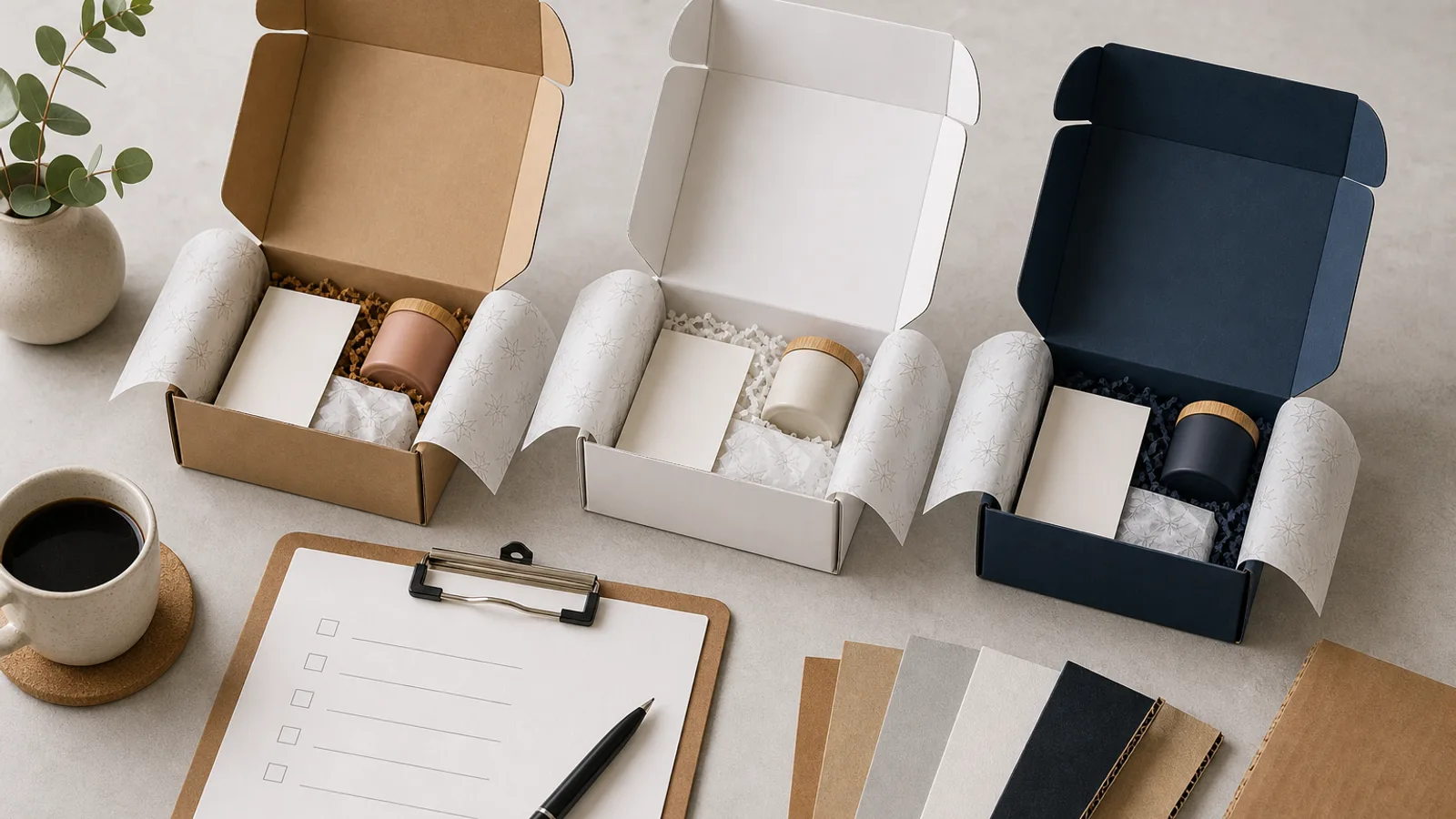
E-flute is much thinner at about 1/16 inch (1.5 mm). Its fine profile delivers an excellent print surface, which is why it is the go-to choice for mailer boxes and retail-ready packaging where branding and unboxing matter.
See corrugated box types for RSC vs die-cut mailer constructions.
Comparison at a glance
| Flute | Thickness | Best for |
|---|---|---|
| A-Flute | ~3/16“ (5 mm) | Heavy or fragile items, maximum cushioning |
| B-Flute | ~1/8“ (3 mm) | Retail boxes, canned goods, strong print surface |
| C-Flute | ~11/64“ (4 mm) | General shipping boxes, balanced performance |
| E-Flute | ~1/16“ (1.5 mm) | Mailer boxes, retail-ready, premium print |
Single wall vs double wall
| Build | Typical flutes | Use case |
|---|---|---|
| Single wall | C or E | DTC parcels, mailers, light–mid weight |
| Double wall | BC, EB combinations | Heavy electronics, glass, industrial parts |
Overspecifying double wall adds cost and DIM weight — model packed dimensions in the box size calculator before upgrading board.
How to choose in 2026
For most e-commerce shipping, C-flute single-wall is the safe default for corrugated shippers. Choose E-flute for branded mailers and shareable unboxing (design guide). Use B-flute when print quality matters on retail shelves. Spec A-flute or double-wall for heavy or fragile freight.
Need help deciding? Get a free quote and our specialists will recommend the right board grade for your product.
Matching flute types to mailer and shipper jobs
Flute choice changes print quality, stiffness, and caliper. E-flute favors branded mailers; B- and C-flute favor shipping strength; BC double-wall handles heavier freight. Pick flute for the job, then decorate.
| Flute | Typical use | Print feel |
|---|---|---|
| E | Mailers, light retail | Smooth |
| B / C | Shippers | More texture |
| BC | Heavy / long-haul | Industrial |
Flute selection pack-out checks
- List packed weight and drop risk.
- Choose flute before locking outer dims (caliper affects OD).
- Soft-proof fine type on the actual flute surface.
- Sample crush on the candidate board.
- Document flute on the PO so reorders stay consistent.
Cost notes tied to flute
Thicker flutes raise DIM slightly but can cut damage. Running every SKU on double-wall is rarely optimal — segment light DTC mailers on E-flute and reserve heavier flutes for freight profiles that need them.
Flute mistakes to avoid
- Speccing E-flute for heavy multi-item shippers
- Changing flute after art is approved without rechecking OD
- Mixing flutes in one size family without labeling cartons
Put flute choice into your next quote
Include packed weight, channel, and whether print quality or stack strength comes first. We will recommend flute and board grade that match the parcel journey.