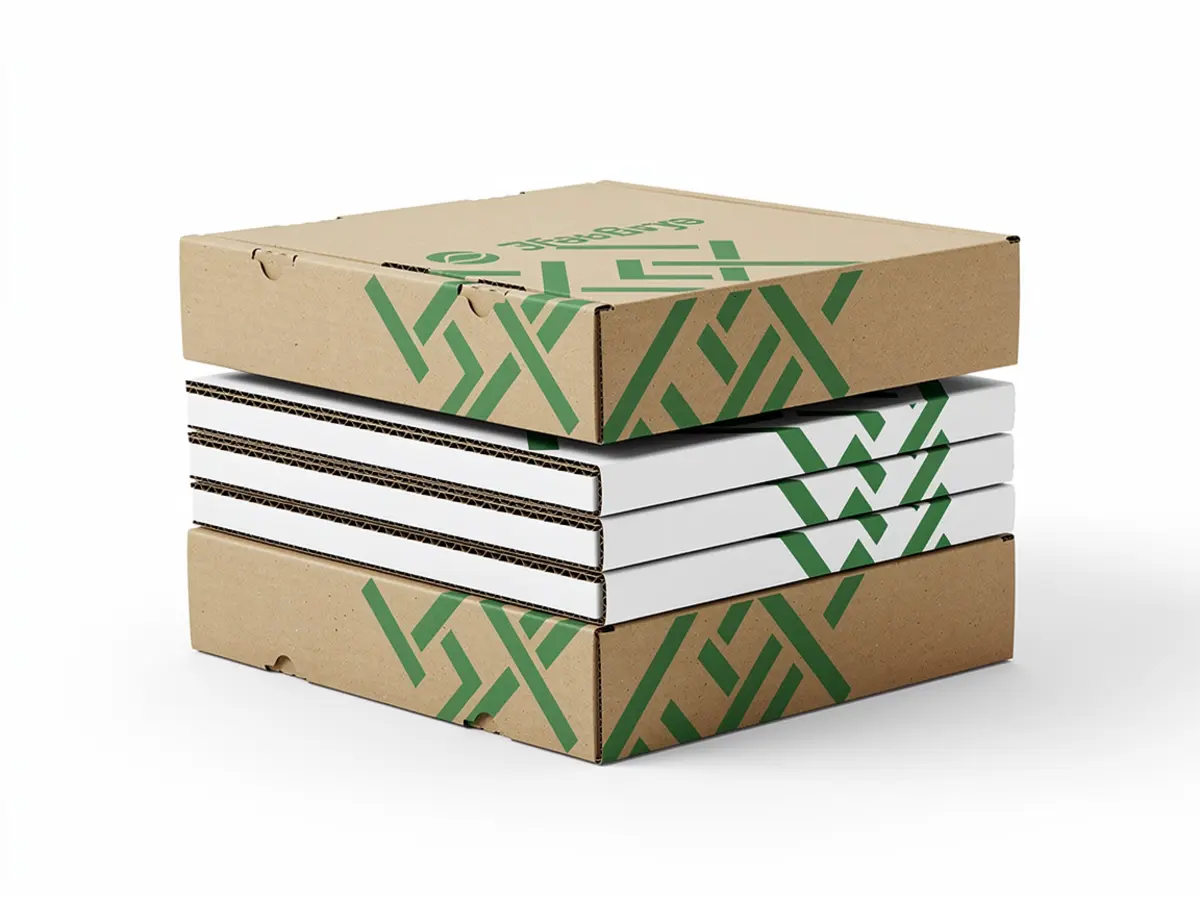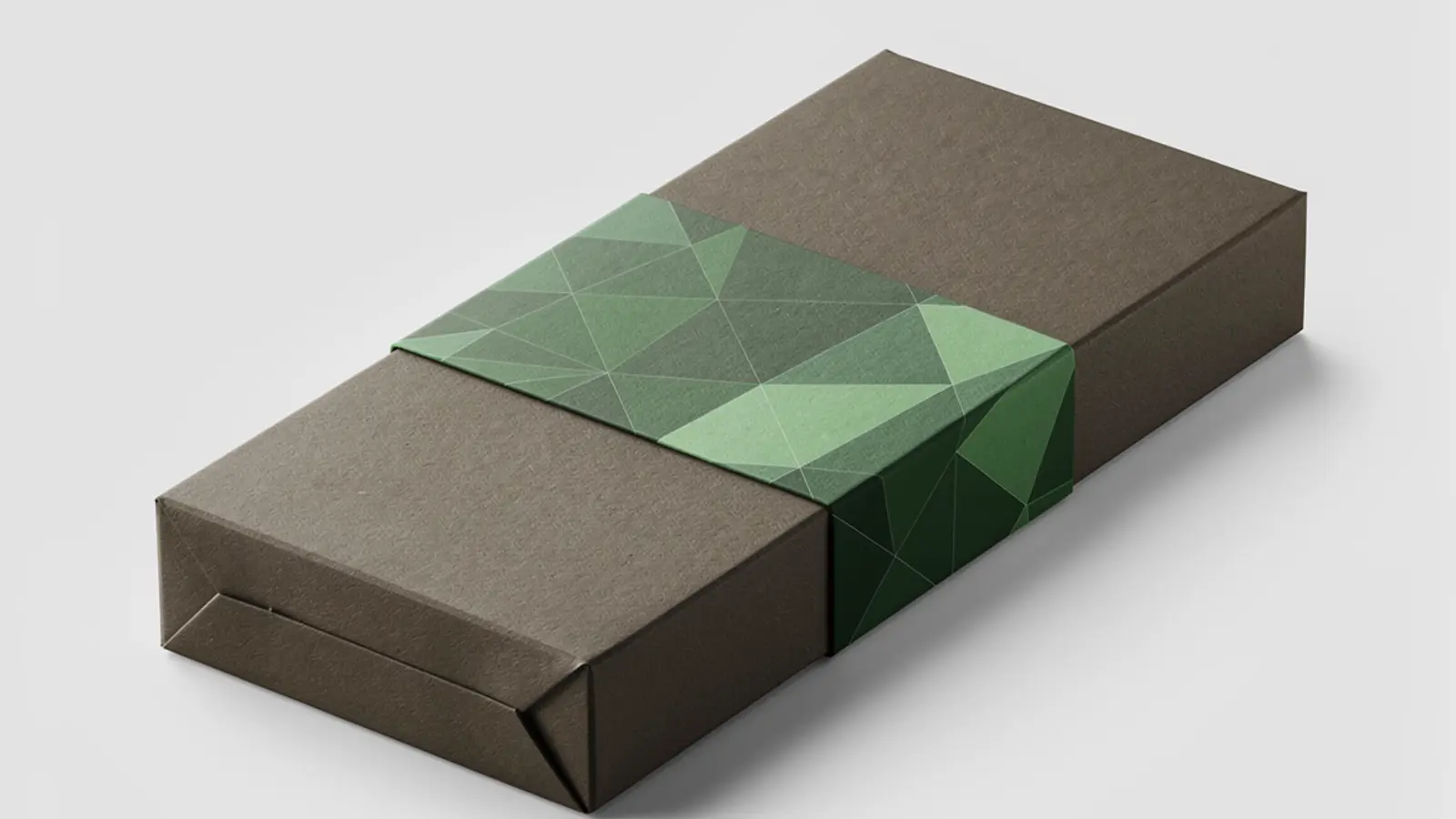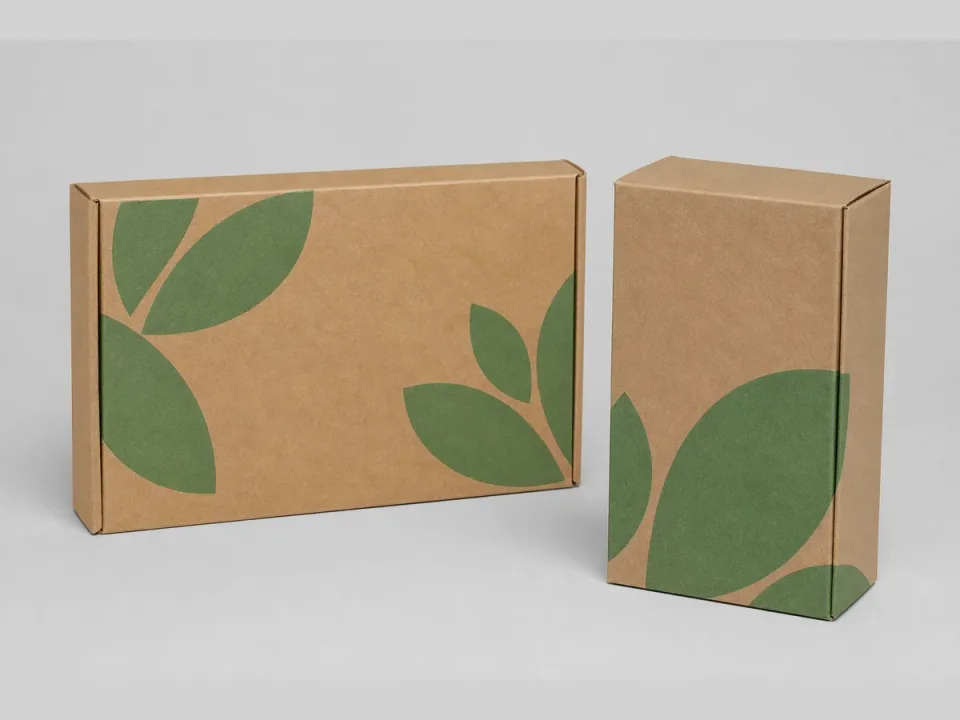
If you’re choosing recyclable packaging, the first question isn’t simply whether the box is made from paper. You also need to consider coatings, adhesives, inks, mixed materials, and the recycling rules in your customers’ markets. A kraft mailer with heavy plastic laminate can look “eco” in a photo and still fail at the recycling facility. A plain corrugated shipper with modest print often recycles cleanly in most US curbside programs.
This guide helps US ecommerce, retail, and CPG buyers specify packaging that can honestly be called recyclable — and avoid claims that do not match how the pack is built. For a broader sustainability overview, see our eco-friendly packaging guide (2026). When you are ready to compare formats, browse eco-friendly packaging options and the sustainable packaging hub.
Key takeaways
- Recycled describes what went into the pack; recyclable describes what customers can do with it after use.
- Paper corrugated and many kraft mailers recycle well in US curbside streams when free of heavy film laminate and food contamination.
- Coatings, windows, magnets, foam, and mixed kits are where recyclability claims usually fail.
- Compostable film is not a shortcut to recyclable — it is a different end-of-life path.
- Right-sizing with a box size calculator cuts material waste before you change substrates.
- Spec the claim, finish limits, and format in your quote — then validate with packaging samples.
Recycled vs recyclable packaging
Buyers often use these words interchangeably. They are not the same.
Recycled packaging contains material recovered from previous use — for example, post-consumer recycled (PCR) fiber in corrugated board. Recycled content supports sourcing and circularity goals. It does not automatically mean the finished pack will be accepted in recycling after one use.
Recyclable packaging is designed so the finished structure can enter a recycling stream under the conditions your customers actually have. In the US, that usually means curbside paper recycling for corrugated and many paperboard cartons.
A strong program often uses both: high recycled-content board that remains recyclable after shipping. A weak program uses recycled fiber, then adds full plastic lamination and a foam insert that make the pack hard to recycle — while still marketing “eco packaging.”
| Term | Means | Buyer question |
|---|---|---|
| Recycled content | Material recovered from prior use is in the board or film | How much PCR or recycled fiber is in this grade? |
| Recyclable | Customer can recycle the pack after use | Will this finish stack be accepted in typical US curbside paper recycling? |
| Compostable | Pack is designed for composting under defined conditions | Do my customers have home or industrial compost access? |
What makes packaging curbside-recyclable in most US markets
There is no single national recycling list. Municipal programs differ. For paper-based ecommerce and retail packaging, these patterns hold across much of the US:
- Fiber-forward structure — Corrugated shippers, E-flute mailers, and folding cartons made primarily of paperboard.
- Limited non-paper layers — Avoid thick plastic film wraps that mills cannot pulp with paper.
- Clean and empty — Food residue, wax coatings for greasy foods, and product left in the box reduce acceptance.
- Separable attachments — Customers should be able to remove plastic tape, blister trays, or magnets when those items are present.
- Clear instructions — “Recycle when empty and flattened” beats a leaf icon with no guidance.
If your brand ships nationally, design for the common case (curbside paper recycling for corrugated), not for the most optimistic facility. When retailer scorecards demand documentation, ask for recycled-content percentages and finish specs in writing on the quote.
Materials that usually recycle well
Corrugated shipping boxes
Custom corrugated shipping boxes are the workhorse of recyclable ecommerce and wholesale packaging. Kraft and white-top single-wall grades with flexo or digital print typically stay in the paper stream. Recycled-content corrugated is widely available without giving up stack strength for most parcel weights.
Use corrugated when you need protection, pallet stacking, or multi-item kits. Right-size interiors so you are not shipping air — oversized shippers waste fiber and inflate dimensional weight.
Recyclable mailer boxes
Custom mailer boxes in E-flute kraft or white board give branded unboxing while remaining curbside-recyclable when laminate stays light. Interior print and soy-based inks are compatible with most paper recycling stories when you avoid full plastic soft-touch wraps.
Mailers suit DTC beauty, apparel accessories, and subscription kits under roughly five pounds. Soft apparel at high volume may still prefer poly or compostable film for cube — that is a different claim set.
Kraft and folding cartons
Kraft boxes and paperboard cartons work for retail presentation when grease coatings and plastic windows are chosen carefully. Uncoated kraft reads sustainable on shelf and often recycles cleanly. Windowed cartons may require customers to separate the PET window, or may be rejected depending on local rules — flag windows in your claim review.
What breaks recyclability
These details cause more greenwashing risk than the board grade itself:
- Heavy plastic film lamination — Soft-touch and gloss film wraps that cover large panels.
- Mixed-material kits — Foam, EVA, velvet, or plastic trays glued into paper boxes without a clear remove-and-recycle instruction.
- Magnetic closures and metal hardware — Common on rigid gift boxes; the wrap paper may recycle poorly with hardware attached.
- Food contamination — Pizza grease and wet organics send otherwise recyclable fiber to landfill.
- Non-paper pressure-sensitive labels covering entire panels — Small shipping labels are usually fine; full-face plastic labels are not.
- Compostable film marketed as “recyclable” — Different stream; different claim.
If your hero SKU needs foam or a magnetic rigid box, consider a recyclable outer shipper plus a keepable gift box — and do not claim the entire system is curbside recyclable unless every component truly is.
Recyclable mailers vs compostable film
When soft goods need a flexible outer, brands often compare recyclable corrugated mailers with compostable film. They solve different problems.
| Option | Best for | Advantages | Limitations | Sustainability | Cost consideration |
|---|---|---|---|---|---|
| Recycled corrugated shipper | Heavy, fragile, multi-item, wholesale | High protection, curbside paper recycling | Higher cube than film | Strong US recycling story | Board + freight; right-sizing matters |
| Kraft / recyclable mailer box | Branded DTC under ~5 lb | Print + unboxing; often curbside recyclable | Not ideal for soft apparel cube | Paper stream when lightly finished | Mid; volume tiers help |
| Folding carton / kraft retail box | Shelf and gift presentation | Brand on shelf; fiber-based | May need outer shipper for DTC | Recyclable when coatings are light | Carton cost + shipper if needed |
| Compostable film mailer | Soft goods with compost access | Low cube; defined compost path | Not curbside recyclable in most areas | Compost claim only if facilities exist | Film often costs more at low MOQ |
| Mixed-material gift kit | Premium unboxing | Theater and protection | Hard to claim “fully recyclable” | Honest component-level claims | Highest when hardware/foam added |
For a deeper format decision, read compostable mailers vs recycled corrugated. Choose compostable when your customers can compost and your product is soft. Choose recyclable paper when curbside recycling is the promise you can keep.
How to write honest recyclable packaging claims
Marketing and packaging ops should agree on language before artwork locks.
- Be specific — “Recyclable corrugated mailer when empty” beats “eco-friendly.”
- Match the finish — If the approved dieline uses heavy film laminate, do not claim curbside recyclable paper.
- Separate recycled content from recyclability — “Made with recycled fiber” and “recyclable where facilities exist” are different sentences.
- Follow FTC Green Guides principles — Qualifications matter when recycling access is not universal. Do not imply nationwide recycling if your structure only works in limited programs.
- Educate in the unboxing — A one-line disposal note inside the mailer reduces contamination and support tickets.
Retailer and marketplace scorecards may ask for recycled-content percentages or fiber sourcing notes. Put those requirements in the quote brief so production does not approve a finish that breaks the claim later.
Buyer checklist before you request a quote
Work through these decisions in order:
- End-of-life claim — Curbside recyclable paper, recycled content target, compostable film, or a tiered mix by SKU.
- Format — Shipper, mailer, retail carton, or shipper + inner carton.
- Product needs — Weight, fragility, grease, moisture, and whether inserts are required.
- Finish limits — Cap laminate and hardware if recyclability is the primary claim.
- Size — Measure product with literature; run the box size calculator so you do not over-box.
- Print — Exterior only vs interior brand; soy- or water-based ink preference.
- Quantity and channels — DTC, wholesale, or both; monthly volume.
- Samples — Order eco-friendly packaging samples to judge board feel and print before MOQ.
- Quote packet — Dimensions, weight, claim language, finish restrictions, and artwork status.
Have dimensions and claim requirements ready? Request a free packaging quote with those details so engineering can recommend board and finishes that support your recycling story.
Common mistakes
- Calling any kraft box recyclable without checking laminate and windows.
- Using compostable film to “look green” when customers only have recycling bins.
- Over-boxing — wasteful fiber and higher DIM charges that undermine the sustainability pitch.
- Gluing foam into a recyclable mailer and claiming the whole pack is recyclable.
- Copying a competitor’s recycling icon without matching their material stack.
- Locking artwork before claim review — expensive to fix after plates or proofs are approved.
How to choose: a practical decision framework
- Determine the customer disposal path first — Recycling access is more common than compost access in the US.
- Pick the material family — Paper corrugated/mailer/carton for recyclable programs; film only when cube or product type demands it.
- Choose structure — RSC shipper, self-lock mailer, or retail carton based on weight and unboxing needs.
- Size from the product out — Minimize void fill.
- Select print — Prefer ink systems and coverage that do not require heavy film to look finished.
- Limit finishing — Skip full soft-touch laminate when curbside recyclable is the claim.
- Add inserts only when needed — Prefer paper or molded pulp over foam when recyclability matters.
- Test with samples — Confirm fit, print, and that marketing agrees with the physical pack.
- Quote with claim language attached — So production flags conflicts early.
- Order with lead time for artwork and proof approval — Seasonal eco campaigns need the claim locked before the creative rush.
FAQ
What is the difference between recycled and recyclable packaging?
Recycled packaging contains recovered material. Recyclable packaging can go into a recycling stream after use. Ask for both specs when your scorecard cares about sourcing and customer disposal.
Are corrugated boxes recyclable in the US?
Most standard corrugated shippers and paper mailers are accepted in curbside paper recycling when empty and free of heavy plastic layers. Local programs vary for windows and food-soiled packs.
Does plastic laminate make paper packaging non-recyclable?
Heavy film lamination often blocks fiber recycling. If you need a premium soft-touch feel and a recyclable claim, ask for alternatives or restrict laminate to small accent areas your supplier confirms are acceptable.
Is compostable packaging the same as recyclable packaging?
No. Compostable and recyclable are different end-of-life paths. See compostable mailers vs recycled corrugated before swapping formats.
Can recyclable mailer boxes include interior print?
Yes — interior print with compatible inks is common on branded mailers and does not automatically void recyclability when the structure stays paper-forward.
What should I put on-pack if I claim recyclable packaging?
Specific, qualified instructions that match the material. Pair icons with words. Keep marketing, legal, and packaging ops aligned before print.
How do I brief a supplier for recyclable packaging?
Share dimensions, format, claim type, finish limits, recycled-content goals, quantity, and channels. Start from sustainable packaging options and attach your claim language to the quote.
Conclusion
Recyclable packaging succeeds when the material, finish, and customer disposal path agree. Start with paper-forward corrugated and mailers, treat laminate and mixed inserts as claim risks, and write on-pack language that matches the pack you actually ship.
Explore eco-friendly packaging, compare formats in the 2026 eco-friendly packaging guide, then order samples or request a free packaging quote with your recyclability requirements included.