Food packaging bags are the fastest-moving format in food retail — the kraft bag handed over a bakery counter, the stand-up pouch on a coffee shelf, the poly bag keeping granola fresh inside a printed carton. They cost less than boxes, pack flat, fill fast, and print beautifully. The catch: “bag” covers at least four very different constructions, and picking the wrong one is how cookies go stale and grease soaks through a brand’s logo. BoxYourBrand produces end-to-end custom packaging for ecommerce and retail brands.
This guide sorts the main food bag types, the barriers each provides, and how to buy them for a food business. Browse food packaging for format specs and MOQ tiers.
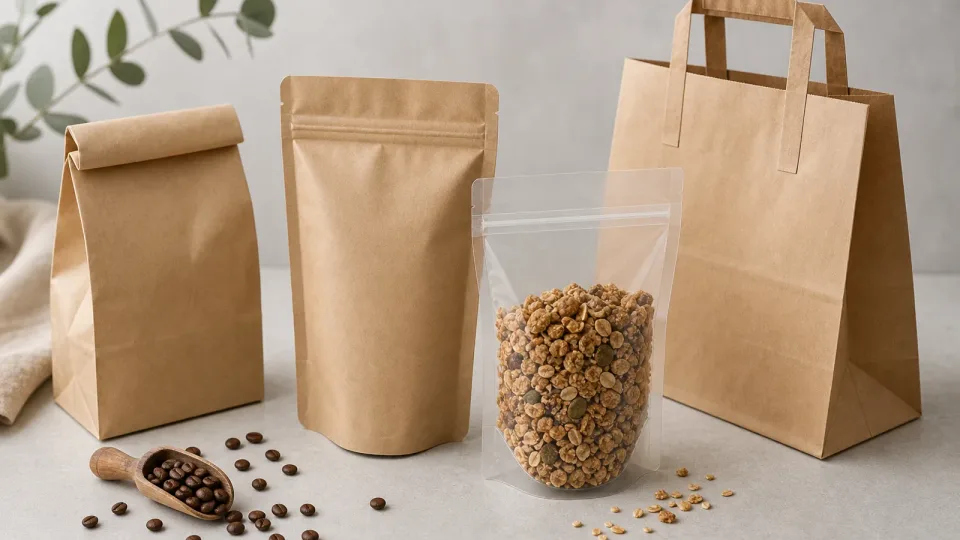
The Four Families of Food Packaging Bags
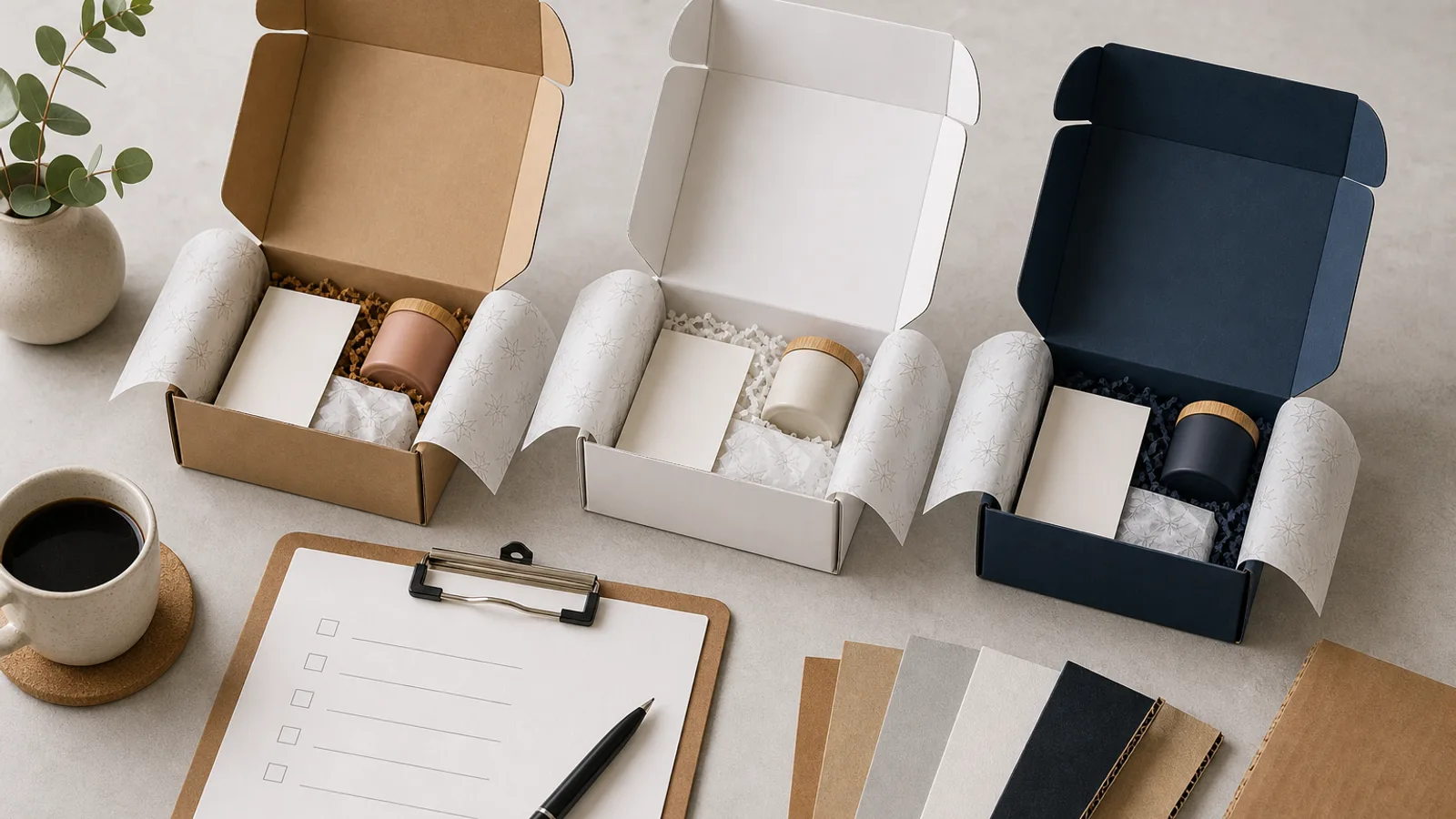
Validate board feel and print quality with packaging samples before locking production MOQ.
1. Kraft Paper Bags
The bakery and takeout standard — kraft bags in natural brown or white, flat or with gussets, printed with your logo in one or two colors or full CMYK.
- Best for: Bakery counter service, dry goods, takeout, retail checkout
- Barriers: Grease-resistant coating available; not airtight
- Why brands choose it: Lowest cost, recyclable and compostable options, strong eco signal
2. SOS and Handle Bags
Self-opening square-bottom bags stand upright for filling — the deli lunch bag grown up — and paper bags with handles carry heavier takeout and retail orders.
- Best for: Restaurant delivery, catering, retail purchases with multiple items
- Barriers: Same as kraft; strength comes from paper weight and handle construction
- Why brands choose it: The delivery-era branding surface — every courier order is a walking ad
3. Poly and Film Bags
Clear or printed plastic packaging bags — flat poly, zip-seal, and shrink formats — protect against moisture and handling.
- Best for: Inner bags for baked goods, produce, frozen items, portioned snacks
- Barriers: Moisture-proof; heat-sealable for freshness
- Why brands choose it: Product visibility and airtight sealing at low unit cost; our plastic packaging bags guide covers the format in depth
4. Stand-Up Pouches and Lined Bags
Multi-layer laminated pouches with zippers, valves, and gussets — the shelf format for coffee, snacks, pet treats, and anything needing real barrier performance. Related formats include pizza boxes.
- Best for: Retail shelf products with 3+ month shelf life
- Barriers: Oxygen, moisture, aroma, UV — the strongest of any bag format
- Why brands choose it: Stands on shelf like a box at a fraction of the freight, with full-surface print
Matching Bag to Food Product
| Product | Recommended bag | Key barrier |
|---|---|---|
| Fresh bread, pastries | Kraft bag, grease-resistant | Breathability (prevents sogginess) |
| Cookies, granola | Poly inner + printed outer, or pouch | Moisture seal |
| Coffee beans | Valve pouch or lined bag | Aroma + one-way degassing valve |
| Fried food, delivery | SOS bag, grease coating | Grease + vent |
| Frozen portions | Poly, freezer-rated | Freeze-thaw seal integrity |
| Candy, small treats | Flat kraft or pillow-style packs | Presentation over barrier |
The pattern: breathable paper for same-day freshness, sealed film for shelf life, laminated pouches for months on a retail shelf. Many food brands use two layers — a sealed inner bag for freshness inside a printed bag or carton for brand (the same layering logic covered in our custom food packaging guide).
Food Safety and Compliance for Bags
The same food-contact rules that govern boxes apply to bags: food-grade paper or film for direct contact, low-migration inks printed on the outside surface, and grease or moisture coatings specified by type. For packaged retail food, labeling requirements (ingredients, allergens, net weight) apply to the bag if it is the retail unit — reserve a printable panel for them in the artwork. Use the quote wizard to compare quantity tiers side by side.
If sustainability drives your brand, note the recycling split: uncoated kraft bags are curbside-recyclable and often compostable, while multi-layer laminated pouches usually are not. The trade-off between shelf life and recyclability is real — our eco-friendly packaging guide walks through it.
Buying Food Bags: MOQs and Cost
Bags follow friendlier economics than boxes:
- MOQs run lower — printed kraft bags commonly start around 500-1,000 units; laminated pouches with custom print run higher (2,000-5,000) because of plate setup.
- Stock-plus-sticker is a real strategy. Launching brands can pair stock bags with custom labels and stickers at almost no MOQ, then graduate to printed bags at volume.
- Print method matters. Flexo suits bold one/two-color kraft printing; rotogravure and digital handle photographic pouch artwork.
As always, quantity is the biggest price lever — the mechanics in our custom packaging cost guide apply to bags exactly as to boxes.
Order Bags That Fit the Food
Send us three details — what the food is, how long it needs to stay fresh, and where it sells — and the bag spec almost writes itself. BoxYourBrand supplies food packaging bags across kraft, paper handle, poly, and pouch formats with food-safe materials, grease and moisture barriers, and print from one-color logos to full-coverage artwork. Get a quote with your product and monthly volume, and we will spec the right construction and MOQ tier for it.