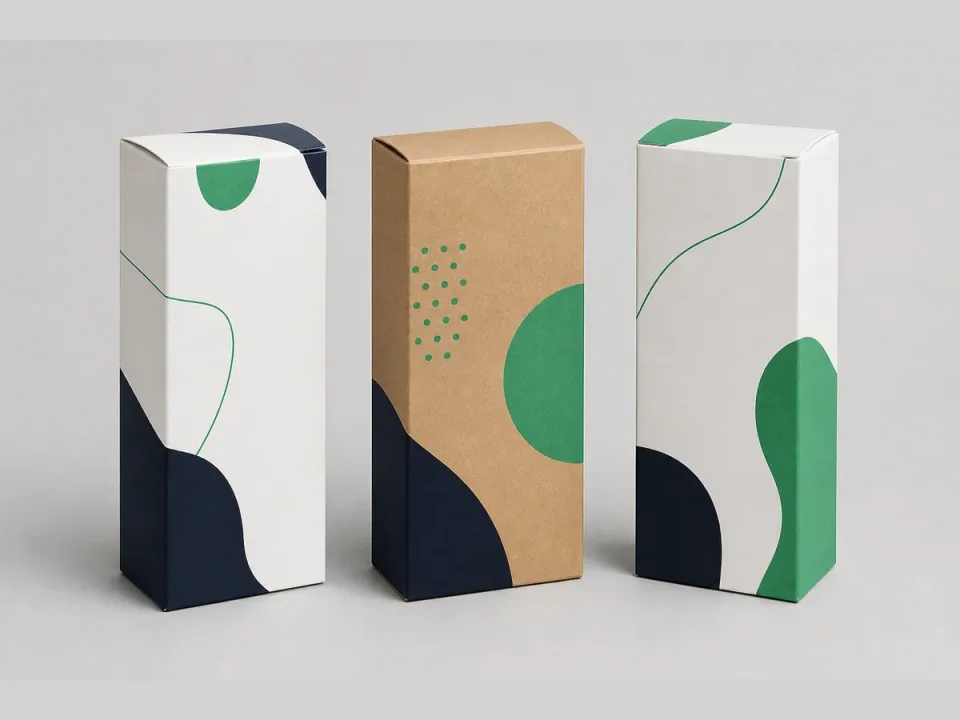
Tuck boxes are the most widely used style of folding cartons in retail — lightweight paperboard cartons with tuck-in top and bottom flaps that fold flat for storage and assemble without glue. For CPG, beauty, and food brands, custom tuck boxes deliver sharp CMYK print at scale with lower per-unit cost than rigid boxes. BoxYourBrand produces end-to-end custom packaging for ecommerce and retail brands.
This guide explains tuck box styles, board grades, print finishes, and MOQ tiers. For product specs and quotes, see folding cartons.
Tuck box styles compared
| Style | Flap direction | Best for |
|---|---|---|
| Straight-tuck end (STE) | Both flaps tuck same direction | Cosmetics, supplements, standard retail |
| Reverse-tuck end (RTE) | Top and bottom flaps tuck opposite | Products needing tighter closure |
| Auto-bottom | Pre-glued base, hand-tuck top | Faster assembly at fulfillment |
| Tuck-top snap lock | Bottom auto-locks | Food, higher-weight cartons |
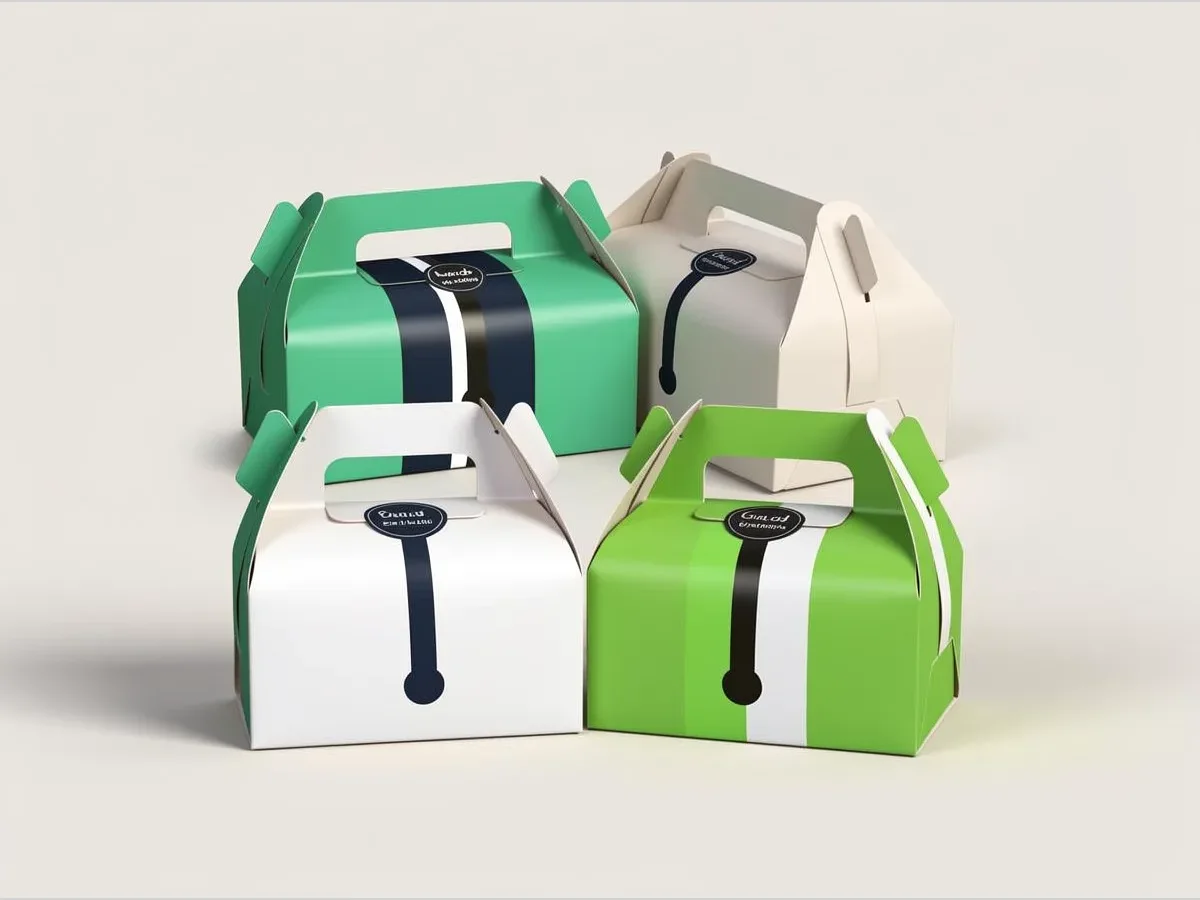
Folding cartons encompass tuck styles plus gable-top, sleeve-and-tray, and hex cartons — but tuck boxes remain the default for shelf-ready single-SKU packaging. Related formats include custom plastic packaging.
Board grades for folding cartons
| Board | Look | Print quality | Typical use |
|---|---|---|---|
| SBS | Bright white | Excellent CMYK | Beauty, premium food |
| CCNB | Clay-coated news back | Good, cost-efficient | Mass retail CPG |
| Kraft | Natural brown | Earthy, eco-led | Artisan food, soap |
| Recycled | Varies | Good with design care | Sustainability programs |
Board caliper ranges from 14pt to 24pt. Heavier products and large panels need thicker board to prevent bowing on shelf. Use the quote wizard to compare quantity tiers side by side.
Print and finishing options
Custom folding cartons support:
- Full CMYK exterior and interior print
- Pantone spot colors for brand consistency
- Gloss or matte lamination
- Soft-touch coating for premium hand-feel
- Foil stamping and emboss/deboss
- Spot UV highlights on logos
Our design team reviews dielines for glue flap conflicts and panel bleed before digital proof. See our corrugated vs folding cartons for the next decision in your workflow.
Packaging with sleeve and sleeve box formats
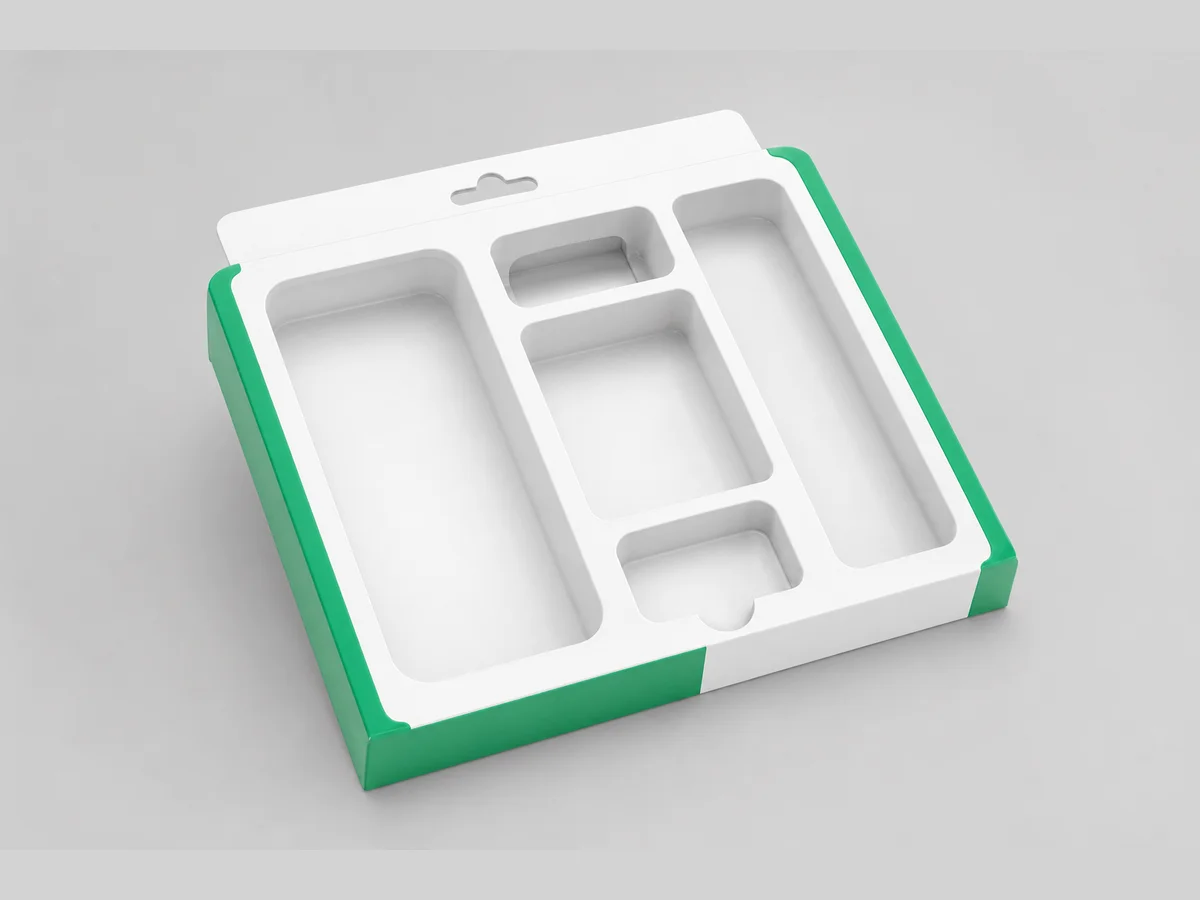
Packaging with sleeve combines an inner tray or tuck carton with an outer printed sleeve — common for gift sets, multi-SKU cosmetics, and food assortments where the sleeve carries brand graphics while the tray holds product cavities.
A sleeve box (sleeve-and-tray) lets you swap sleeve artwork seasonally without retooling the inner tray — efficient for limited editions and retail promotions.
See custom printed sleeves for sleeve-only programs that wrap stock outers or rigid boxes.
Folding cartons vs other formats
| Format | Structure | When to use |
|---|---|---|
| Tuck box / folding carton | Thin paperboard, folds flat | Retail shelf, single product |
| Corrugated mailer | Fluted board, self-locking | Ecommerce ship + unboxing |
| Rigid box | Greyboard, non-collapsing | Luxury gift, high AOV |
| Sleeve & tray | Outer sleeve + inner tray | Multi-item sets |
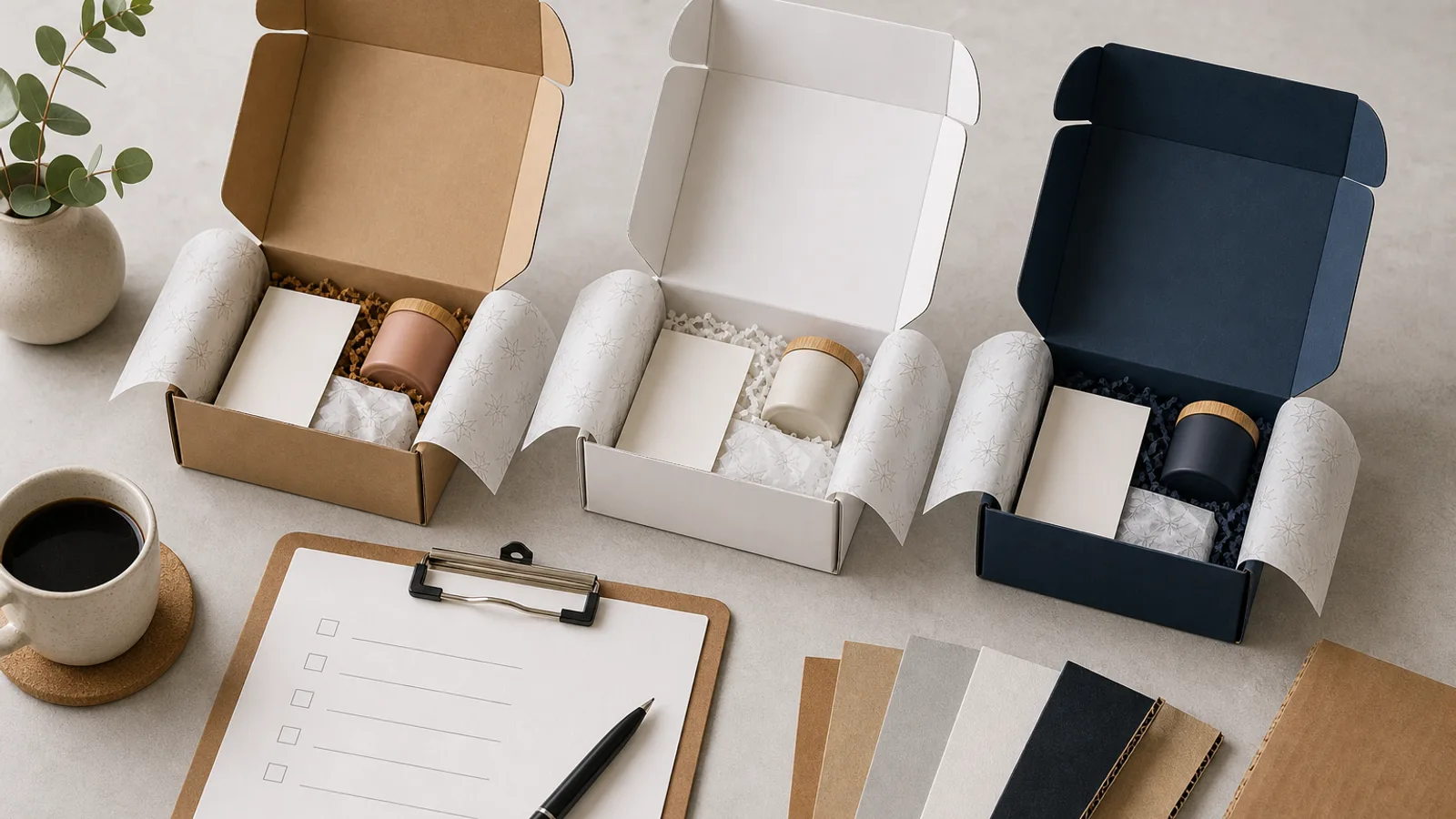
Many DTC brands pair a retail folding carton with a mailer box for transit protection. Read custom packaging materials for a full material comparison.
MOQ and pricing tiers
| Tier | Quantity | Print method | Typical use |
|---|---|---|---|
| Launch | 250–500 | Digital | Pilot SKU, seasonal test |
| Growth | 500–1,000 | Digital / hybrid | Multi-SKU rollout |
| Retail scale | 1,000+ | Offset litho | National distribution |
Per-unit cost drops as quantity rises because die tooling and plate setup spread across the run. Share SKU count and annual forecast when you request a folding carton quote.
How to spec tuck boxes
- Product dimensions — Length, width, height including clearance.
- Closure style — STE, RTE, or auto-bottom based on weight and assembly speed.
- Coatings — Grease-resistant for food; soft-touch for beauty.
- Regulatory panels — Nutrition, ingredients, UPC placement on back/side panels.
- Ship method — Carton-only retail vs carton-in-shipper for ecommerce.
Use the box size calculator to document outer dimensions before quoting.
Order folding cartons and tuck boxes
Ready to produce tuck boxes or folding cartons for your next retail launch? Get a free quote with dimensions, board preference, and finish list — or order samples to validate print and hand-feel before production.