Greeting cards packaging does two jobs at once. It protects paper goods that damage easily — corners, foil, delicate textured stock — and it merchandises them at retail, where a boxed set routinely sells for three times the price of the same cards sold singly. BoxYourBrand produces end-to-end custom packaging for ecommerce and retail brands.
This guide covers card and envelope sizing, the packaging formats stationery brands actually use, wholesale display requirements, postal protection, and how the material options compare. For the box formats, see custom folding cartons and retail display boxes.
Card and envelope dimensions
Validate board feel and print quality with packaging samples before locking production MOQ.
Every packaging decision starts with the envelope, not the card. The envelope is the larger item and the one that determines your interior dimensions. Browse specialty packaging boxes for format specs and MOQ tiers.
| Card format | Card size (flat/folded) | Envelope | Common use |
|---|---|---|---|
| A1 | 3.5 × 4.875“ | A1 (3.625 × 5.125“) | Thank-you notes, place cards |
| A2 | 4.25 × 5.5“ | A2 (4.375 × 5.75“) | The most common note card |
| A6 | 4.5 × 6.25“ | A6 (4.75 × 6.5“) | Mid-size greeting cards |
| A7 | 5 × 7“ | A7 (5.25 × 7.25“) | Standard greeting card, invitations |
| Square | 5.25 × 5.25“ | 5.5 × 5.5“ | Design-led collections |
| DL | 3.9 × 8.3“ | DL (4.33 × 8.66“) | Long-format and European lines |
Two allowances matter when you build the box:
- Length and width — add about 1/8“ over the envelope dimension. Tighter than that and a customer bends a corner every time they pull a card out; looser and the set rattles and looks cheap.
- Depth — measure the actual stack of cards and envelopes together, then add roughly 1/8“ of headroom. Textured, letterpress, and cotton stocks are noticeably thicker per card than smooth stock, so a 12-card set can vary by a quarter inch between collections.
If you run more than one card size, resist the temptation to build one box that fits all of them. A set that swims in its box reads as a manufacturing error to a retail buyer. Related formats include custom plastic packaging.
Greeting card packaging formats
| Format | Use | Typical MOQ |
|---|---|---|
| Clear / printed sleeve | Single card + envelope retail | 250–500 |
| Belly band | Minimal branded wrap on card bundles | 250 |
| Tuck-end box | 8–12 card boxed sets | 100–250 |
| Rigid two-piece or drawer box | Premium and holiday sets | 100 |
| Counter display box | Register and craft-fair merchandising | 100 |
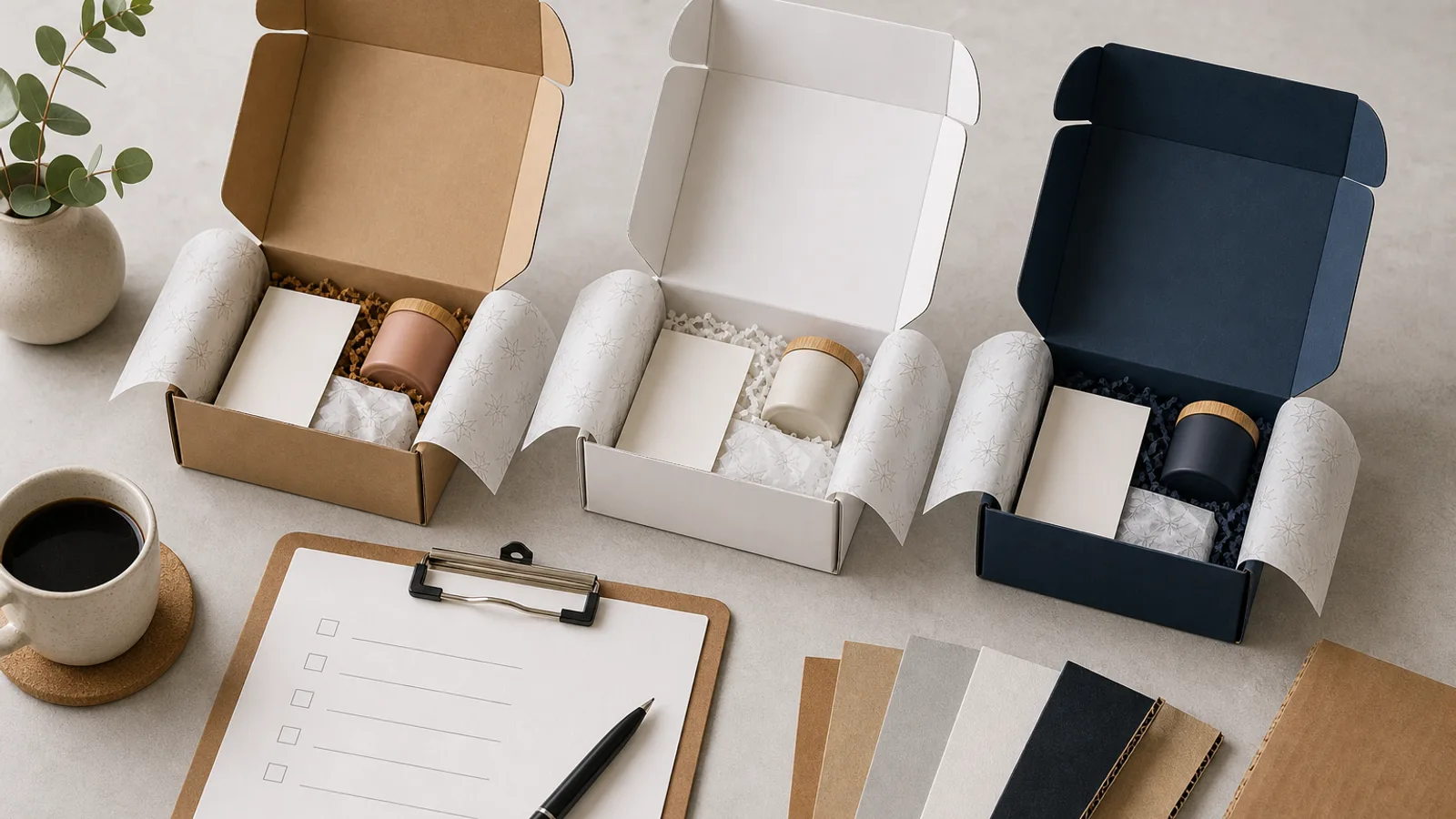
| Mailer box | E-commerce card club / subscription | 50–250 |
Boxed sets: where stationery margin lives
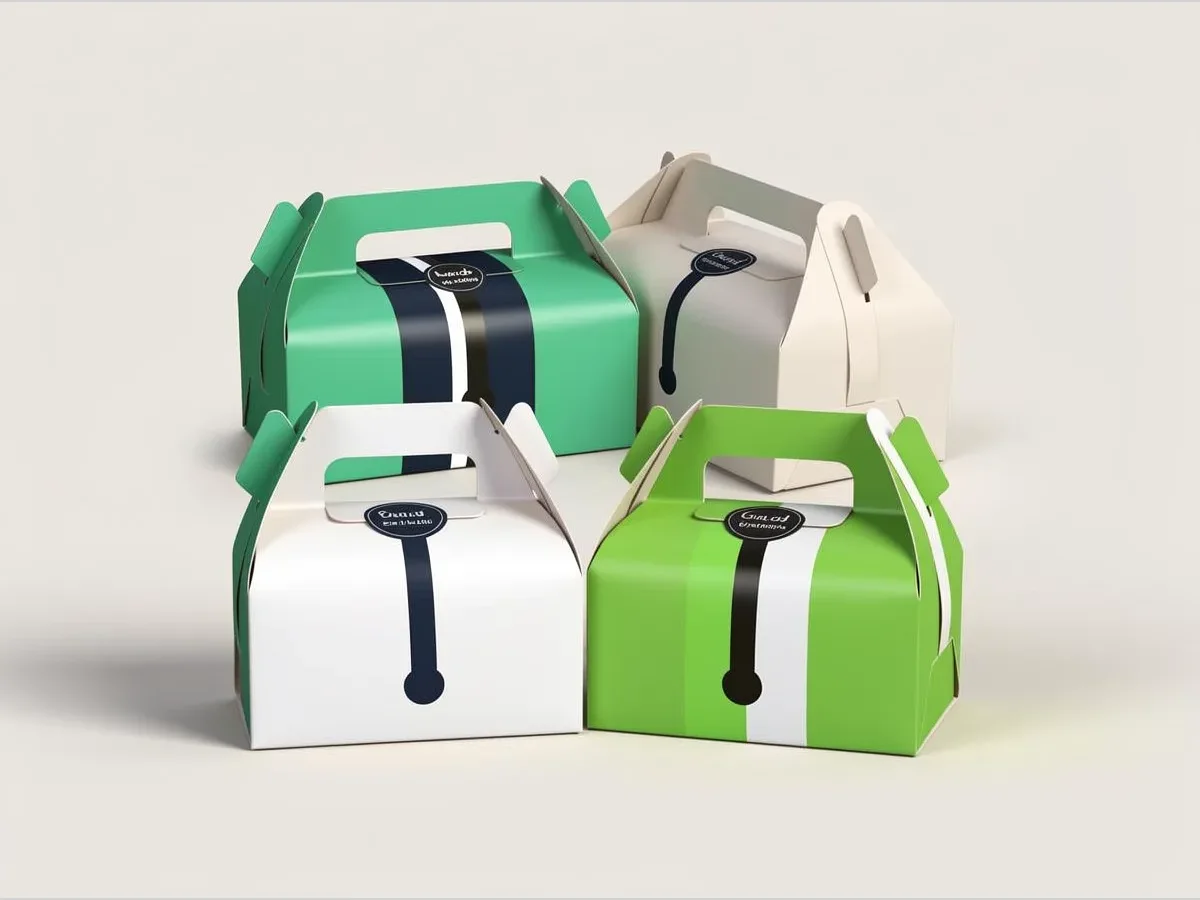
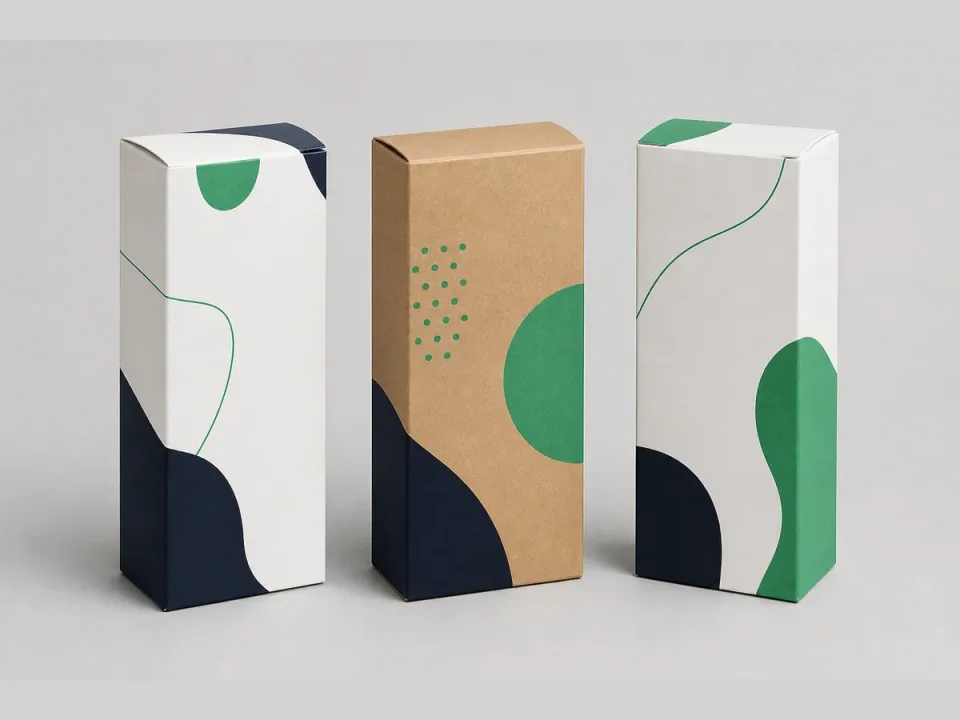
A boxed card set turns twelve $1.50 cards into a $24 giftable product. The economics work because the box does the selling: a printed tuck carton sized around A2 or A7 cards with envelopes, artwork wrapping all five visible panels, and a fitted depth so cards do not shift. Use the quote wizard to compare quantity tiers side by side.
Brands running seasonal collections keep one dieline and swap artwork per run — digital print makes 100–250-unit seasonal runs practical, and reusing the die means each new collection costs artwork setup rather than tooling. See our folding cartons guide for the next decision in your workflow.
A detail worth the small extra cost: a thumb-notch die cut on the lid or a ribbon pull. Boxed sets that are hard to open get handled repeatedly on shelf, and handling is what damages retail packaging.
Single-card retail: sleeves and bands
Single cards need corner and surface protection through repeated browsing. Clear cellulose sleeves (compostable) or printed paper sleeves with a branded backing board are the standard. A printed belly band is the minimalist alternative that shows the artwork while carrying the brand and barcode.
The backing board matters more than most brands expect. A card sleeved without a board flexes every time a customer browses, and by the end of a season the top-of-stack cards are visibly soft. An 18–24pt board eliminates it for a fraction of a cent per unit.
Material comparison
| Material | Feel | Print quality | Recyclability | Best for |
|---|---|---|---|---|
| SBS paperboard (18–24pt) | Smooth, bright | Excellent CMYK | Curbside recyclable | Most boxed sets |
| Kraft paperboard | Natural, textured | Good for 1–2 color | Curbside recyclable | Craft and eco-positioned lines |
| Recycled paperboard | Slightly mottled | Good, softer color | Curbside recyclable | Sustainability-led brands |
| Rigid setup board | Heavy, premium | Excellent with wrap | Recyclable, less commonly | Holiday and letterpress sets |
| Cellulose sleeve | Clear, crisp | N/A | Home compostable | Single-card retail |
| Polypropylene sleeve | Clear, glossy | N/A | Rarely accepted | Avoid where plastic-free matters |
Most stationery brands moving away from plastic switch from polypropylene to cellulose sleeves first. It is the most visible sustainability change in the category and the easiest to communicate on a hang tag.
Wholesale and display
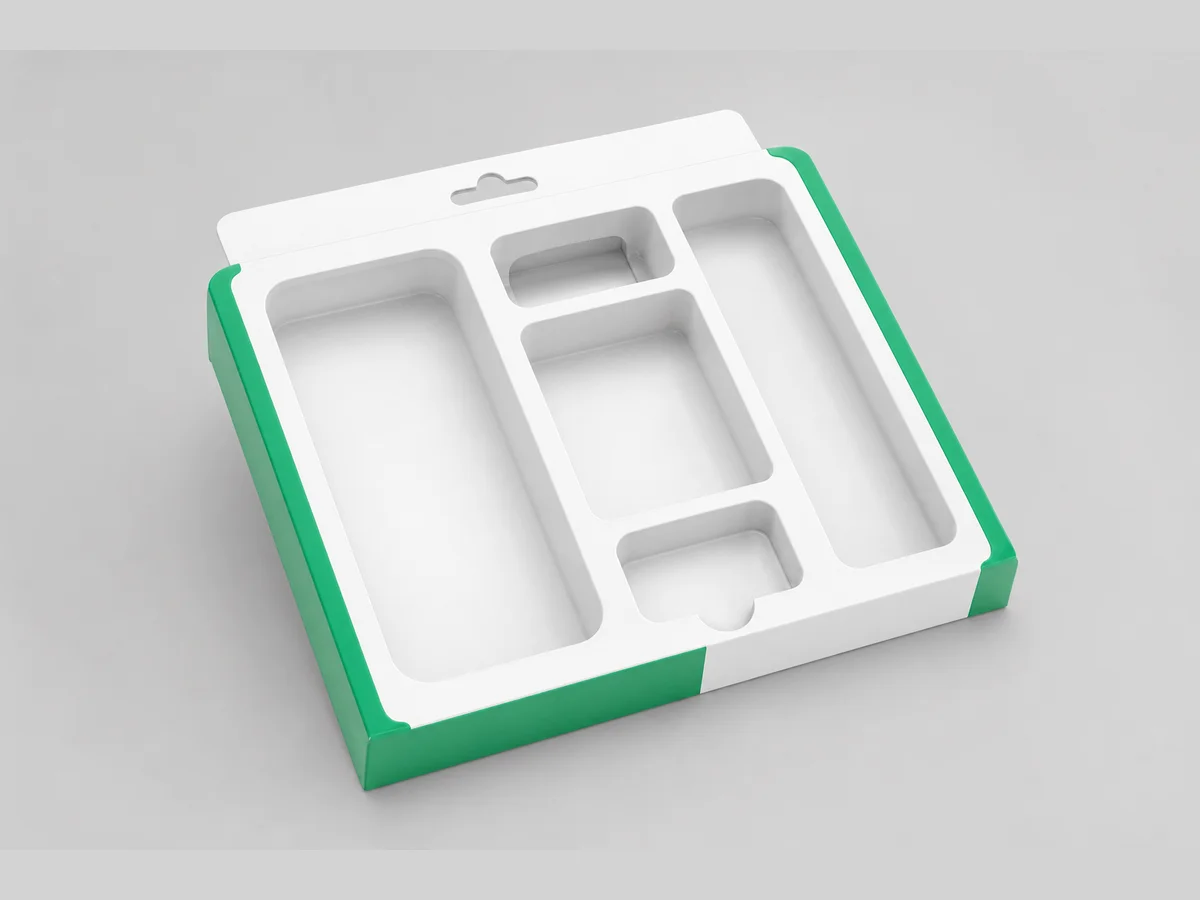
Selling into gift shops means shelf-ready presentation. Counter display boxes hold faced cards at the register, and shipper cases protect wholesale orders in transit.
What wholesale buyers actually check:
- Barcode placement. A scannable UPC on the sleeve or box back, in a consistent position across your line. Buyers reject lines that require hunting for the code.
- Faced presentation. Cards that stand up in the display without support. A display that slumps by week two gets pulled.
- Case pack consistency. The same count per case across SKUs simplifies their receiving.
- Reorder-friendly SKU marking. Print the SKU on the box, not just on an invoice.
A clean display case wins reorders that loose shrink-wrapped bundles do not — the display is doing merchandising labor the shop would otherwise have to do itself.
Postal protection for e-commerce
Card clubs and online stationery orders ship best in shallow mailer boxes with a fitted insert or band keeping cards flat. Three failure modes to design against:
- Corner crush. The most common damage on card shipments. A rigid mailer with minimal internal movement prevents it; a padded envelope does not.
- Flexing. Cards shipped in a flexible mailer arrive with a permanent bow. A chipboard stiffener costs almost nothing and eliminates it.
- Moisture. Paper goods and rain are a bad combination. A cellulose sleeve inside the mailer is enough for most climates.
Avoid oversized shippers. Cards shift, corners crush, and dimensional-weight pricing penalizes empty space — check your box against the DIM weight calculator before you commit to a size.
One note on the cards themselves: square envelopes are non-machinable in the US postal system and carry a surcharge over standard First-Class postage. If you sell square cards, say so on the packaging. Unexpected postage is one of the most common complaints on square card sets, and a single line on the box back prevents it.
Ready to spec a set box or sleeve program? Get a free quote with your card size, set count, and quantity — free dieline and digital proof included.