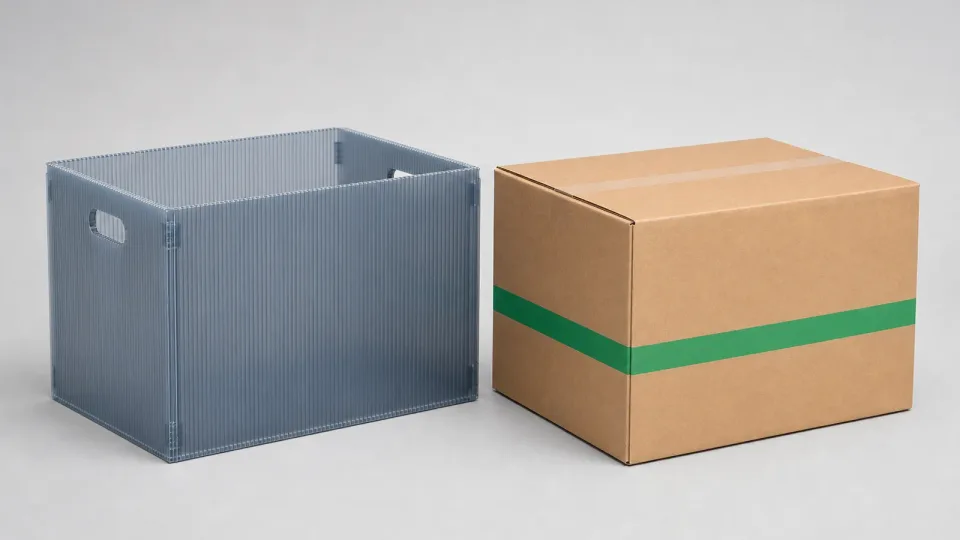
Corrugated plastic boxes are a niche alternative to corrugated cardboard for programs that need moisture resistance or reusable transit packaging. Most ecommerce brands still default to E-flute mailers and RSC shippers — but plastic corrugated has a role in specific supply chains. BoxYourBrand produces end-to-end custom packaging for ecommerce and retail brands.
Corrugated plastic characteristics
Validate board feel and print quality with packaging samples before locking production MOQ.
- Higher moisture resistance than paperboard
- Reusable across multiple transit cycles in closed-loop logistics
- Different print and fold tooling than standard mailers
When cardboard is the better fit
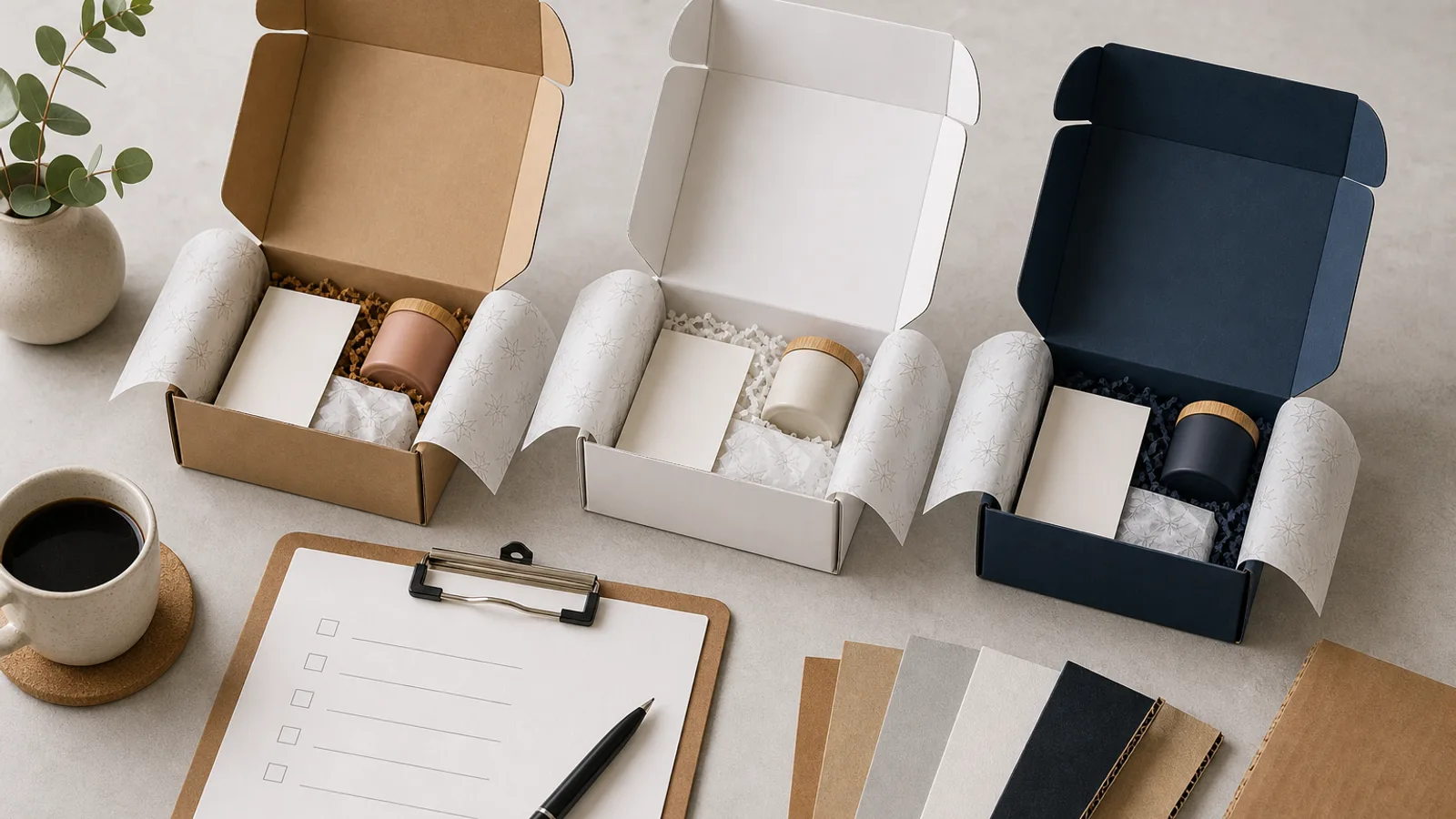
Custom mailer boxes and corrugated shipping boxes remain the standard for DTC ecommerce because of cost, recyclability, and print quality. Interior/exterior CMYK branding is mature on paper-based corrugated.
Specifying corrugated plastic mailers
If your product faces humidity, condensation, or reusable depot returns, ask about corrugated plastic formats when quoting custom mailer boxes. Share weight, dimensions, and whether the box must nest or stack for return freight.
Next Steps for Corrugated Plastic vs Cardboard
Our packaging specialists compare corrugated plastic versus cardboard based on your lane, product, and branding requirements — not a one-size-fits-all recommendation. Related formats include custom plastic packaging.
Request a quote with your transit conditions and quantity.
When corrugated plastic beats cardboard shippers
Corrugated plastic suits moisture, wash-down, and reusable depot loops. Most ecommerce brands still win on cardboard cost, print, and recycling — use plastic when the environment demands it. Use the quote wizard to compare quantity tiers side by side.
| Material | Best for | Trade-off |
|---|---|---|
| Plastic corrugated | Moisture / reuse | Cost, weight, print limits |
| Cardboard | DTC brand parcels | Moisture sensitivity |
Plastic-vs-cardboard decision checklist
- Document moisture and reuse requirements.
- Compare print expectations honestly.
- Model cost across reuse cycles if closed-loop.
- Confirm end-of-life path for each material.
- Sample both if the call is close. See our corrugated vs folding cartons for the next decision in your workflow.
Barrier and durability notes
Plastic corrugated resists condensation that softens paperboard. If your product only sees dry parcel networks, E-flute mailers usually remain the better branded choice.
Material-switch pitfalls
- Switching to plastic for “premium” without a moisture need
- Assuming plastic is always recyclable locally
- Ignoring print limits vs litho cardboard
Choose plastic or cardboard with a written job
State environment, reuse goals, and brand needs. We will recommend corrugated plastic or cardboard structures that fit the real journey.
Closed-loop vs one-way parcel economics
Corrugated plastic pays back when boxes return to a depot enough times to offset higher unit cost. One-way ecommerce parcels rarely hit that math — branded cardboard mailers usually win on print and recycling familiarity.
If you operate both paths, do not force one material. Write two specs: reusable plastic for inbound/closed-loop, cardboard for customer-facing DTC. That split keeps claims and costs honest when you request quotes.
Print expectations when switching materials
If brand panels matter as much as moisture resistance, cardboard usually still wins. Corrugated plastic print options are narrower — confirm graphics needs before a material switch.
State whether customer-facing print is required when you compare plastic and cardboard quotes.
Practical next steps for Plastic vs Cardboard Corrugated Boxes
Before you scale custom corrugated plastic boxes, freeze structure and size on a short pilot, then decorate. Bring packed dimensions, channel notes, and quantity tiers to the quote form so engineering recommendations match how the pack actually ships and sells.
If you already have a working dieline, send it — reusing proven structure cuts tooling and proof rounds. Archive board, film, ink, and revision IDs with the purchase order so reorders do not rediscover decisions you already paid to learn.
Comparing plastic vs cardboard suppliers fairly
Send the same written brief — dimensions, environment, print needs, and quantity — to every supplier. Price gaps usually come from board grade, print method, or missing sample policy, not mysterious discounts. Keep that brief with your PO so reorders stay apples-to-apples.