
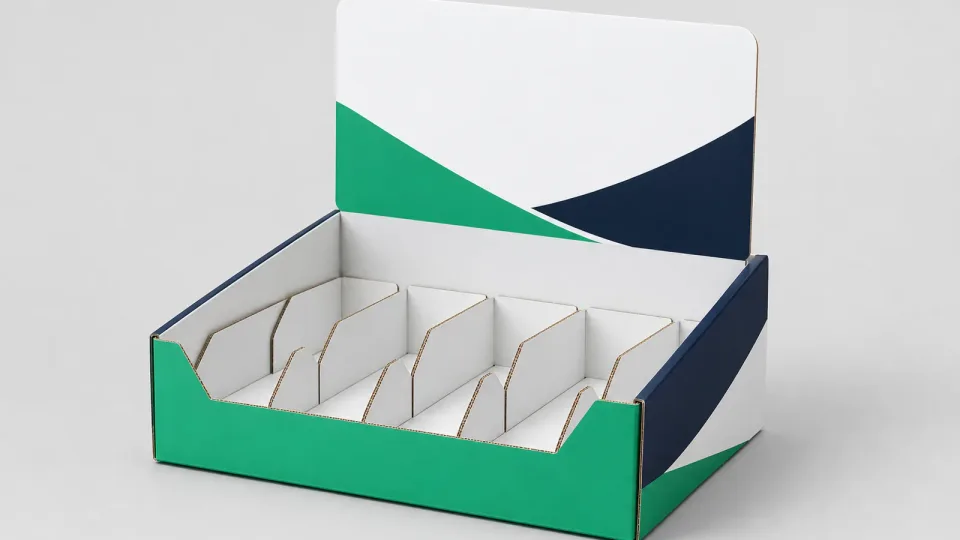
Shelf-ready packaging must fit the planogram before it fits the marketing brief. Engineering compliance early prevents costly reprints, rejected deliveries, and delisted SKUs — problems that usually surface only after thousands of units are already on the truck. BoxYourBrand produces end-to-end custom packaging for ecommerce and retail brands.
This guide explains how shelf-ready packaging (SRP) works with retailer planograms: dimensions, tray structure, barcodes, facing consistency, pilots, and how SRP relates to custom cardboard display boxes, POP impulse displays, and counter vs floor units.
Key takeaways
- Shelf-ready displays must match retailer planogram depth, height, and header requirements.
- Litho-laminated corrugated delivers photographic print for counter and shelf POP.
- Ship-flat display kits reduce inbound freight versus pre-assembled units.
- Test structural load with filled product before national retail rollouts.
What Shelf-Ready Packaging Means
Validate board feel and print quality with packaging samples before locking production MOQ.
Shelf-ready packaging (also called SRP or retail-ready packaging) is corrugated packaging designed so stockers can move product from the outer shipper to the shelf with minimal handling. Typical patterns include:
- Perforated trays — tear-away tops or fronts so the tray becomes the shelf vehicle
- Display shippers — cases that open into a shopper-facing unit when a panel is removed
- Tray + lid systems — lid removed at store; tray remains as the facing base
Custom cardboard display boxes in SRP format cut back-room labor and improve facing consistency versus dumping loose units onto shelf. Retailers prefer SRP when it reduces minutes-per-case without increasing shrink or bay clutter.
SRP is not the same as freestanding POP. Floor and counter displays sit outside or in addition to the bay; SRP lives inside the planogram footprint.
Why Planogram Compliance Comes First
A planogram defines where each SKU sits: bay width, shelf depth, height clearance, facings, and sometimes weight limits. Your SRP tray is a physical object that either fits those numbers or fails the account’s compliance check.
Typical retailer constraints:
- Width tolerances per bay segment (often measured to the centimeter or 1/8 inch)
- Maximum tray height so price rails and shelf tags remain visible
- Depth that does not block adjacent SKUs or overhang the shelf edge
- Stable base under full case pack load for the expected days on shelf
Share target-account guidelines when requesting shelf-ready packaging quotes. Engineering without the planogram sheet is guesswork — and reprints are expensive once litho plates are cut.
Engineering the Tray
Tray strength and graphic panels must survive shipping and weeks of shopper handling.
Flute grade and load
Match flute grade and litho laminate to total product weight and expected dwell time. Weak trays buckle, lean, or collapse — ruining facings and triggering store-team complaints. Heavy glass or liquid SKUs need more structure than light sachets.
Spec load testing (filled tray) before national production. A prototype that looks perfect empty can fail under a full case of bottles.
Tear strips and openings
Perforations must tear cleanly for stockers without tools, but stay intact through DC conveyor systems. Overly aggressive perfs tear in transit; weak perfs slow stocking and leave jagged fronts that look unprofessional on shelf.
Facing consistency
SRP succeeds when every store presents the same front: logo orientation, fill height, and SKU order. Design the tray cavity so product cannot shift into a messy row during transit. Add die-cut stops or dividers when SKUs rattle or rotate.
Barcodes, Case Labels, and Scan Compliance
Outer shipper labels must align with inner tray barcodes for scan compliance at DC and store receiving. Misaligned codes create “orphan” inventory events and chargebacks.
Coordinate during dieline review:
- Outer GTIN / case code position
- Inner tray or pack barcode visibility after tear-away
- Price ticket or shelf-edge label zones if the retailer requires them on the tray front
- Lot / date codes if food or regulated categories apply
Never treat labels as “print later” artwork. Scan failure after a national ship is a commercial incident, not a design preference.
Graphics That Work on Shelf
SRP fronts are narrower than floor-display headers. Hierarchy still matters:
- Brand mark
- Product descriptor or variety callout
- Size / count if required by the account
Avoid recycling full package front art at reduced scale if critical type drops below legibility at shelf distance. Litho-lam panels handle photo detail, but shelf lighting and angle differ from packaging studio comps — soft proofs under aisle-like lighting help.
Match brand color to nearby POP units if the same campaign runs impulse displays in the same aisle. Shared standards keep the brand block cohesive from bay to endcap.
SRP vs Counter and Floor POP
Use this decision frame:
| Need | Prefer |
|---|---|
| Permanent bay presence with low stocking labor | Shelf-ready packaging (SRP) |
| Register impulse or pharmacy counter | Counter display |
| Launch volume / endcap takeover | Floor POP display |
| Aisle impulse without bay redesign | POP display boxes |
Many CPG programs combine SRP for everyday distribution with seasonal POP for incremental lift. Spec them as a kit with shared color and messaging so stores do not receive conflicting brand looks.
Spec Checklist for First SRP Orders
Bring these inputs to your packaging partner:
- Retailer name(s) and planogram or dimensional PDF
- Product L×W×H and filled weight; case pack count
- Required facing count per tray / bay
- Ship pattern (pallet configs, max stack height)
- Tear-away vs open-tray preference from the account
- Barcode and regulatory panel requirements
- Pilot quantity vs national estimate
- Dwell-time expectation (days/weeks on shelf)
Missing any of the first four almost guarantees a redesign cycle.
Pilot One Bay, Then Scale
Validate one retailer bay (or a small store set) with a short-run custom retail display boxes pilot before national litho plate investment. Observe:
- Does the tray fit without forcing adjacent SKUs?
- Can stockers open and place it in under the account’s labor target?
- Do trays stay square after seven days of shopper pulls?
- Are barcodes scanning through receiving?
Fix structure and graphics from the pilot, then scale. Plates and dies change for free only on paper — not after a multi-thousand-unit buy.
Cost and Lead-Time Notes
Per-unit SRP cost drops as volume amortizes tooling and litho setup. Pilots may run digitally or on short-run processes; national grocery and club programs typically need traditional litho timelines after proof approval. Flat-pack ship patterns reduce freight cube versus assembled displays.
Ask for volume tiers (e.g., 50–249, 250–999, 1,000+) when comparing quotes so finance can model rollout steps without re-quoting every gate.
Related Guides
- Hub: custom cardboard display boxes for retail
- Impulse design: POP display boxes for impulse sales
- Placement economics: counter display vs floor display